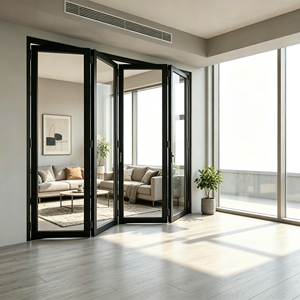
Exterior & Interior Aluminium Glass Bifold Sliding Profile
Structural multi-chamber sliding systems optimized for quiet accordion movement and seismic vibration dampening.
View Technical Profile
Engineered for high-humidity climates, extreme seismic vibration requirements, and stringent thermal transmittance quotas (ZEH standard requirements).
Structural multi-chamber sliding systems optimized for quiet accordion movement and seismic vibration dampening.
View Technical Profile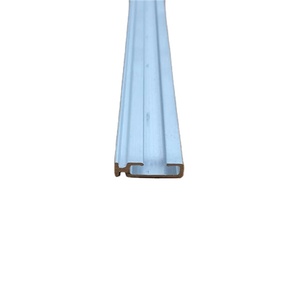
Ultra-fine Japanese minimalist sightlines with Class A1 anodized oxidation finish to resist coastal salt degradation.
View Technical Profile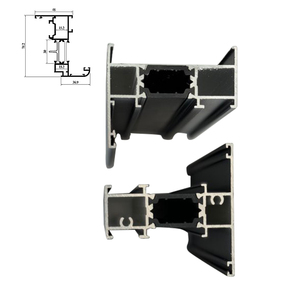
High-insulation PA66GF25 reinforced composite cavity extrusion providing high thermal resistance for northern prefectures.
View Technical Profile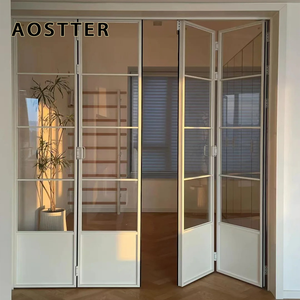
Reinforced horizontal tracking mechanism with multi-point perimeter seals preventing wind-driven driving rain penetration.
View Technical Profile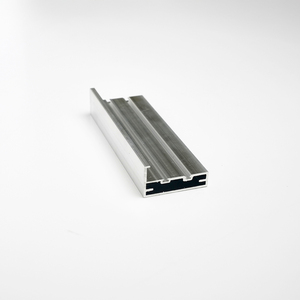
Streamlined profile geometry tailored for high-density metropolitan Tokyo residential interiors and modern sliding partitions.
View Technical Profile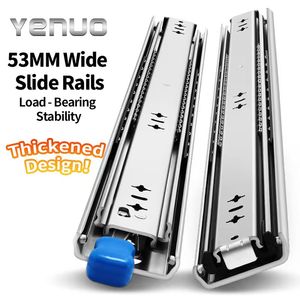
Precision milled aluminium base guides engineered to carry multi-layer laminated architectural glass panels up to 250 lbs.
View Technical Profile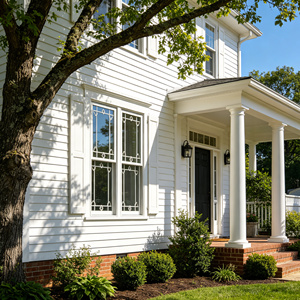
Engineered internal water discharge slots with integrated thermal barrier ensuring U-values matching Japan ZEH standards.
View Technical Profile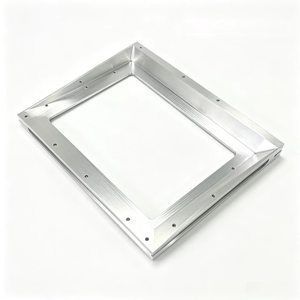
Milled corner reinforcement brackets and façade anchors for seismic-rated curtain walls and architectural assemblies.
View Technical ProfileProcuring architectural aluminium window profiles for the Japanese market involves navigating one of the world's most stringent building regulatory frameworks. Japan’s building codes—governed by the Ministry of Land, Infrastructure, Transport and Tourism (MLIT)—stipulate extreme parameters for wind pressure resistance (JIS A 4706 Wind Resistance Grades S-1 through S-7), rigorous airtightness (A-1 through A-4), and progressive watertightness (W-1 through W-5).
Key Procurement Insight: Under the updated Building Energy Efficiency Act, all new residential and commercial structures across Japan must meet strict ZEH (Net Zero Energy House) and ZEB criteria, requiring window assemblies to achieve low heat transfer rates (U-values ≤ 1.9 W/m²·K).
Our OEM/ODM manufacturing facility operates customized extrusion dies calibrated to Japanese standard alloy designations (principally JIS 6063-T5/T6 and 6061-T6). By integrating high-density PA66GF25 polyamide structural strips and precision multi-point EPDM co-extruded compression gaskets, we bridge the gap between cost-effective overseas manufacturing scale and Japan’s zero-defect tolerances.

From the freezing, heavy-snow regions of Hokkaido to the coastal typhoon corridors of Okinawa and Kyushu, fenestration systems must be engineered for localized environmental stressors.
Region 1 and 2 microclimates mandate broken-bridge profile structures with depth exceeding 75mm. Our multi-chambered thermal breaks eliminate condensation (dew formation) on interior aluminium profiles even during extreme winter sub-zero temperatures, protecting traditional indoor wooden framework from fungal rot.
Southern maritime prefectures face severe tropical cyclones carrying saline mist. We specify architectural profiles with combined anodic oxide coating and electrodeposition composite coating (JIS H8602 Class A1) paired with heavy internal chamber stiffeners capable of withstanding dynamic wind loads exceeding 3,000 Pa.
Densely constructed fire-prevention districts require non-combustible building materials and enhanced acoustic dampening (JIS T-2 to T-3 ratings). Our narrow-frame flush window profile series integrates multi-point locking cams and elastomeric gaskets that isolate low-to-mid frequency urban transit rumble.
Comparative performance specifications detailing mechanical, thermal, and surface characteristics calibrated for Japanese municipal project submittals.
| Performance Characteristic | Japanese Industrial Standard (JIS) | Standard OEM Profiles | Our Precision Engineered Profiles |
|---|---|---|---|
| Aluminium Alloy Standard | JIS H 4100 (A6063S / A6061) | Generic 6063 Extrusion | A6063-T5 / T6 High Purity (Billet Traced) |
| Wind Pressure Resistance | JIS A 4706 Grade S-5 to S-7 (2400-3600 Pa) | 1600 - 2000 Pa | Up to 3600 Pa (Reinforced Core Chambers) |
| Airtightness Rating | JIS A 4706 Grade A-4 (2 m³/(h·m²) or less) | Standard Grade A-2 | Grade A-4 (Co-extruded Multi-Lip Gaskets) |
| Watertightness Performance | JIS A 4706 Grade W-4 to W-5 (500 Pa) | 250 - 350 Pa | 500 Pa (Stepped Drainage Decks) |
| Surface Anodizing Coating | JIS H 8602 Composite Anodize + Clear | Ordinary Anodized ≤ 10μm | Class A1 ≥ 16μm + 7μm ED Organic Seal |
| Extrusion Wall Tolerance | JIS H 4100 Special Precision Class | ±0.15mm to ±0.25mm | ±0.05mm across critical lock tracks |
Strategic manufacturing perspectives aligned with the transformative decarbonization shifts of Japan's construction sector.
With Japan targeting nationwide net-zero operational energy for all new residential builds by 2030, conventional non-thermal aluminium frames are completely obsolete for exterior building skins. Demands for deep composite thermal breaks integrated with triple-glazed Low-E gas-filled glass units are dominating procurement schedules.
Japanese architectural minimalism demands maximum daylight incidence with concealed outer frames. The market is shifting towards hybrid engineering: high-tensile structural exterior aluminium profiles that battle seasonal typhoons combined with warm interior timber cladding or super-matte architectural coatings.
Due to severe construction labor shortages across major Japanese cities, contractors favor fully pre-notched, pre-punched, and CNC-machined profile sub-assemblies. Supplying knock-down (KD) packages ready for on-site insertion dramatically compresses project delivery timelines.
Bridging global manufacturing efficiency with rigorous Japanese QA/QC craftsmanship.
Every profile design undergoes comprehensive finite element analysis (FEA) to confirm wind pressure limits, structural deflection criteria, and thermal barrier efficiency prior to die opening, eliminating costly re-tooling iterations.
Our quality assurance strictly follows a multi-tier checkpoint framework: spectral analysis of incoming aluminium ingots, in-line optical sensor dimensional checks during extrusion, tensile testing of thermal bonds, and micro-scratch surface evaluations before crating.
To eliminate surface abrasions during ocean freight across the East China Sea, every profile is individually wrapped with UV-resistant peelable protective film, interlined with shock-absorbent foam, and packed into reinforced fumigated wooden crates labeled with Japanese opening markers.
Detailed technical, regulatory, and logistics answers for Japanese trading companies, architects, and facade contractors.
Yes. Every export lot destined for Japan is accompanied by an authenticated Mill Test Certificate (MTC) detailing spectroscopic chemical composition (Si, Fe, Cu, Mn, Mg, Cr, Zn, Ti balances) and mechanical tensile testing (tensile strength, yield proof stress, elongation percentage) confirming absolute conformity with JIS H4100 (6063, 6061 series). These documents fulfill standard submittal requirements for Japanese architectural verification bodies.
For profiles targeted at coastal regions such as Kanagawa, Chiba, Shizuoka, or Okinawa, we recommend combined composite coatings in compliance with JIS H8602. This process applies an initial architectural anodic oxidation layer (Class A1 ≥16μm thickness) sealed with a high-durability electrodeposition clear synthetic resin (ED film ≥7μm). Alternatively, we provide AAMA 2605-compliant PVDF (fluoropolymer) electrostatic coatings that resist CASS (copper-accelerated acetic acid salt spray) testing for over 4,000 hours.
Absolutely. Our broken-bridge systems are designed around European-standard PA66GF25 (polyamide with 25% glass fiber reinforcement) composite thermal break strips ranging from 14.8mm to 34mm width. When paired with standard Japanese double-glazed or triple-glazed Low-E insulated glass units (IGUs) filled with Argon gas and warm-edge spacers, our finished fenestration profiles achieve thermal transmittance values (U-frame) well below 1.6 W/(m²·K), comfortably surpassing Region 3 to Region 7 ZEH energy performance baseline thresholds.
Upon approval of final 2D/3D CAD shop drawings, custom extrusion die manufacturing typically requires 12 to 18 calendar days. Initial extrusion trial samples (T0/T1) are checked with coordinate measuring machines (CMM) and optical cross-section projectors to verify dimensional tolerances within ±0.05mm. Sample cuts with full test inspection documentation are dispatched via international courier (DHL/FedEx) to your engineering division in Japan within 3 to 5 business days for physical trial fit-up.
Yes. We offer fully integrated downstream CNC machining capabilities, including precision 45°/90° compound mitre cutting, robotic thermal break crimping, drain slot punching, weep-hole routing, hardware pocket milling, and corner cleat pre-assembly. We can supply complete knock-down (KD) packages equipped with internal expanding corner brackets, screw alignment slots, and labeled EPDM gaskets, significantly reducing manual assembly hours at Japanese fabrication workshops.
We support FOB, CIF, and DDP trade terms with direct container shipping lines connecting to Tokyo, Yokohama, Nagoya, Osaka, Kobe, and Hakata ports. Shipping documentation packs are prepared strictly in accordance with Japan Customs guidelines, including commercial invoices, detailed item-level packing lists categorized by project grid markers, certificate of origin (COO), and bill of lading (B/L) for rapid clearance.
Consult with our senior fenestration engineers to evaluate profile section drawings, verify structural wind-load parameters, or initiate custom die tooling tailored for the Japanese market.