Acoustic Rated
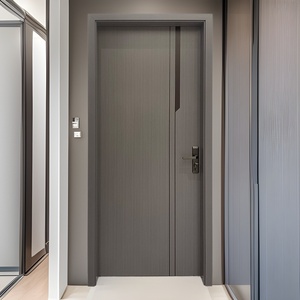
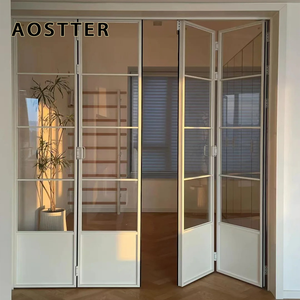
Foshan Aluminum Alloy Anti-Theft Bedroom Door Household Soundproof All-Aluminum Interior Study Door
STC 42dB
6063-T6 Alloy
Anodized 20μm

Direct-from-factory precision fenestration designed for extreme diurnal temperature shifts, high ultraviolet exposure, and strict acoustic dampening in the Arabian Peninsula.
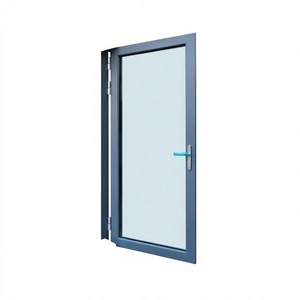
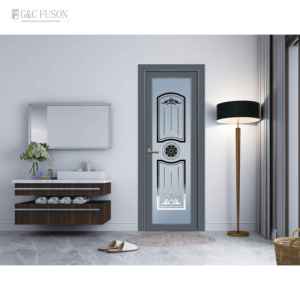
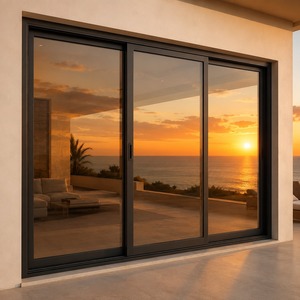
The monumental transformation under the Saudi Vision 2030 initiative—anchored by giga-projects such as NEOM, the Red Sea Global destination, Qiddiya, the New Murabba, and expansive ROSHN residential communities—has radically redefined building envelope engineering in the Middle East. Structural glazed building enclosures are no longer evaluated solely for their aesthetic and transparency metrics. Today, they represent the frontline barrier against one of the planet's most unforgiving climatic environments. In Saudi Arabia, building facades must simultaneously endure ambient surface temperatures surpassing 55°C, intense direct normal solar irradiation exceeding 2,400 kWh/m² per annum, abrasive airborne desert silicates, and aggressive C5-M marine salinity across coastal development belts.
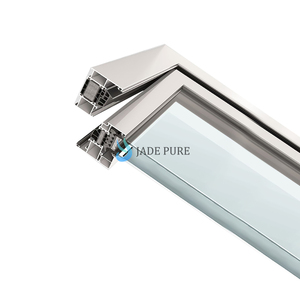
Standard architectural aluminium profiles exhibit exceptionally high thermal conductivity ($k \approx 205 \text{ W/m}\cdot\text{K}$), turning uninsulated exterior frames into literal heat conduits that trigger severe interior radiative warming and catastrophic HVAC oversizing. As a premier original equipment manufacturer (OEM) and exporter to Riyadh, Jeddah, Dammam, and Tabuk, our engineering department integrates advanced Polyamide 66 reinforced with 25% structural glass fiber (PA66 GF25) multi-cavity thermal break extrusions. These insulating strips decouple exterior and interior aluminium segments across minimum barrier depths of 24mm to 34mm, dropping the structural frame thermal transmission ($U_f$) to below 1.5 W/m²K.
For glass composition, the benchmark specification for institutional projects across the Kingdom centers on Double and Triple Silver vacuum-deposited Magnetron Sputtered (MSVD) Low-E insulated glass units (IGUs). Built on low-iron float glass substrates to remove greenish tinting and maximize visual fidelity, the typical build-up comprises an 8mm outer fully tempered pane with high-performance selective coating on Surface #2, a 16mm warm-edge hermetic cavity backfilled with 90% concentration argon gas, and a 6mm+6mm laminated inner safety pane bonded via acoustic PVB or structural SentryGlas (SGP) interlayers. This configuration reduces short-wave solar transmission while retaining high visible light transmission ($VLT \ge 45\%$), yielding an optimal balance between indoor thermal comfort and daylight harvesting.
Saudi Arabia’s geographical diversity imposes dual physical threats that degrade inferior facade materials within months of handover:
Engineered envelope specifications customized to the microclimatic challenges, urban zoning mandates, and aesthetic directives across the Kingdom's diverse territories.
High diurnal shifts ($\Delta T > 28^\circ\text{C}$) generating tremendous thermal expansion stresses. Projects require extensive structural expansion joints and PA66 thermal breaks to eliminate building stress fractures.
Severe oceanic humidity combined with airborne salt mist creates relentless galvanic and pitting corrosion. Assemblies mandate AAMA 2605 3-coat PVDF and marine-grade silicone seals.
Zero-carbon and LEED Platinum requirements demand dynamic energy harvesting, smart switchable electrochromic glass, and integrated bird-safe ceramic frit patterns.
High wind loads from Arabian Gulf shores alongside petrochemical airborne compounds. Requires high structural inertia mullions and industrial-grade air-impermeability seals.
Detailed performance thresholds contrasting standard international export configurations against our specialized, high-load Saudi Arabian architectural builds.
| Performance Indicator | SBC 601/602 Mandatory Standard | Standard Commercial Grade | Our Saudi Export Engineered Spec | Compliance Audit |
|---|---|---|---|---|
| Solar Heat Gain (SHGC) | ≤ 0.25 (Non-North Façade) | 0.35 - 0.45 | 0.20 - 0.22 (Triple Silver Low-E) | Fully Certified |
| Thermal Transmittance ($U_{cw}$) | ≤ 1.60 W/m²K | 2.20 - 2.80 W/m²K | 1.25 - 1.40 W/m²K | Surpasses Code |
| Wind Pressure Resistance | Per ASCE 7-16 / Site Calc (1.8-2.5 kPa) | 1.5 kPa | Up to 3.50 kPa (High-Rise Tested) | Fully Certified |
| Air Infiltration Rate | ASTM E283 ≤ 1.5 m³/(h·m²) | ≤ 2.5 m³/(h·m²) | ≤ 0.5 m³/(h·m²) (Triple Gasket) | Class 4 Airtight |
| Water Penetration Barrier | ASTM E331 ≥ 720 Pa Static | 450 Pa | 1,000 Pa (Dynamic Lab Validated) | Surpasses Code |
| Acoustic Isolation Rating | STC ≥ 38 dB (Urban Zones) | STC 30 - 32 dB | STC 42 - 45 dB (Acoustic PVB IGU) | Approved |
We provide comprehensive engineering, custom fabrication, and verified containerized export logistics tailored specifically to the administrative and site realities of the Kingdom.
Our fabrication facility utilizes 4-axis and 5-axis German profile machining centers ensuring micrometer-accurate corner joins, drainage slot routings, and pneumatic hydraulic corner crimping. Every unitized panel leaves the production floor square, sealed, and ready for rapid site hoisting without field re-machining.
Our facade engineering division generates complete architectural submittal sets: detailed shop drawings, structural wind load FEA stress simulations, glass deflection analysis (ASTM E1300), and thermal condensation risk modeling. We liaise directly with your consulting engineering teams to secure client approvals effortlessly.
We eliminate demurrage and customs delays at Jeddah Islamic Port and King Abdulaziz Port in Dammam. Products are SASO certified and registered on the SABER portal with validated Certificates of Conformity (CoC). Factory packaging features custom reinforced A-frame steel stillages, silica desiccant packs, and barcode-indexed panel tagging matching site schedules.
Critical answers addressing Saudi Building Code certifications, SABER customs clearances, structural load validation, and on-site overseas engineering support.
We configure glass builds and profile assemblies based on location-specific calculations. Thermal modeling via LBNL THERM and WINDOW software proves compliance with SHGC ≤ 0.25 and U-values below 1.6 W/m²K. Official technical reports, test certificates from accredited international labs (ILAC-MRA), and mill test certificates are submitted during the project qualification phase.
As an experienced exporter to Saudi Arabia, we register technical documentation directly on the Saudi SABER electronic platform. We obtain the mandatory Product Certificate of Conformity (PCoC) through approved Conformity Assessment Bodies (CABs) and initiate the Shipment Certificate of Conformity (SCnC) prior to vessel departure, preventing expensive port hold-ups.
Every glass facade panel is masked with heavy-duty 80-micron UV-resistant self-adhesive surface protective film. Finished aluminium profiles are wrapped in protective polyethylene foam, and panels are strapped onto custom heavy-gauge steel A-frame pallets lined with rubber buffers. Hermetic vapor-barrier wrapping with industrial desiccant protects finishes from ocean-voyage humidity and port sand exposure.
Yes. In addition to our extensive standard profile library (50mm, 60mm, 65mm, 78mm systems), our engineering facility features rapid in-house tooling creation for custom aluminium extrusions. We can design, extrude, test, and finish custom-designed structural mullions, transoms, and external architectural fins within 25 working days from drawing sign-off.
For customized commercial curtain wall and high-end residential packages, production lead times span 30 to 45 calendar days following shop drawing sign-off and material approval. Direct ocean transit times from our production facilities to King Abdulaziz Port (Dammam) or Jeddah Islamic Port generally require 18 to 24 sailing days, allowing reliable supply-chain pacing for major building contracts.
Yes. We supply comprehensive bilingual (English/Arabic) installation manuals, exploded 3D shop drawings, torque schedules, and step-by-step assembly videos. For medium and large developments, we dispatch senior facade installation supervisors to the site in Saudi Arabia to guide local mechanical fixing, anchor alignment, flashing integration, and water tightness verification.
Partner with an engineering-led architectural facade manufacturer built for Saudi Arabia's Vision 2030 transformations. Submit your opening schedules or architectural blueprints for immediate thermal calculation reviews, structural assessments, and competitive FOB/CIF quotation proposals.