
Explore our export-ready, made-to-measure aluminium systems, heavy-duty insulated profile hardware, and PA66 GF25 thermal break components optimized for Moroccan residential developments.
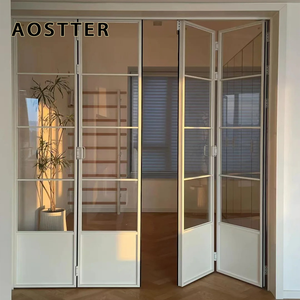
Ultra-quiet bottom-rolling carriage, double tempered safety glazing, and multi-point perimeter compression seals for balcony renovations.
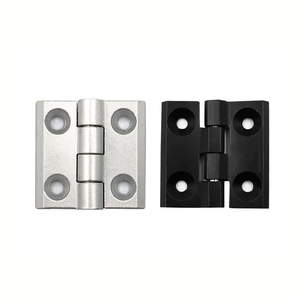
Industrial-grade 2020-5050 aluminium extrusion profile slot hinges delivering extreme shear resistance and coastal anti-corrosion.
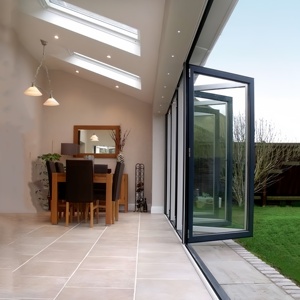
Heavy-duty multi-panel acoustic barrier bi-folding door engineered with flush threshold tracks for seamless indoor-outdoor Moroccan living.
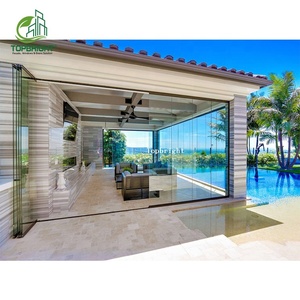
Maximized optical clarity, tempered 10mm/12mm monolithic safety panels, custom concealed top track for high-end luxury villa pergolas.
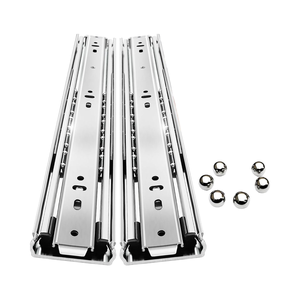
Solid ball-bearing cold-rolled steel rails with electro-zinc plating, ideal for commercial cabinetry and heavy window-integrated compartments.
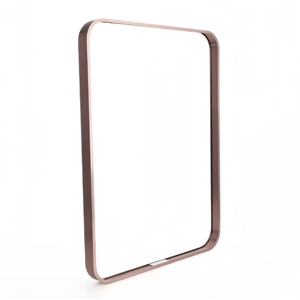
Custom surface-treated high-tensile alloy sections with Class 20 micron anodizing, resistant to UV degradation and saline pitting.
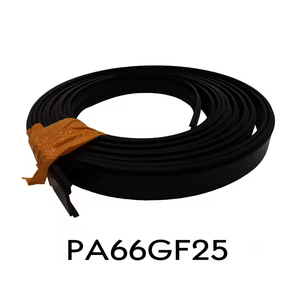
CE-certified 25% glass-fiber reinforced virgin nylon barrier strips. Low thermal conductivity (≤ 0.3 W/m·K) to stop Moroccan summer heat soak.
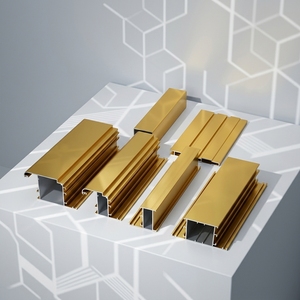
Structural mill-finish and powder-coated extruded aluminium framing profiles, engineered for severe wind loads and water-tight sealing.
Villas and luxury seaside residential towers fronting the Atlantic Ocean demand heavy structural profiles fabricated with 6063-T5 / 6063-T6 marine-grade aluminium alloys. Airborne maritime chloride induces accelerated electrolytic corrosion and surface pitting on standard finishes. Our fenestration packages utilize a minimum 20-micron Qualanod architectural anodization or Qualicoat Class 2 certified PVDF fluorocarbon coatings capable of withstanding over 1,000 hours of continuous acetic salt spray testing without micro-fissuring.
In interior regions, ambient temperatures regularly swing from daytime peaks exceeding 46°C to nocturnal drops below 14°C. Non-thermal windows conduct tremendous heat into interiors, skyrocketing HVAC power consumption. Our PA66 GF25 polyamide thermal break profiles decouple interior and exterior aluminium chambers, preventing thermal bridging. Paired with double-glazed low-emissivity (Low-E) solar-control glass filled with 90% Argon gas, our assemblies reduce infrared heat ingress while preserving visible light transmission.
The Northern littoral corridor along the Strait of Gibraltar experiences erratic gusts of high wind velocity (the "Chergui"). Window framing must possess high moment of inertia ($I_x$) mullion structural reinforcements to avoid excessive deflection under cyclic wind pressures of up to 2400 Pa (Class C5 wind load). Conversely, high-altitude installations in the Middle Atlas require deep glazing pockets capable of supporting triple-glazed argon units with tempered laminated glass to resist winter freezing.
Strategic modernization across urban hubs and national sustainability mandates are transforming architectural fenestration specifications.
The Moroccan Agency for Energy Efficiency (AMEE) is tightening enforcement of the Thermal Regulation of Construction in Morocco. Projects are now mandated to meet specific thermal transmittance coefficients ($U_w$) across Morocco's 6 designated climatic zones. Contractors are systematically transitioning away from raw cold-bridge profiles toward certified thermal break systems.
Contemporary residential architecture in Casablanca Finance City (CFC) and luxury private compounds in Marrakech’s Palmeraie are shifting toward floor-to-ceiling panoramic sliding panels. Clients demand interlock sightlines as narrow as 20mm to 25mm with fully recessed floor tracks, maximizing sightlines while holding multi-ton glass units effortlessly.
With urbanization rapidly accelerating along Casablanca's Corniche and Rabat’s metropolitan center, acoustic comfort has become a critical marketing pillar for tier-one developers. The demand for laminated double-glazing with acoustic PVB interlayers integrated into multipoint-locking tilt-and-turn windows has grown over 45% year-on-year.
Direct maritime container shipping from our deep-water export facilities to Tanger Med Hub and Casablanca Port provides Moroccan developers with competitive pricing, predictable 18–25 day maritime transit, and seamless customs transit through the Moroccan Single Window (PORTNET).
A side-by-side engineering evaluation comparing traditional non-thermal Moroccan joinery with our CE-certified architectural fenestration platforms.
| Performance Characteristic | Standard Non-Thermal Extrusions | Our CE Thermal Break 65 Platform | Our Heavy-Duty 80+ Luxury Villa Series |
|---|---|---|---|
| Thermal Transmittance ($U_w$) | ≥ 5.2 W/m²·K (Severe bridging) | 1.8 - 2.2 W/m²·K (RTCM Approved) | ≤ 1.4 W/m²·K (Passive Villa Standard) |
| Thermal Barrier Core | None (Monolithic solid web) | PA66 GF25 Polyamide (14.8mm – 24mm) | Multi-cavity PA66 GF25 with Aerogel insert |
| Air Permeability (EN 12207) | Class 2 (Significant air drafts) | Class 3 / Class 4 (High airtightness) | Class 4 (Hermetically sealed EPDM co-extrusion) |
| Water Tightness (EN 12208) | Class 3A (200 Pa limit) | Class 7A – 9A (600 Pa storm pressure) | Class E900 (900 Pa cyclonic hurricane barrier) |
| Wind Load Resistance (EN 12210) | Class B2 (Deflection under load) | Class C4 (High-velocity Atlantic resistance) | Class C5 (Engineered internal steel tie-bars) |
| Acoustic Attenuation ($R_w$) | 22 – 26 dB (Audible exterior noise) | 35 – 38 dB (Commercial acoustic comfort) | 42 – 48 dB (Resort luxury acoustic rating) |
| Surface Protection Life | 3–5 Years (Coastal oxidation risk) | Qualicoat Class 2 / 15-Year Warranty | PVDF Triple-Coat Fluorocarbon (25-Year Marine) |
Delivering precision, accountability, and engineering rigour from CAD review to container discharge at Moroccan ports.
We do not maintain static inventories of standard-sized frames. Every single window opening, sliding balcony door, and curtain wall module is custom-fabricated precisely to your architect's schedule and structural shop drawings, avoiding site alterations or masonry adjustments on your Moroccan project.
Our workshop leverages multi-head digital CNC machines ensuring dimensional tolerances within ±0.5mm. Miters receive pneumatic corner cleating infused with two-part polyurethane structural adhesive (P-Glue) to prevent water ingress and corner sagging under heavy double-glazed acoustic sash loads.
Before packing, 100% of operable units undergo trial assembly. Glazing squareness, roller glide smoothness, weather-strip compression, and handle locking cylinders are systematically tested. Detailed high-definition photographic dossiers and QC checklists are provided prior to container sealing.
Ocean freight demands unyielding cargo protection. Frames are shrink-wrapped in scratch-resistant peelable films, protected with hardened cellular corner buffers, and strapped in fumigated solid plywood crates. Every bundle features individual Opening IDs keyed directly to approved architectural schedules.
Our engineering office works directly with your consulting engineers (Bureaux d’Études Techniques - BET) in Morocco. We provide comprehensive AutoCAD cross-sections, structural deflection analyses, glass stress certifications, and 3D BIM models ready for integration into Revit workflows.
We bridge the physical distance through exhaustive shop drawings that detail perimeter expansion joints, flashing membranes, thermal break alignment, and shim placements. On major developments, we offer technical oversight teams to supervise Moroccan installation crews.
Essential guidance for developers, architects, and procurement teams importing high-grade architectural aluminium into the Kingdom of Morocco.
Morocco’s Règlement Thermique de Construction au Maroc specifies thermal transmittance ($U_w$) limits based on climate zones 1 through 6. Our 65mm and 75mm thermally broken window platforms integrate PA66 GF25 polyamide barriers and Argon-filled Low-E double glazing, achieving test-bench $U_w$ values ranging between 1.4 and 1.8 W/m²·K. These values comfortably satisfy or exceed municipal permit requirements across all Moroccan regions.
We deliver a full Moroccan customs documentation bundle, including the Bill of Lading (BL), Commercial Invoice, Detailed Packing List organized by opening tags, Certificate of Origin (COO), and factory CE conformity declarations (EN 14351-1). Where required by Moroccan customs inspection agencies (such as Bureau Veritas or SGS under the Verification of Conformity program), we coordinate pre-shipment inspection certificates.
Yes. For coastal properties in Casablanca, Rabat, or Taghazout, we offer Class 20/25 micron anodized surface finishes (tested to ISO 7599) and Qualicoat Seaside certified powder coatings. We also provide sublimation heat-transfer architectural wood-grain finishes that reproduce oak, walnut, or teak aesthetics while providing the structural stability and rot-free benefits of industrial aluminium.
Upon final sign-off of shop drawings and approval of physical color/corner swatches, custom manufacturing requires approximately 25 to 35 business days depending on order volume. Ocean freight from our maritime facilities to Tanger Med Hub or Casablanca Port typically takes between 18 and 24 days on direct shipping lines, ensuring dependable milestones for project managers.
We support both methods based on contractor preference and hoist conditions at the project site. Standard casement, tilt-and-turn, and medium sliding panels can be delivered pre-assembled and factory glazed under strict quality-controlled siliconing conditions. For oversized panoramic sliding glass units or curtain walls exceeding container door heights, frames are shipped knocked down (CKD) alongside precut, marked insulated glass units.
Our exterior windows and doors feature three-tier EPDM synthetic rubber continuous perimeter gaskets and strategically staggered drainage channels equipped with exterior non-return flapper valves. This equalizes pressure within the internal profile drainage chamber, preventing wind gusts up to 900 Pa from driving rainwater back through the system into interior finishes.
Forward your architectural drawings, elevation schedules, or tender documents to our fenestration engineering team. We deliver complete shop submittals, glass thermal calculations, and factory-direct export proposals within 48 hours.