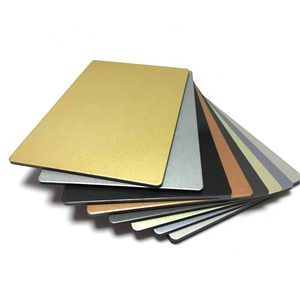
Designed and precision-machined to fulfill strict tropical endurance specifications across the Indonesian archipelago, from Jabodetabek high-rises to Kalimantan industrial zones.
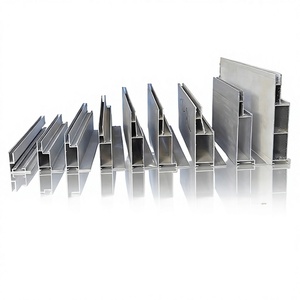
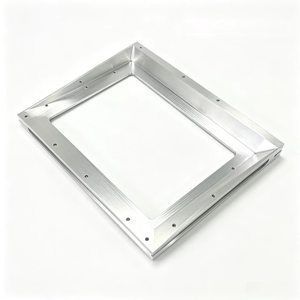
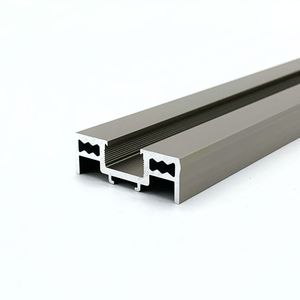
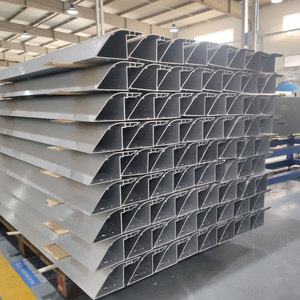
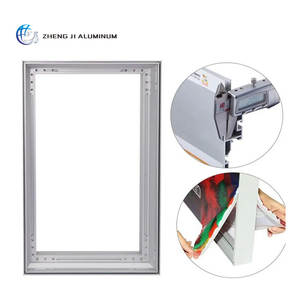
The Republic of Indonesia represents Southeast Asia’s most dynamic market for extruded aluminium frames, architectural glazing systems, and modular industrial profiles. Driven by accelerated infrastructure deployment, the historic capital relocation to Nusantara (IKN) in East Kalimantan, and massive expansions in high-tech industrial parks across West Java and Central Java, the country’s demand for high-performance engineered aluminium alloys has entered an era of rapid technical transformation. However, procuring extrusion systems for Indonesia poses substantial operational and metallurgical challenges. Specifying procurement teams must account for equatorial solar irradiance, average relative humidity levels exceeding 80%, coastal chloride exposure (ISO 9223 C4/C5 marine atmospheric classifications), and strict structural safety requirements under Indonesian National Standards (SNI).
As a seasoned manufacturing partner and direct export supplier, we combine high-tonnage extrusion lines (up to 10,000 metric tons) with integrated surface treatment facilities and deep CNC machining centers. Our export engineering protocols are aligned specifically with the technical frameworks established by Indonesian civil engineering consultants, the Ministry of Public Works and Public Housing (PUPR), and commercial fabricators across Jakarta, Surabaya, Medan, and Balikpapan.
Tailored engineering answers to the distinct microclimates, seismic considerations, and commercial requirements of the archipelago.
The construction of Indonesia’s new administrative capital mandates stringent green building criteria (Greenship GBCI standards) and fire safety resilience. Our systems supply thermally broken structural façades, unitized curtain wall profiles, and Class A2 fireproof composite cladding engineered for high structural wind resistance, rapid site assembly, and long-term carbon minimization.
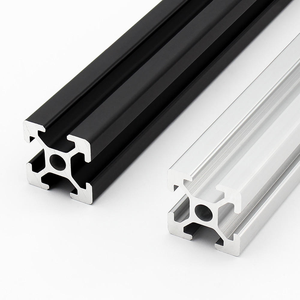
Indonesian industrial corridors house expanding automotive, semiconductor, and FMCG manufacturing assembly lines. Our modular 1515, 4040, and 4590 T-slot extrusion systems empower factory plant engineers to rapidly deploy cleanroom enclosures, automated robotic workstations, ergonomic conveyor guides, and protective safety cell perimeters without welding.
Island resorts and cliffside luxury properties endure high winds, intense UV indices, and saline marine air. Our 40mm slim sliding doors, motorized louvred pergolas, and floor-to-ceiling bi-folding systems deliver maximum glass-to-frame ratios while preventing corrosion through marine-certified Qualanod architectural anodizing and high-grade stainless components.
Three primary drivers are reshaping how Indonesian structural engineers, developers, and industrial procurement managers specify aluminium frame imports:
1. Stringent Energy Transition & Green Building Regulations (OTTV Standards): Under Governor Regulations across Jakarta and new PUPR building directives, commercial structures must strictly limit Overall Thermal Transfer Value (OTTV < 35 W/m²). Standard single-pane non-thermal extrusions fail this threshold. The market has rapidly converted to thermally broken multi-cavity aluminium framing with triple-glazed Low-E argon assemblies that isolate indoor conditioned spaces from ambient 34°C tropical heat.
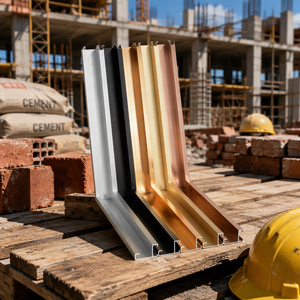
2. Corrosion Mitigation in Maritime Microclimates: Given Indonesia’s archipelagic coastline exceeding 54,000 kilometers, coastal urban zones encounter continuous chloride salt fog. Standard mill finishes or commercial-grade 8µm anodizing succumb to filiform corrosion within 18 months. Export specifications for our Indonesian buyers enforce Qualanod Class I (18-25µm) anodizing or Qualicoat Class 2 / Class 3 super-durable thermosetting powders with salt spray resistance exceeding 3,000 hours.
3. Downstream CNC Pre-Fabrication vs. High On-Site Labor Risks: Rising Indonesian construction labor costs and tight completion schedules on turn-key projects have made traditional on-site frame fabrication obsolete. Contractors increasingly demand fully processed, CNC pre-machined profiles featuring cut-to-length mitered corners, punched water-weep slots, pre-drilled hardware mortises, and barcoded part numbers matching digital BIM schedules.
| Alloy & Temper | Yield Strength (Rp0.2) | Surface Treatment Standard | Target Indonesian Environment | Primary Sector Application |
|---|---|---|---|---|
| 6063-T5 / T6 | 160 – 190 MPa | Qualanod 15–20µm / Qualicoat Cl. 2 | Urban Tropical & Inland (Jakarta, Bandung) | Slim Doors & Casement Glazing |
| 6061-T6 | 240 – 275 MPa | Hard Anodized 25µm / Chromate | Marine & Petrochemical (Batam, Cilegon) | CNC Electronic Mounting & Brackets |
| 6005A-T6 | 215 – 250 MPa | Electrodeposition / PVDF 3-Coat | High Wind & Coastal (Bali, Balikpapan) | Heavy Structural Curtain Wall Mullions |
| 6082-T6 | 260 – 310 MPa | Satin Matte Anodized 15µm | Automotive & Industrial (Cikarang, Kendal) | Modular Machine Frames & Automation Jigs |
| Alloy 3003 / 5005 (ACP) | 130 – 175 MPa | Kynar 500 PVDF (70% resin min) | All Equatorial High UV Zones | A2 Fireproof Facades & High-Rise Cladding |
Cross-border building envelope procurement requires uncompromised technical accountability, complete drawing traceability, and direct ocean-logistics protection.
Before casting extrusion dies or initiating CNC programs, our structural engineering team validates wind load deflection, corner joint moment capacity, thermal expansion coefficients, and glass weight distribution against your project's architectural schematics.
Utilizing high-speed 4-axis and 5-axis CNC machining centers spanning up to 6.5-meter worktables, we achieve micron-accurate drilling, tapping, slotting, and miter-cutting. Every component arrives installation-ready with zero on-site manual modification required.
Quality inspection runs through each production phase: spectral alloy composition testing, extrusion wall thickness checks, coating film thickness (DFT) measurements, cross-hatch adhesion validation, and pre-assembly trial mock-ups accompanied by comprehensive QC photo submittals.
Transit across the South China Sea exposes cargo to high maritime humidity. Every extrusion profile is protected with peelable laser film, interleaved with pearl cotton foam, enclosed in corner impact guards, and secured within fumigated plywood crating or heavy-duty steel A-frames.
Streamline site installation across Jakarta or Surabaya towers. Every single cased unit, bundle, and machined frame carries high-durability QR barcodes and structural opening references corresponding directly to approved architectural shop submittals.
As an authorized exporter under the ASEAN-China Free Trade Area (ACFTA), we issue official Form E Certificates of Origin. This documentation allows qualified Indonesian importers to clear cargo at Port of Tanjung Priok and Tanjung Perak under 0% preferential tariffs.
Clear, definitive technical and commercial answers regarding standards, customs documentation, shipping routes, and fabrication tolerance.
Send your structural specifications, CAD architectural drawings, or custom extrusion requirements. Our export engineering team provides comprehensive structural review, quotation breakdowns, and Form E tariff guidance within 24 hours.