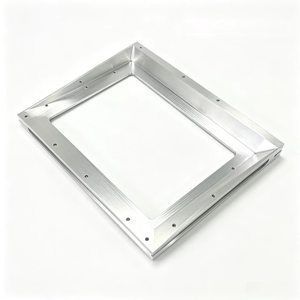
Multi-axis milled 6061-T6 structural brackets engineered for robotics and enterprise electronic equipment. Complete with helicoil thread inserts and conductive chemical conversions.
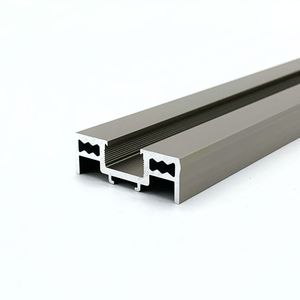
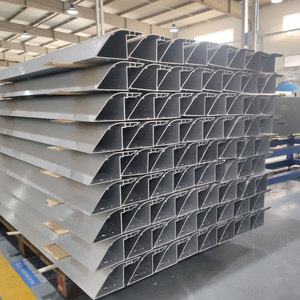
Heavy cross-section structural profiles optimized for factory automation safety perimeters, gantry rails, machine framing, and high dynamic load vibration dampening.
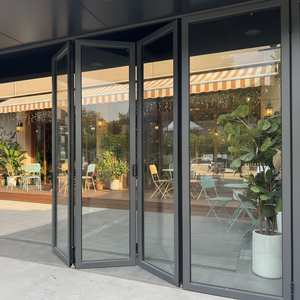
Polyamide PA66 thermal barrier framing designed for external balconies. Expands usable living volume with weather-sealed acoustic gaskets and smooth multi-wheel hinges.
Engineering Authority: Precision Manufacturing of Custom Aluminium Framing
Modern engineering projects demand structural framing that transcends generic commercial aluminum profiles. As global construction, industrial automation, and high-tech equipment manufacturing push the boundaries of structural efficiency, China's precision aluminum manufacturing ecosystem has transitioned from raw mass production into micron-level deep processing and specialized metallurgical alloying. When sourcing aluminum frames from China, international engineering teams must scrutinize the entire lifecycle: chemical composition analysis of virgin aluminum billets, extrusion die dynamics, artificial thermal aging regimens (T5/T6), multi-axis CNC secondary finishing, and advanced anti-corrosion barrier coatings.
Metallurgical Chemistry and Extrusion Dynamics
The structural integrity of an aluminum frame begins at the smelting furnace. Sub-standard extrusions frequently employ remelted contaminated scrap, yielding elevated zinc and iron impurities that cause micro-fissuring, erratic thermal shrinkage, and internal structural voids. Our precision extrusions utilize 100% prime A00 primary electrolytic aluminum ingots (Al content ≥ 99.70%), precisely formulated with trace silicon and magnesium to create standard-conforming 6063, 6061, or 6005-T6 alloys. By carefully controlling the cooling exit temperature during the press stroke and utilizing nitrogen-shielded die technologies, our manufacturing lines maintain homogenous grain boundary structures, eliminating internal stress concentrations across complex geometric profiles.
Multi-Cavity Extrusion Dies
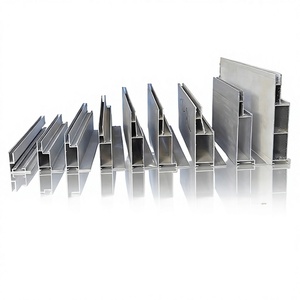
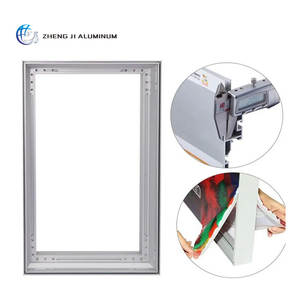
CAD-optimized die flow geometry ensuring uniform wall thickness tolerances within ±0.08mm across thin-wall structural channels, eliminating profile warp.
CNC Deep Processing
Integrated 3-axis, 4-axis, and 6.5-meter long-bed 5-axis CNC machining centers performing high-speed drilling, slotting, tapping, and miter joining under robotic automation.
Surface Chemical Resistance
Architectural QUALICOAT-approved powder coatings, 20µm Class-I anodization, and 3-coat fluoropolymer (PVDF) barriers engineered for extreme salt-spray marine exposure.
Architectural Fenestration vs. Industrial T-Slot Profiles
Engineers and procurement managers must distinctly evaluate two core functional categories of framing systems:
1. Architectural Fenestration & Envelope Framing: These systems (e.g., slim sliding door frames, multi-fold balcony systems, and curtain walling) require rigorous thermodynamic calculations. Modern building codes penalize thermal bridging; therefore, our architectural frames integrate high-performance polyamide PA66 GF25 thermal insulating strips mechanically crimped between interior and exterior aluminum profiles. This configuration optimizes thermal conductivity (U-values below 1.2 W/m²·K) while dampening external acoustic transmission up to 42 dB.
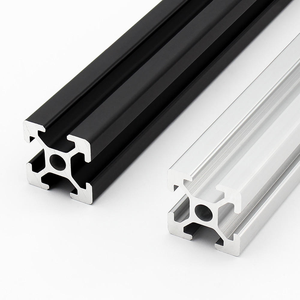
2. Industrial Modular T-Slot Framing: Predominantly utilized in factory automation, cleanrooms, and robotic workcells, T-slot profiles (such as 1515, 2020, 4040, and 8080 structural series) prioritize high moment of inertia, structural modulus of elasticity, and standard slot dimensional uniformity. Precision extruded slots eliminate the need for thermal welding, allowing international facilities to deploy modular workstations, protective guarding, and gantry carriages with bolt-and-bracket mechanical fasteners in hours instead of days.
Manufacturing Prowess
Factory Infrastructure & Technical Capabilities
Direct from our high-capacity production facilities, here is how our manufacturing infrastructure guarantees technical consistency from raw ingot to crated shipment.
Tooling & Mold Design
In-house precision mold engineering studio yielding rapid new-profile prototyping within 7 to 10 working days, backed by mold life maintenance guarantees.
Extrusion Tonnage Range
Operating a fleet of 600-ton to 10,000-ton hydraulic extrusion presses capable of pushing profile widths up to 650mm and lengths exceeding 14 meters.
Staged QA/QC Inspection
Three-phase optical spectrometry, tensile modulus verification, eddy-current coating thickness validation, and 100% pre-assembly mockups before packaging.
Export Packing Protocol
Scratch-resistant micro-perforated film, expanded EPE pearl corner protectors, fumigated solid timber crating, and unit-level CAD labeling for rapid on-site staging.
Market Outlook 2026-2030
Future Sourcing & Procurement Trends
Anticipate architectural changes, circular economy mandates, and manufacturing evolutions shaping the aluminum frame industry over the next five years.
Low-Carbon & Recycled Green Aluminium
Global CBAM (Carbon Border Adjustment Mechanism) and ESG benchmarks are accelerating demand for certified green aluminum extruded with renewable hydropower. Procurement teams are specifying alloy traceability verifying embodied carbon footprints below 4.0 kg CO2/kg Al, accompanied by verified Environmental Product Declarations (EPD).
Ultra-Slim Visible Sightlines & Concealed Sashes
In high-end architectural and commercial developments, minimal frames (sightlines under 25mm) with structural flush thresholds and concealed motorized drives are replacing bulky profiles. This requires extruders to provide higher structural alloy tempers (such as 6063A-T66) to handle extreme wind shear forces on triple-glazed oversize spans.
Pre-Fabricated "Plug-and-Play" Modular Framing
Due to soaring jobsite labor costs across North America, Europe, and the Middle East, overseas buyers are moving away from raw linear extrusion bars. Procurement is overwhelmingly shifting toward pre-notched, pre-punched, and pre-machined kit assemblies that reduce field labor hours by over 60% through standardized quick-locking hardware.
Procurement Knowledge Base
Frequently Asked Questions for B2B Aluminium Frame Sourcing
Critical answers addressing commercial, engineering, and logistics variables encountered when importing aluminum frames from China.
What parameters are required for an accurate engineering quote?
To produce an authoritative structural proposal and mold/extrusion quotation, share your detailed 2D/3D CAD drawings (DWG, DXF, or STEP format), required aluminum alloy type and temper (e.g., 6063-T5 vs. 6061-T6), surface finish specifications (anodizing micron depth, RAL powder coating, PVDF), estimated annual quantity, and target delivery port.
Why choose 6063-T6 over 6061-T6 for custom aluminum frames?
6063 is formulated primarily for architectural framing and delicate extrusions where pristine surface cosmetics, high corrosion resistance, and intricate multi-void shapes are essential. 6061 exhibits roughly 25-30% higher tensile strength and yield stress, making it the preferred choice for heavy industrial structures, structural machine frames, and high-load CNC-machined bracket hardware.
How do you prevent surface scratching and distortion during transit?
Export orders follow stringent packing protocols: individual profiles are enclosed in high-tack electrostatic peeling film, separated by non-abrasive interleaving craft paper, packaged in reinforced corrugated bundles, and securely packed inside moisture-sealed, fully fumigated marine-grade plywood crates equipped with heavy shock-absorbent timber skids.
Can you match custom architectural colors and dual-tone finishes?
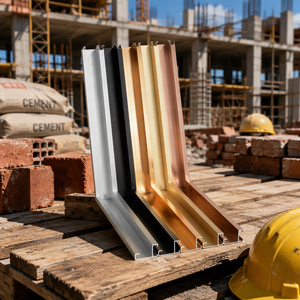
Yes. Utilizing advanced horizontal and vertical automated powder-coating lines, we match standard RAL, Pantone, and custom master lab swatches. On thermally broken framing profiles, our dual-head insertion and crimping technology allows independent interior and exterior color combinations (e.g., matte black powder coat exterior with natural warm wood-grain interior).
Accelerate Your Project With Custom Aluminum Engineering
Whether you require standard 1515/4040 industrial T-slot inventory, specialized slimline architectural sliding profiles, or precision 5-axis CNC-milled electronic enclosures, our manufacturing team is prepared to review your engineering schedule.