China Top Aluminium Sash Windows Manufacturers & Manufacturer
B2B Architectural Procurement White Paper: High-Precision 6063-T6 Extrusions, Multi-Chamber Polyamide Thermal Barriers, and Enterprise OEM/ODM Fenestration Systems.
Direct Manufacturing Lineup
Featured Architectural Sash & Industrial Systems
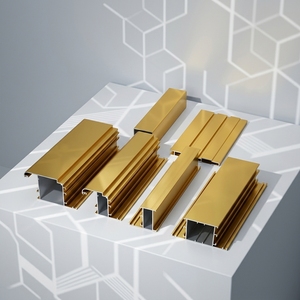
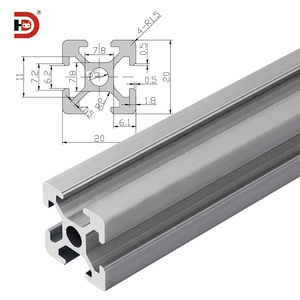
Standardized die catalogs and tailored custom cross-sections engineered to EN 12020-2, AAMA 2605, and ISO 9001 standards for export projects worldwide.
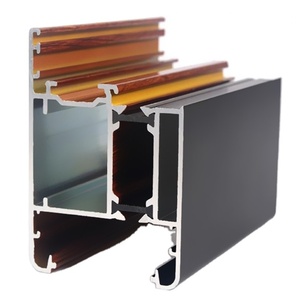
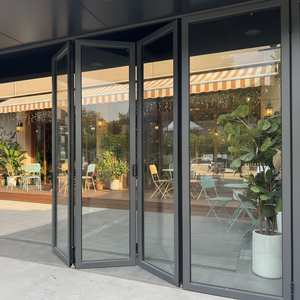
Heavy-gauge aluminum folding system engineered for extreme positive and negative wind pressures in coastal and high-rise apartment envelopes.
Enterprise Strengths
Why Tier-1 Contractors Rely on Our Manufacturing Plants
By pairing vertical extrusion lines with CNC-driven fabrication, we bridge the gap between custom architectural design and industrial production at scale.
Alloy Formulation & Extrusion
We cast primary 6063, 6061, and 6005A billets under continuous spectrographic control. Multi-stage aging furnaces achieve reliable T5/T6 tempers with tensile strength exceeding 205 MPa and yield strength over 180 MPa.
±0.15mmExtrusion Tolerance
6063-T6Standard Structural Grade
Finishes & Weather Protection
Equipped with vertical GEMA powder coating plants, anodizing baths up to 25 microns (Class 1), and liquid fluoropolymer PVDF systems meeting AAMA 2605 specs to guarantee 20+ years of color stability against UV radiation.
4000+ HrsSalt Spray Test Resistance
AAMA 2605Fluoropolymer Spec
Turnkey Envelope Integration
From single-hung and double-hung sash casements to unitized curtain wall assemblies, our fabrication shops handle 5-axis CNC machining, corner crimping with dual-compound polyurethanes, and pre-glazed export packing.
100%Dry-Fit Mockup Tested
IPPCISPM-15 Crating Compliance
Engineering Specifications
Aluminium Sash & Glazing Performance Benchmarks
Standard engineering parameters verified under international testing frameworks (ASTM, EN, and AS2047) across profile depth, thermal values, and physical envelope resistance.
System Category
Alloy & Temper
Thermal Break Tech
Acoustic (Rw / STC)
Wind Load (ASTM E330)
Water Tightness (EN 12208)
Thermal U-Value (Uw)
Commercial Thermal Sash
6063-T6 Architectural
24mm–34mm PA66-GF25
38 dB to 44 dB
± 3500 Pa (Design)
Class 9A (600 Pa)
1.3 – 1.6 W/m²·K
Slim-Sightline Sliding Sash
6063-T5 High-Tensile
Multi-Chamber Polyamide
35 dB to 41 dB
± 2800 Pa (Design)
Class 7A (300 Pa)
1.5 – 1.8 W/m²·K
Heavy Architectural Bifold
6061-T6 Structural
30mm Technoform Strip
36 dB to 42 dB
± 3200 Pa (Design)
Class 8A (450 Pa)
1.4 – 1.7 W/m²·K
Unitized Curtain Wall
6005A / 6063-T6
Dual Continuous EPDM
42 dB to 48 dB
± 5000 Pa (Design)
Class E1200 (1200 Pa)
1.1 – 1.4 W/m²·K
Passive House Grade Casement
6063-T6 Deep Chamber
39mm Aerogel / PA66
42 dB to 46 dB
± 4000 Pa (Design)
Class 9A (600 Pa)
0.79 – 1.0 W/m²·K
Industry Foresight
Future Procurement Trends in Aluminium Glazing (2025–2030)
Shifting regulatory standards, decarbonization goals, and smart construction workflows are transforming how international developers source fenestration products from China.
1. Low-Carbon Hydro-Aluminium & EPD
Global procurement directives (such as the EU Carbon Border Adjustment Mechanism and US Buy Clean standards) demand verifiable Environmental Product Declarations (EPDs). Leading Chinese extrusion lines are converting to hydro-powered, low-carbon billet casting, cutting embedded CO₂ from 16 kg CO₂/kg Al down to under 4 kg CO₂/kg Al.
2. Ultra-Slim Sightlines & Concealed Sashes
Modern architectural tastes favor nearly invisible framing profiles. Next-generation sash windows conceal moving frames entirely behind structural jambs and heads. This requires high-moment 6063-T6 cross-sections that accommodate triple-laminated Low-E insulated glass units without sagging or torsional flexing.
3. BIM-Driven CAD/CAM Customization
Overseas procurement is abandoning static PDF schedules in favor of IFC-format BIM integration. Architectural models link directly into factory 5-axis CNC cutters, enabling automatic notch preparation, drainage channel milling, and hardware pocket routing with zero manual drafting conversions.
4. Smart Building & Mechatronic Hardware Integration
Motorized sash mechanisms, hidden magnetic contact sensors, and micro-actuators integrated into the window rebate are now standard in high-end projects. Modern aluminum window systems run concealed electrical raceways directly through thermally broken chambers without compromising overall U-values.
5. Fully Unitized, Pre-Glazed Export Cages
Rising jobsite labor costs across North America, Europe, and Australasia are driving demand for pre-glazed, factory-sealed fenestration units. Instead of shipping knocked-down (KD) frames, manufacturers provide fully gasketed, pre-tested frames in heavy-duty sea freight crating designed for rapid crane offloading on site.
Quality Engineering
Evolution of Aluminium Sash Window Production
How advanced metallurgy, precision die engineering, and automated corner joins deliver dependable structural performance across demanding climatic zones.
Extrusion Die Nitriding & Flow Dynamics
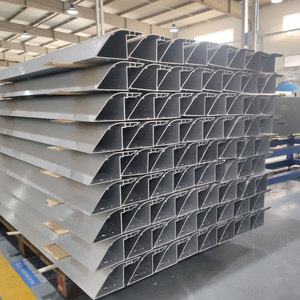
Modern sash manufacturing starts with Computer-Aided Engineering (CAE) flow simulations of aluminum billets moving through multi-port porthole dies. Nitriding die bearing surfaces to 1000+ HV extends die life and guarantees consistent wall thickness across complex, hollow multi-cavity sash profiles.
Mechanical Corner Crimping & Epoxy Infill
Traditional screw-fastened sash corners are vulnerable to sagging and water infiltration. Current best practice uses heavy hydraulic corner crimpers that fold extruded aluminum cleats into internal profile chambers, coupled with automated two-component epoxy injection for airtight, water-sealed joints.
Continuous EPDM Gasket Vulcanization
Rather than using cheap PVC strips, premium aluminum sash units rely on continuous co-extruded EPDM gaskets with vulcanized 90-degree corner joints. This design resists shrinkage, ozone degradation, and wind-driven rain penetration up to 600 Pa (Class 9A under EN 12208).
Procurement Answers
Frequently Asked Questions for B2B Importers
Clear, detailed engineering and logistics answers to help architects, quantity surveyors, and project developers make informed sourcing decisions.
What are the key technical differences between 6063-T5 and 6063-T6 aluminum alloys for sash windows?
6063-T5 is cooled from an elevated temperature shaping process and artificially aged. It offers a typical tensile strength of roughly 150–160 MPa and a yield strength of 110 MPa, making it easy to form into intricate shapes with clean surface finishes. In contrast, 6063-T6 undergoes solution heat treatment followed by artificial aging. This increases tensile strength to over 205 MPa and yield strength to 170–180 MPa, delivering greater structural rigidity. For high-rise sash windows, oversized picture combinations, or areas prone to coastal wind shear, T6 temper is specified to resist deflection and wind pressure without adding bulky profile depth.
How do PA66-GF25 thermal break strips prevent condensation and optimize U-values?
Aluminum has a high thermal conductivity of approximately 160–200 W/m·K. Without an insulation barrier, indoor heat rapidly escapes outdoors in cold weather, causing the interior profile to chill and create condensation. PA66-GF25 is a polyamide 6.6 polymer reinforced with 25% short glass fibers, yielding a low thermal conductivity of roughly 0.3 W/m·K while matching aluminum's coefficient of thermal expansion (2.3 × 10⁻⁵ /K). This shared expansion rate prevents de-crimping, shear stress, and water leaks across extreme seasonal temperature swings. Combined with multi-cavity chambers and Low-E argon insulated glass units, it drives overall window U-values (Uw) down to 1.1–1.5 W/m²·K.
What documentation and shop drawings are required prior to tooling custom extrusion dies?
Custom die manufacturing begins with an approved 2D CAD cross-section (DWG/DXF) showing nominal dimensions, tolerances, wall thicknesses, and critical functional zones (e.g., screw ports, gasket pockets, thermal break knurls). A 3D STEP or IGES model is also reviewed to confirm compatibility with matching hardware. The factory's technical department issues an official Die Extrusion Submittal Drawing detailing perimeter calculations, weight-per-meter ratios, alloy callouts, die line orientations, and finish allowances (accounting for ~60–80 microns of powder coat thickness). Die cut-outs proceed only after the client's engineering lead countersigns this submittal.
How are aluminum sash windows packed and protected to prevent sea-freight damage and galvanic corrosion?
Ocean transport exposes fenestration products to high humidity, temperature swings, and salt-laden air. Finished profiles receive low-tack protective film to safeguard against scratches during handling. Assemblies are fitted with reinforced plastic corner protectors, wrapped in moisture-barrier bubble film, and secured inside heat-treated, fumigated plywood crates compliant with ISPM-15. Desiccant packs inside the crates absorb container moisture to prevent white oxidation on exposed aluminum edges. Units are organized and packed by installation floor or elevation tag matching the site's approved drawings.
What hardware brands and multi-point locking systems can be incorporated on your production lines?
Our CNC machining centers are calibrated to standard European Euro-groove (13.4mm and 15.4mm) and American sash geometries. We source and install hardware from industry-leading European manufacturers (including Siegenia, Roto, GU, and Hoppe) as well as premium domestic architectural brands like Kin Long and CMECH. Systems can feature hidden tilt-and-turn hinges, perimeter mushroom-head multi-point espagnolettes, child-safety restrictor stays, and motorized chain actuators wired for BMS (Building Management System) operation.
What quality control protocols apply before container sealing and export dispatch?
Every production batch passes through three QC stages. First, incoming inspection verifies billet composition, tensile properties, and extrusion wall thickness using digital calipers. Second, post-finishing inspection measures coating thickness via magnetic-induction gauges, checks gloss levels, and runs cross-hatch adhesion tests (ISO 2409). Third, assembled units undergo 100% dry-fit mockups to verify diagonal squaring within ±1.5 mm, sash gasket compression, and operating friction. Clients receive an Inspection Certificate and full photo submittal report before freight dispatch.
Request an Architectural Engineering & Cost Estimation Proposal
Send your schedule of openings, CAD elevations, or custom extrusion die concepts. Our fenestration engineers will provide structural calculations, thermal simulations, and volume price breaks within 24 business hours.