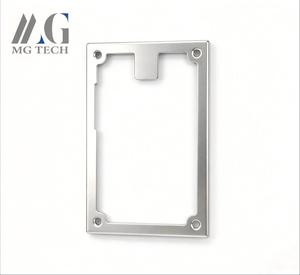

From ultra-slim thermal break structural systems to micron-accurate CNC components, inspect our high-demand profiles fabricated to meet exacting Swiss procurement specifications.
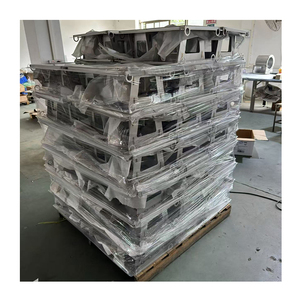
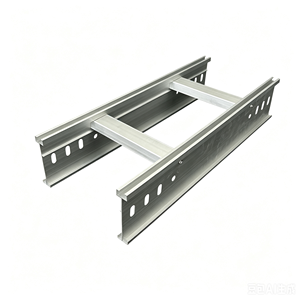
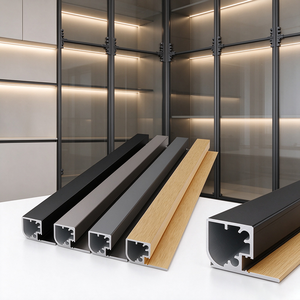
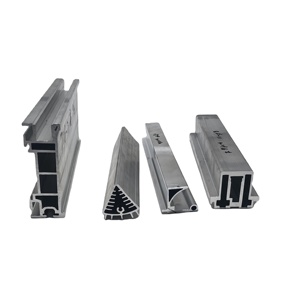
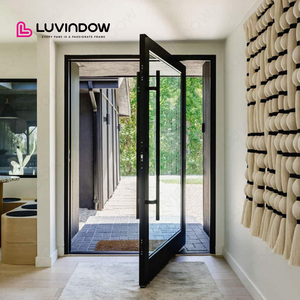
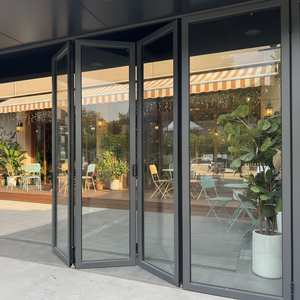
Procuring aluminium profile sections for Swiss industrial and construction frameworks demands an uncompromising standard of metallurgical precision. The Swiss Federal Office of Energy (SFOE) together with the Swiss Society of Engineers and Architects (SIA) impose some of the strictest building envelope guidelines in the world. As developers and facade engineers in Zurich, Basel, and Geneva pivot toward carbon neutrality, generic extrusions no longer suffice.
Our direct-from-factory aluminium manufacturing operations cater directly to Swiss general contractors, facade fabricators, and machinery manufacturers. By pairing high-purity primary aluminium billets (Alloy 6060, 6063, 6005A, and 6082) with high-density polyamide thermal barrier strips (PA66 GF25), we construct custom profile sections capable of achieving Passivhaus and Minergie-P compliance with profile frame U-values (Uf) reaching as low as 0.8 W/(m²K).
Furthermore, Alpine topographies present acute structural challenges: wind load pressures exceeding 1.6 kN/m² in mountainous cantons (Valais, Graubünden) and intense thermal swings between sub-zero winters and high-UV summers. Every cross-section we ship to Switzerland is calibrated for structural inertia (Ix, Iy), high deflection resistance (Class C5 under EN 12210), and water tightness exceeding 1050 Pa (Class E1050).
Inquire Now
Tailored structural extrusions built to conquer extreme Alpine altitudes, rigorous laboratory cleanrooms, and progressive contemporary urban envelopes.
Private luxury chalets and multi-family developments throughout Lucerne, St. Moritz, and Zermatt demand minimal sightlines that endure massive snow pack weights and wind shear.
Basel’s world-leading biotechnology cluster and MedTech manufacturing corridors require profile frames with non-porous surfaces and sterile assembly characteristics.
Civic and commercial developments in Zurich-West and Geneva requiring unitised curtain wall facades and durable infrastructure sections (SBB cable bridges and passenger platforms).
Select the optimal European-standard aluminium alloy for your Swiss structural, precision machining, or aesthetic envelope requirement.
| Alloy & Temper | Tensile Strength (Rm MPa) | Yield Strength (Rp0.2 MPa) | Corrosion Resistance | Typical Swiss Application | Normative Compliance |
|---|---|---|---|---|---|
| EN AW-6060 T6 | 190 - 215 | 150 - 160 | Exceptional (Atmospheric) | Architectural windows, doors, interior glass partition frames | SN EN 755-2 / SIA 343 |
| EN AW-6063 T6 | 215 - 245 | 170 - 190 | High (Seaside / Alpine) | Thermal break facades, villa pivot doors, louvred pergolas | SN EN 12020-2 / Minergie |
| EN AW-6005A T6 | 270 - 300 | 225 - 250 | Very High | Structural curtain wall transoms, railway interiors, solar racking | SN EN 1999-1-1 (Eurocode 9) |
| EN AW-6082 T6 | 310 - 340 | 260 - 280 | High (Industrial Environments) | Heavy automation machinery frames, crane tracks, infrastructure | SN EN 755-2 / DIN EN ISO 9001 |
How Swiss regulatory policies and architectural shifts are transforming the technical parameters of imported aluminium profiles.
Swiss public sector bids and institutional real estate projects frequently mandate Environmental Product Declarations (EPD). We offer low-embodied carbon extrusions produced from circular scrap matrices with certified carbon footprints below 4.0 kg CO₂ per kg aluminium.
Inquire NowWith changing winter wind dynamics and heavy wet snow occurrences in higher elevations (Ticino, Bernese Oberland), facade contractors demand heavier wall thickness tolerances (EN 12020-2 precision) to negate thermal expansion buckling and structural deflection under 2.5 kN/m² loads.
Inquire NowExtremely high labour and installation costs in Switzerland make on-site adjustments prohibitively expensive. Swiss buyers increasingly avoid raw stock profiles in favour of fully fabricated, CNC-milled, drill-tapped, and pre-crimped sections that install rapidly on site.
Inquire NowImporting aluminium building envelopes and industrial components into Switzerland demands total clarity, strict certification, and meticulous logistics handling.
Every profile section is cross-checked against your shop drawings, finite element wind calculations, and thermal bridge isotherms prior to die extrusion, avoiding expensive on-site rework.
Incoming billet spectrometer verification, automated dimension caliper checks at extrusion exit, ultrasonic weld inspection, and film thickness coating tests according to Qualicoat Class 2 rules.
Profiles are interleaved with peelable surface protection films, padded with closed-cell foam, and secured inside solid treated timber export crates labelled with precise opening reference IDs.
Authoritative technical guidance addressing Swiss customs clearance, metallurgical testing, SIA tolerances, and thermal barrier verification.
Yes. All architectural and industrial profile extrusions are produced according to European standard EN 755 (precision tolerances to EN 12020). For facade and window frameworks, our products comply with SIA 343 (Windows and French Windows) and SIA 331 specifications for air permeability, water tightness, and structural deflection under wind loads.
Yes. We integrate multi-chamber polyamide thermal barrier strips (PA66 GF25) ranging from 24mm to 42mm in depth. Paired with triple low-E argon-filled glazing (Ug 0.5-0.6 W/(m²K)), our complete profiles achieve frame U-values (Uf) as low as 0.8 to 1.1 W/(m²K), easily qualifying for Minergie-P and Passivhaus project requirements.
We provide full export-ready logistics packages, including certified Commercial Invoices, Packing Lists with opening references, Bill of Lading, and EUR.1 movement certificates / Certificates of Origin. Shipments can be booked CFR/CIF Basel, Zurich, or Delivered At Place (DAP) directly to your fabrication workshop or construction site.
For Swiss applications exposed to heavy road de-icing salts, mountain frost, and UV, we recommend Qualanod Class 2 (20-25 micron) architectural anodizing in natural silver, bronze, or champagne, or Qualicoat Class 2 / Seaside powder coating. Dual-colour finishing (different interior and exterior RAL tones) is fully supported on thermally broken profiles.
Custom profile tooling can be cut in-house within 10 to 15 business days. Our MOQ for custom dies typically starts at 500 kg to 1,000 kg depending on the profile cross-section weight. If initial order volumes exceed 5 metric tons, tool design and die manufacturing charges are entirely credited back to your account.
Every shipment is accompanied by EN 10204 Type 3.1 Inspection Certificates documenting the exact chemical composition from spectrometer analysis, ultimate tensile strength, yield strength, and percentage elongation across all production batches.
Send your CAD profiles, BIM schedules, or system specification briefs directly to our facade and extrusion engineers. We provide comprehensive DFM analysis, tolerance assessments, and CIF Swiss quote turnaround within 48 hours.
Inquire Now