
Precision-extruded, high-inertia architectural envelopes fabricated in China under rigorous ISO 9001 and Qualicoat certifications, fully configured for Chile’s seismic codes (NCh433) and thermal regulations (OGUC Art. 4.1.10).
The construction sector across Chile—from high-density commercial towers in Santiago’s Sanhattan district to luxury beachfront complexes in Viña del Mar and energy-efficient developments in Puerto Montt—is experiencing a profound architectural transformation. Developers, general contractors, and structural engineers in Chile are faced with the demanding task of balancing rigorous seismic resilience standards (Norma Chilena NCh433) with progressive municipal thermal insulation mandates codified under the OGUC (Ordenanza General de Urbanismo y Construcciones, Art. 4.1.10).
As premier Chinese exterior glazing systems manufacturers and direct-fabrication factories, we bridge the gap between heavy industrial manufacturing scale and precise architectural engineering. Historically, Chilean procurement professionals relied on local distributors stocking European profile extrusions at substantial markups and extended supply-chain lead times. Today, partnering directly with our OEM/ODM manufacturing facilities in China provides Chilean real estate developers with structural unitized curtain walls, stick façades, and heavy-duty sliding systems fabricated to bespoke specifications, complete with international laboratory validation, at direct factory economics.
Moreover, the bilateral commercial landscape between Santiago and Beijing offers unique logistical and financial efficiency. Leveraging the China-Chile Free Trade Agreement (Tratado de Libre Comercio China-Chile), our aluminum glazing profiles, tempered insulated glass units (IGUs), and composite panels enter Chilean ports (San Antonio, Valparaíso, and Iquique) under preferential 0% customs tariff treatment (Arancel Cero via Certificate of Origin Form F). This duty exemption, paired with automated CNC fabrication, delivers up to 35% cost optimization over legacy European or North American import channels without compromising structural safety or aesthetic nuance.
Chile spans over 4,200 kilometers of latitude, containing distinct climatic and physical stressors. Our glazing systems are specifically tailored to each regional zone.
Subject to extreme diurnal thermal variations (±25°C within 8 hours), severe solar ultraviolet radiation (UV Index 11+), and abrasive airborne particulate matter. We engineer exterior envelopes with triple-coat 70% Kynar 500 PVDF architectural finishes and solar-control double glazing utilizing offline magnetron sputtering Low-E coatings with low Solar Heat Gain Coefficients (SHGC ≤ 0.28) to preserve HVAC efficiency and arrest mechanical frame fatigue.
A dual challenge: the high seismic ground acceleration zone of the Central Valley intersecting with aggressive chloride marine mist along the coastal fringe. We equip high-rise window walls and commercial storefronts with seismic movement expansion pockets (±35mm racking displacement tolerance) and coastal-grade architectural Qualanod Class 20 (≥20μm) anodized finishes, impervious to salt crystallization and localized pitting corrosion.
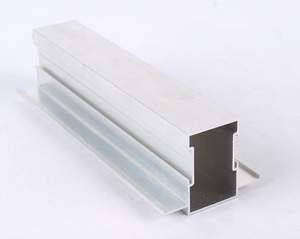
Persistent driving rain, cyclonic coastal wind pressures exceeding 2,400 Pa, and stringent thermal envelope restrictions under Chilean Zona Térmica 6 and 7. We specify multi-chambered polyamide thermal break barriers (PA66 GF25), triple-glazed argon-filled assemblies, and pressure-equalized rain-screen drainage labyrinths that deliver overall window performance of Uw ≤ 1.2 W/(m²·K) and Class E1050 watertightness.
Direct physical metrics cross-referenced against Chilean Structural and Thermal Norms.
| Glazing System Category | Alloy & Thermal Barrier | Chilean Building Code Target | Seismic Drift Limit (NCh433) | Thermal U-Value Range | Air & Water Watertightness |
|---|---|---|---|---|---|
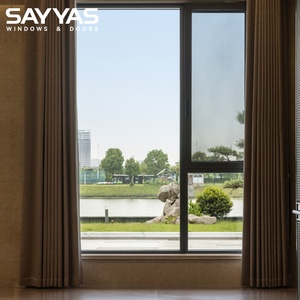
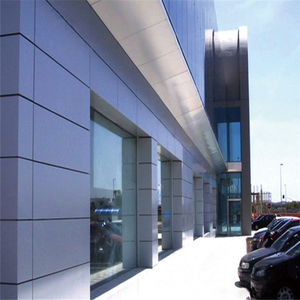
| Unitized Curtain Wall (Structural Silicone) | 6063-T6 Architectural Grade; 34mm PA66 GF25 Strips | Commercial Towers (Santiago, Providencia) | ±40mm Inter-Story Lateral Racking | 1.3 – 1.6 W/(m²·K) | Air: Class 4 (600 Pa) Water: 1,200 Pa Static |
| Thermally Broken Window Wall | 6060-T66 High-Tensile; Multi-Cavity Insulated Sashes | High-Rise Residential Multi-Family | ±25mm Seismic Joint Clearance | 1.2 – 1.5 W/(m²·K) | Air: Class 3 (300 Pa) Water: 900 Pa Dynamic |
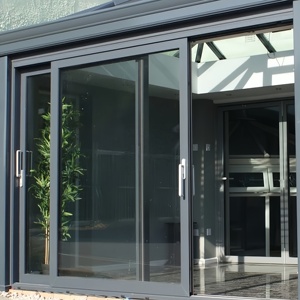
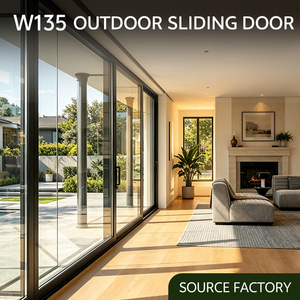
| Heavy Lift-and-Slide Patio Systems | 6063-T5 Structural Profiles; 3.0mm Wall Thickness | Luxury Coastal Villas (Zapallar, Maitencillo) | Flexible EPDM Perimeter Decoupling | 1.4 – 1.8 W/(m²·K) | Wind Resistance: 2,800 Pa Water: 1,050 Pa |
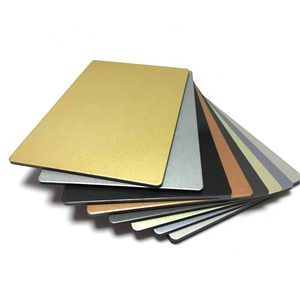
| A2 Fireproof ACP Ventilated Façade | 3003-H14 Aluminum Skin; Inorganic Mineral Core | Public Infrastructure & Spandrels | Sub-Frame Slotted Anchors (±30mm) | System Thermal Barrier Complement | Fire: A2-s1, d0 (EN 13501-1) Non-Combustible |
Designing glazing systems for Chile requires an understanding of tectonic kinetics that ordinary window exporters lack. Because Chile sits directly over the Nazca-South American plate subduction zone, façade envelopes must endure major seismic events without structural glass fracture or falling debris hazards. Our engineering team calculates and models all anchor brackets, mullion expansion splices, and corner transoms to ensure compliance with NCh433 Of. 1996 Mod. 2009 (Diseño Sísmico de Edificios) and the post-2010 earthquake emergency decrees (Decreto Supremo DS 60 & DS 61).
In our advanced Chinese production complex, unitized curtain wall modules feature split-mullion interlocking designs fitted with dual-durometer vulcanized EPDM gaskets. When horizontal ground motion imparts shear strain upon a multistory concrete structural frame, our systems accommodate differential story drift through sliding anchor slots and perimeter elastomeric clearances without loading the insulated glass units in compression. Prior to export crating, full-scale prototypes undergo laboratory dynamic racking tests simulating the spectral accelerations characteristic of seismic events registered along the Chilean coast.
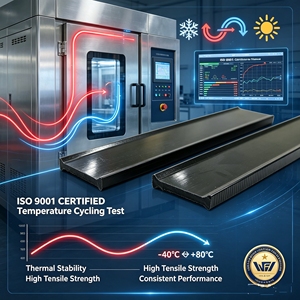
Our quality verification processes reflect the rigorous standards established by FAM Aluminium: every single extrusion batch undergoes tensile yielding evaluation, optical spectrographic alloy verification, and micro-inch surface finish inspection. Before overseas transit, crated units receive comprehensive identification tags tied directly to your building’s architectural CAD schedule, eliminating on-site identification errors and dramatically compressing installation timelines for Chilean installation teams.
Practical guidance covering logistics, testing, trade agreements, and site-level installation support.
Under the Tratado de Libre Comercio (TLC) between Chile and China, our factory prepares and issues the official Certificate of Origin (Form F) endorsed by China Customs. This documentation is submitted to the Servicio Nacional de Aduanas de Chile upon arrival at San Antonio or Valparaíso, granting complete exemption from the standard 6% ad-valorem import tariff. Only standard local VAT (19% IVA) applies.
We employ oversized structural glazing bite clearances, continuous split-mullion gaskets, and heavy 3D-adjustable cast-in steel anchoring brackets. This configuration allows differential inter-story lateral racking drift up to H/50 without glass-to-aluminum contact, verified via finite element structural modeling and deflection calculations submitted during the shop drawing submittal phase.
For approval by the local Dirección de Obras Municipales (DOM) and the project's Revisor Independiente de Arquitectura, we provide structural static calculations, acoustic attenuation reports (NCh352), thermal transmittance certifications verifying OGUC Art. 4.1.10 compliance, and mill test certificates for alloy composition and anodizing coating thickness.
Finished glazing units, curtain wall ladders, and extruded frames are individually cushioned with low-density polyethylene foam, impact-resistant corner buffers, and waterproof shrink wrap. They are then securely mounted into fumigated steel-reinforced ISPM-15 compliant plywood crating with desiccant packs, engineered for containerized ocean transit across the South Pacific.
Operating multi-axis automated CNC machining centers with cutting tolerances within ±0.2mm. Sashes, transoms, and corner mullions are mitered, pre-slotted for pressure equalization, and prepared for quick interlocking field assembly.
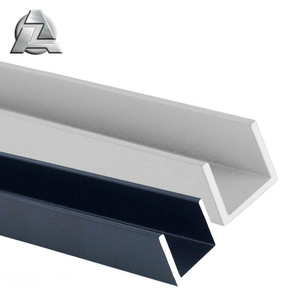
Certified applicators of international architectural powder coating systems (AkzoNobel, PPG, Jotun) and Qualanod Class 20 continuous anodizing lines. Proven resistance against the extreme UV degradation of the Atacama and the saline coastlines of the Pacific.
Our project engineering department collaborates directly with your Chilean structural calculation specialists and architectural consultants. We provide complete bilingual shop drawing packages, structural calculation books, BIM Revit families, and step-by-step installation guides tailored for local installers.
Send us your architectural elevations, opening schedules, or structural façade calculations. Our engineering desk will deliver a comprehensive project review, wind-load analysis, Form F tariff schedule, and direct FOB/CIF San Antonio or Valparaíso pricing.