
Precision-machined 6060-T66 aluminium alloy systems integrated with multi-cavity PA66 polyamide barriers, Low-E tempered IGUs, and architectural hardware tested to global ASTM, EN, and GB standards.
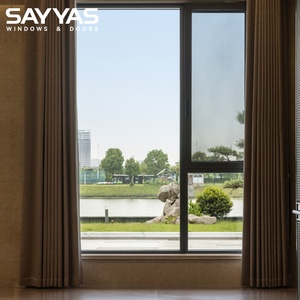
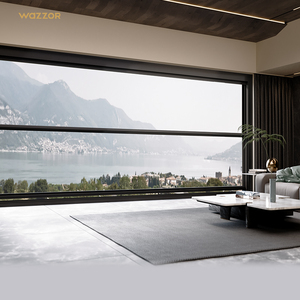
As Pakistan modernizes its residential towers, luxury farmhouses in Islamabad, and commercial high-rises in Karachi and Lahore, energy conservation has moved from an architectural luxury to an operational survival necessity.
With National Electric Power Regulatory Authority (NEPRA) tariffs exceeding PKR 60 to 80 per kWh for commercial and luxury residential consumers, heat gain through inefficient fenestration accounts for over 52% of total HVAC cooling loads during peak summer heatwaves. Conventional uninsulated aluminium sections manufactured locally act as thermal bridges, radiating conductive solar heat directly into the living space. By deploying China's highest grade 6060-T66 architectural alloys separated by 24mm to 34mm multi-cavity Polyamide PA66-GF25 thermal insulation strips, our export-grade fenestrations slash interior thermal transmittance by more than 68%, directly dropping monthly operational power costs for developers and end-users.


A single window specification cannot serve the humidity of Clifton, Karachi and the sub-zero snowfalls of Bhurban, Murree. Our engineering design protocols tailor profiles, glass build-ups, and perimeter sealants specifically for each provincial zone.
Primary Hazards: Airborne marine salts, heavy ambient relative humidity (up to 85%), high UV indexes, and cyclonic coastal wind pressures.
Engineering Response: We apply Qualicoat Class 2 certified architectural powder coatings or 25μm thick anodized finishes tested to withstand 3,000+ hours of ASTM B117 neutral salt spray without pitting. Double-glazed IGUs utilize warm-edge silicone structural seals to avoid edge-seal delamination under maritime atmospheric stress.
Primary Hazards: Grueling summer ambient temperatures exceeding 48°C, extreme infrared solar gain, and severe winter hazardous smog (PM2.5 particulate penetration).
Engineering Response: Profile sections feature 32mm multi-cavity polyamide strips with expanded EPDM center gaskets providing airtightness compliant with Class 4 (EN 12207). We specify double-silver magnetron sputtering Low-E glass that delivers a Solar Heat Gain Coefficient (SHGC) of 0.28 to 0.32, keeping air-conditioning loads negligible.
Primary Hazards: Dramatic diurnal temperature variations (up to 25°C swing in 24 hours), sub-zero winter temperatures, and structural condensation risk.
Engineering Response: SAYYAS triple-glazed thermal insulation systems packed with 90% Argon gas cavities and warm-edge composite spacers. This maintains interior glass temperatures well above the dew point, eliminating mold growth, interior condensation pooling, and drafts in luxury residences.
Three key catalysts are driving commercial developers and private builders in Pakistan toward direct China factory procurement: rising energy costs, structural urban evolution, and bilateral trade facilitation under CPEC.
Due to circular debt adjustments and international fuel charges, electricity in Pakistan has become an expensive commodity. Commercial banks, IT parks, and luxury high-rises in Gulberg (Lahore) and Clifton (Karachi) are aggressively seeking LEED Pakistan and EDGE IFC green building certifications. Investing in China factory-direct thermal break windows reduces HVAC chiller sizing by up to 35%, generating permanent payback on building capital investments within 3 to 4 years.
Traditionally, Pakistani contractors relied on local semi-skilled workshops cutting local extrusion profiles manually on site. However, field-assembled windows frequently leak water during monsoons, exhibit draft whistling under wind loads, and rattle during storms. Tier-1 developers in DHA and Bahria Town now demand imported, factory-crimped, CNC-milled systems with millimeter-perfect shop drawing tolerances and pre-installed EPDM multi-chamber gaskets.
Under the China-Pakistan Free Trade Agreement (CPFTA Phase II), custom tariffs on numerous manufactured building materials have seen progressive reductions. Leveraging sea-freight routes from Ningbo, Shanghai, or Shenzhen direct to Karachi Port (KICT/SAPT) and Port Qasim (QICT) allows Pakistani developers to import custom-engineered architectural window units at a lower landed cost than fragmented local options.
| Performance Parameter | Local Pakistani Non-Thermal Window | China OEM Thermal Break 6060-T66 | Testing & Compliance Standards |
|---|---|---|---|
| Overall Heat Transmittance (Uw) | 5.8 – 6.2 W/(m²·K) (Excessive Heat Leak) | 1.1 – 1.6 W/(m²·K) (Energy Star Grade) | ISO 10077-1 / EN 673 |
| Insulation Thermal Barrier | None (Solid Conductive Aluminum) | 24mm – 34mm Technoform PA66-GF25 | GB/T 23615.1 / DIN 16941 |
| Acoustic Attenuation (STC / Rw) | 22 – 25 dB (Street Noise Penetration) | 38 – 48 dB (Quiet Luxury Living) | ASTM E90 / ISO 717-1 |
| Air Permeability & Smog Seal | Class 1 (Dust & Smog Infiltration) | Class 4 (≤ 0.5 m³/(h·m) @ 100Pa) | EN 12207 / GB/T 7106 |
| Surface Coating Longevity | Standard Anodized (Pits in 2-3 Years in Karachi) | AkzoNobel Interpon D2525 PVDF / Powder | Qualicoat Class 2 / AAMA 2604 |
| Water Penetration Resistance | 150 – 250 Pa (Frequent Monsoon Leaks) | ≥ 700 – 1000 Pa (Monsoon Cyclone Proof) | EN 12208 / ASTM E331 |
Importing building envelope packages requires deep trust in dimensional fidelity, glass safety, and structural longevity. Here is how our specialized production lines protect your procurement investment.
Every extrusion is processed on German and Italian 4-axis CNC machining centers. Corner joints are injected with two-component polyurethane corner glue after pneumatic hydraulic crimping, creating an impervious, monolithic structural corner that never sags, shifts, or separates during transit or decades of usage.
Our insulated glass units are manufactured on automated Bystronic robotic lines. We temper Grade-A float glass with zero optical distortion, apply double or triple Low-E coatings, warm-edge spacers, and inject molecular sieve desiccant alongside 90%+ pure Argon gas to guarantee long-term U-value performance.
Every single frame and sash is wrapped in protective PE tape, corner-guarded with high-density EVA shock caps, and crated inside fumigation-free solid plywood sea-freight cases. Units are labeled with unique CAD opening IDs matching your architectural construction drawings for rapid, organized sorting on site.
Our in-house facade engineering department assists Pakistani consulting engineers, MEP specialists, and architects with comprehensive shop drawings, structural wind load calculations based on the Pakistan Building Code (PBC-2021), glass deflection simulations, and anchor detail shop submittals before cutting a single profile. This ensures smooth approval processes with project consultants, CDA, LDA, and DHA building control directorates.
Everything you need to know regarding banking procedures, Letters of Credit (LC), customs documentation, shipping transit, and on-site fitting in Pakistan.
Whether you are developing a luxury residential villa in DHA Lahore, a commercial corporate center in Blue Area Islamabad, or a high-rise waterfront apartment in Clifton Karachi, our engineering team is ready to analyze your architectural window schedules, perform wind load simulations, and generate competitive direct factory estimates.