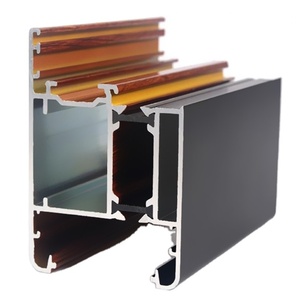
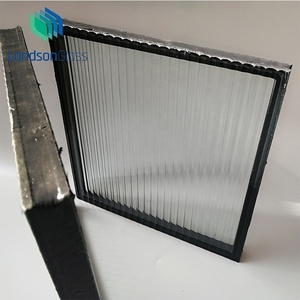
Precision-engineered in Dubai using advanced computerized CNC tooling and tested under extreme atmospheric variables, ready for direct sea freight export to Puerto de Buenos Aires and Zárate.

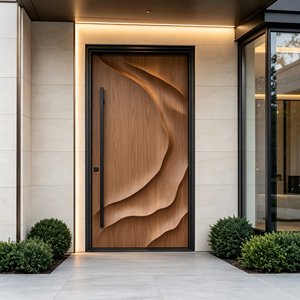
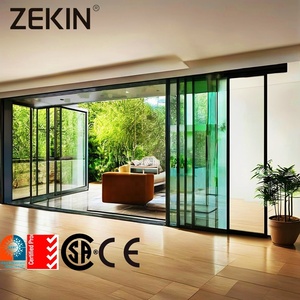
The contemporary commercial real estate and luxury residential landscape across Argentina—spanning the corporate high-rise districts of Puerto Madero in Buenos Aires, the expansive winery estates of Mendoza, and the boutique hospitality resorts of Patagonia—has reached a critical juncture in envelope performance. The tightening of local energy efficiency mandates under IRAM 11507 (Parts 1 to 4), combined with strict structural wind loading criteria specified by CIRSOC 102 and seismic demands of CIRSOC 103, requires architectural glazing and cladding solutions far beyond regional standard capacities.
Dubai-based manufacturers and international exporters have emerged as the premier procurement partners for leading Argentine developers (desarrolladores), structural consultants, and facade contractors (faenistas). Operating out of the world's most demanding architectural proving ground, Dubai fabricators produce aluminum systems engineered to survive acute thermal shocks (+50°C summer air, intense saline winds from the Arabian Gulf, and heavy sand scouring). When translated to the diverse microclimates of Argentina, these heavy-duty engineering methodologies deliver unprecedented performance margins against the howling coastal winds of the Rio de la Plata estuary and the sub-zero snow loads of the Andean cordillera.
By bypassing fragmented regional supply chains and leveraging direct containerized sea freight from Jebel Ali Port to Terminal 4 in Puerto de Buenos Aires, Argentine architectural firms achieve substantial economies of scale, strict batch-to-batch alloy homogeneity, and turn-key compliance with international certifications including NFRC, AS2047, ASTM, and CE standards.
When selecting Dubai manufacturing partners for overseas contracts in Latin America, procurement directors prioritize distinct structural, metallurgical, and technological capabilities that eliminate on-site failure risks. Our engineering workflow integrates every phase from structural FEA (Finite Element Analysis) deflection modeling to CNC five-axis milling and automated assembly.
We strictly utilize certified primary smelting ingots extruded through computerized hydraulic presses. This guarantees optimal tensile strength, yield thresholds, and an impeccably smooth surface finish for anodic oxidation or architectural fluoropolymer (PVDF) treatments.
Engineered using low-conductivity PA66 GF25 (polyamide 6.6 reinforced with 25% glass fiber) thermal break strips. This mechanical decoupling completely isolates exterior thermal fluctuations from interior climates, directly solving condensation and energy loss in both heating and cooling regimes.
Our automated horizontal and vertical electrostatic powder and liquid coating plants apply multilayer fluoropolymer resins delivering extreme resistance against UV photodegradation, chalking, and chemical staining—ideal for the high-UV exposure of Northern Argentina and coastal salinity.
Argentina's vast geography—extending over 3,700 kilometers north to south—encompasses biomes ranging from humid subtropical regions to arid alpine deserts and polar maritime zones. Engineering a commercial facade or luxury residential fenestration package requires custom calibration for each destination.
High-rise residential and commercial corporate headquarters facing Rio de la Plata wind shear require structural unitized curtain walls and multi-track heavy-duty sliding balcony doors engineered to absorb dynamic gusts reaching 160 km/h with zero acoustic resonance.
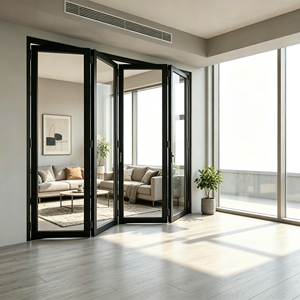
Boutique winery hotels, tasting rooms, and private luxury villas demanding oversized entrance pivot doors and motorized accordion bi-folds. Structural extrusions are designed to accommodate seismic drift requirements dictated by INPRES-CIRSOC 103.
Sub-zero alpine environments characterized by heavy freeze-thaw cycles, aggressive snowdrifts, and fierce southern winds. Demands deep multi-chambered thermal break casements paired with triple-glazed hollow vacuum Low-E argon insulated glass units (IGUs).
Mixed-use corporate towers, commercial logistics facilities, and riverfront luxury residential developments where solar heat gain reduction (low SHGC) and seamless interlocking exterior wall cladding are critical to sustainable lifecycle economics.
Below is the detailed specification matrix comparing system configurations, glass build-ups, structural deflection metrics, and recommended applications for project tenders across Argentine municipalities.
| System Architecture | Alloy & Profile Specification | Glazing / Infill Configuration | Acoustic & Thermal Metrics | Argentine Regulatory Fit |
|---|---|---|---|---|
| Thermally Broken Curtain Wall | 6063-T6, 2.5mm–3.5mm wall thickness; PA66 GF25 34mm thermal isolators | Double/Triple IGU: 8mm Low-E + 16A (Argon) + 8mm Tempered or Laminated | Rw = 44 dB; Ucw = 1.1–1.3 W/m²K |
CIRSOC 102 (Wind Loads); IRAM 11507-4 Class A |
| Heavy Lift-and-Slide Patio Doors | 6063-T6, multi-cavity sub-frame, 250kg–400kg stainless sash rollers | 28mm–42mm Insulated Vacuum / Laminated Glazing with Warm-Edge Spacers | Rw = 39 dB; Uw = 1.4–1.6 W/m²K |
NFRC / AS2047 Certified; Ley de Eficiencia Energética 13059 |
| Architectural Bi-Folding Accordion | Heavy-duty extrusion, top-hung dual stainless bogie wheels with sealed bearings | Double Tempered Safety Glass: 6mm Clear + 12A + 6mm Low-E Neutral | Rw = 36 dB; Uw = 1.6–1.8 W/m²K |
IRAM 11507-1 Air Tightness Class 3; Water Tightness Class 7A |
| High-Security 3D Pivot Entrance Door | Reinforced 6061-T6 structural core, German floor spring pivot bearing (500kg) | 3D Fluid CNC wave carving plate with integrated polyurethane thermal core | Rw = 42 dB; Ud = 1.0 W/m²K |
INPRES-CIRSOC 103 (Seismic Joint Tolerances); High Wind Resistance |
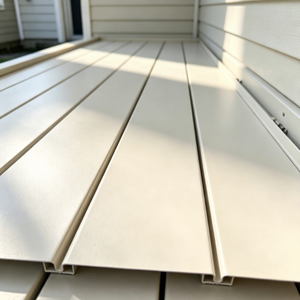
| Interlocking Architectural Cladding | Extruded aluminum alloy tongue-and-groove siding with concealed fasteners | Class A Fire-rated non-combustible solid core with rear air cavity | Rear ventilation reduces wall temperature by 8°C | IRAM 11910-1 Reaction to Fire Class RE 1 (Incombustible) |
Argentina's construction industry is experiencing rapid modernization driven by strict municipal sustainability mandates and an influx of international hospitality investment. Understanding these macro trends allows developers and architects to specify systems that maintain property value over decades.
The Province of Buenos Aires, along with the Autonomous City of Buenos Aires (CABA) and Rosario, has enacted rigorous building thermal transmission standards. Historically, standard non-thermal aluminum windows dominated speculative developments, causing extreme electricity grid strain during humid summers and peak winter heating shortages. Contemporary projects now mandate verified overall heat transfer coefficients (K-values or U-values). Our thermally isolated profile systems incorporate multi-chambered polyamide strips and warm-edge double glazed units with low emissivity soft-coats, drastically reducing HVAC loads and qualifying projects for international LEED Gold and EDGE Advanced certification.
In Mendoza, San Juan, and northwestern provinces like Salta and Jujuy, building codes conform to the strict seismic mandates established by the National Institute of Seismic Prevention (INPRES). Fenestration and curtain wall designs must withstand high lateral inter-story drift without glass fall-out or catastrophic structural framing failure. Dubai manufacturing standards incorporate continuous flexible EPDM perimeter gaskets, split-mullion expansion joints, and articulated steel anchor brackets designed to absorb both horizontal earthquake shocks and extreme thermal expansion cycles typical of high-altitude deserts.
Across luxury residential developments in Nordelta, Pilar, and country club gated communities, as well as upscale Patagonian lodges, high-net-worth clients demand seamless visual continuity. The preference has shifted decisively away from chunky framing toward ultra-slim sightlines capable of supporting massive structural glass panes weighing over 400 kilograms. By utilizing our aerospace-grade primary extrusions, architects can design floor-to-ceiling glass assemblies up to 3.8 meters in height with visible interlocking stiles as slim as 20mm, providing panoramic vistas across the pampas or the Andes without structural compromise.
Engaging in transcontinental procurement requires absolute confidence in factory quality assurance, rigorous technical vetting, and proactive container packing methodologies. As a dedicated architectural fabricator and exporter, FAM Aluminium operates under a fully integrated Quality Management System tailored specifically to international trade.
Every window, door, and curtain wall module undergoes comprehensive 2D/3D shop drawing reviews prior to extrusion cutting. We verify structural anchor loads, thermal dew point calculations, and glass thickness sizing based on your architectural drawings.
Every production run passes four mandatory quality gates: (1) Raw extrusion dimensional and hardness testing, (2) Corner crimping and thermal strip peel-off resistance checks, (3) Full factory trial assembly of hardware mechanisms, and (4) Spectrophotometric color consistency audits.
Windows and panels are wrapped in protective polyethylene films, reinforced with heavy rubber edge buffers, and packed in fumigated plywood ocean crates (ISPM 15 compliant). Desiccant silica packs prevent moisture condensation during sea voyages across the Atlantic.
Exporting to the Argentine Republic involves navigating specific customs classifications, Mercosur regulations, and maritime scheduling. Our logistics team handles international ocean freight documentation with precision:
Typical ocean transit from Jebel Ali Port (UAE) to Puerto de Buenos Aires (Terminales Río de la Plata / APM Terminals) averages 32 to 42 days via major maritime carriers including MSC, Maersk, and CMA CGM. Full container loads (20ft GP and 40ft High Cube containers) are staged with custom heavy-duty A-frames for open-top containers when transporting oversized facade panels. Every crate is barcoded and indexed with the contractor's window schedule opening reference, enabling immediate sorting and phased installation once the container reaches the job site in Buenos Aires, Córdoba, or Rosario.