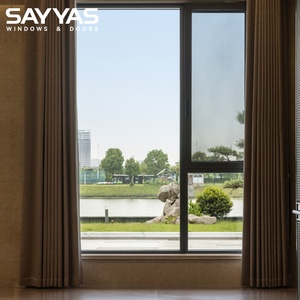
Precision-extruded, precision-crimped aluminum alloys and insulated assemblies engineered for residential high-rises, coastal villas, and high-spec industrial complexes across Vietnam.
Vietnam presents one of the most mechanically demanding microclimates in Southeast Asia for modern exterior building envelopes. Spanning from the humid subtropical seasonality of Northern Vietnam (Hanoi, Hai Phong, Bac Ninh) to the intense tropical wet-and-dry cycles of Southern Vietnam (Ho Chi Minh City, Binh Duong, Dong Nai), architectural facades are constantly subjected to severe thermal shock, extreme solar radiation (reaching peak solar irradiance exceeding 1,000 W/m²), and prolonged periods of relative humidity ranging between 80% and 98%. Under these circumstances, uninsulated or poorly designed aluminum framing rapidly triggers interior condensation, biological mold growth, structural galvanic degradation, and catastrophic cooling load inefficiencies.
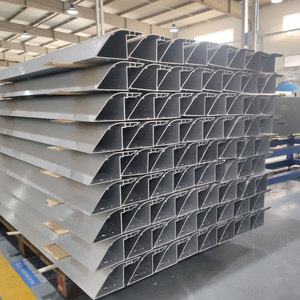
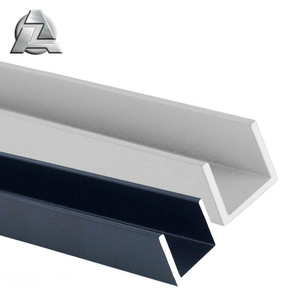
As an engineering-driven manufacturer and exporter, we design building envelope solutions that address these exact physical stressors. Standard architectural aluminum has an exceptionally high thermal conductivity of approximately 160 to 200 W/(m·K). Without an engineered barrier, external heat conducted through fenestration framing creates internal surface temperatures far below the indoor ambient dew point whenever air conditioning operates. This phenomenon—commonly known as thermal bridging—causes condensation along window perimeters and facade mullions. To eliminate this issue, our multi-cavity polyamide PA66-GF25 thermal insulation strip systems mechanically decouple exterior and interior aluminum profiles, dramatically lowering structural frame transmittance to Uf values under 1.6 W/(m²·K).
Beyond thermal performance, building envelopes in Vietnam's central coastal belt (Da Nang, Quy Nhon, Nha Trang, and Quang Ninh) confront relentless maritime salt fog and violent seasonal typhoons carrying sustained wind pressures exceeding 2,000 Pa. To counter water infiltration during monsoon storms, our systems integrate multi-barrier EPDM co-extruded cellular gasket arrangements with pressure-equalized internal drainage chambers. These internal weep paths allow driven rainwater to drain out spontaneously before interior pressure differentials can suck moisture across the inner barrier.
In dense urban centers like Hanoi and Ho Chi Minh City, ambient transportation and street noise frequently exceed 75 dBA. Incorporating our thermally broken multi-chamber frames alongside asymmetric double- or triple-glazed insulated glass units (IGUs) filled with 90% Argon gas achieves a weighted sound reduction index (Rw) exceeding 42 dB. This structural acoustic performance delivers peaceful, acoustically protected indoor environments essential for Grade-A commercial office space and ultra-luxury residential towers.
Tailoring profile metallurgy, structural alloy tempers (6060-T66 / 6063-T6), and thermal barriers to the exact functional demands of Vietnam’s industrial, commercial, and hospitality landscapes.
Electronics manufacturing, semiconductor packaging, and pharmaceutical facilities demand cleanroom environments with zero air leakage and precise thermal stability. Our modular industrial framing profiles and fireproof composite wall cladding assemblies maintain internal ambient tolerances while resisting chemical cleaning agents, supporting strict ISO 14644 cleanroom standards.
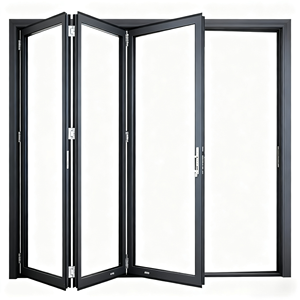
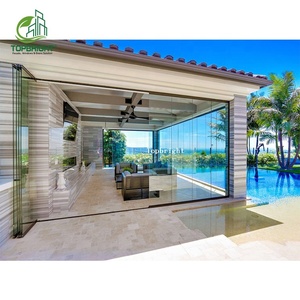
Expansive opening widths demand high-span sliding patio and bi-folding door mechanisms capable of resisting persistent saline mist and high ultraviolet indexes. Equipped with Qualicoat Class 3 PVDF coatings (25-year warranty against chalking) and 316-grade stainless steel running carriages, our systems deliver fluid glide performance without salt-induced seizing or pitting.
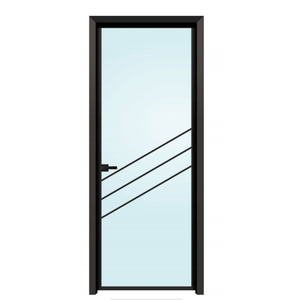
Modern corporate towers require structural unitized curtain walls and slim-profile swing doors that minimize solar heat gain without compromising natural daylighting. Our thermally broken commercial window walls integrate warm-edge silicone structural spacer bars to prevent edge seal failures under intense afternoon solar exposures.
How national net-zero commitments and multinational foreign direct investments (FDI) are redefining procurement specifications for exterior facade systems.
Following Vietnam's formal commitment at COP26 to achieve Net Zero Carbon emissions by 2050, the Vietnamese Ministry of Construction and institutional developers have radically raised the bar for fenestration performance. Historically dominated by non-thermally broken hollow aluminum extrusions that yielded high lifecycle operational expenditures, the Vietnamese market is experiencing a massive pivot toward high-efficiency architectural envelopes. Developers are discovering that HVAC sizing accounts for up to 35% of an industrial or commercial building’s initial capital expenditure; implementing thermal break facades immediately reduces overall chiller plant capacity requirements by 20% to 30%.
Furthermore, international institutional tenants relocating production facilities to Vietnam under the "China+1" supply chain diversification framework require their production facilities to conform to rigorous sustainability audits. Multinational technology leaders and apparel conglomerates operating in VSIP (Vietnam Singapore Industrial Park) or Amata industrial estates actively prioritize facilities engineered with low-embodied-carbon aluminum and low-VOC surface treatments. Our manufacturing lifecycle utilizes clean hydro-powered secondary aluminum billets where requested, accompanied by Environmental Product Declarations (EPDs) that provide transparent cradle-to-gate life cycle impact metrics.
Another profound trend across high-end domestic residential real estate in Vietnam is the demand for minimalist sightlines coupled with hurricane-grade structural resistance. Urban homeowners and hospitality operators are no longer satisfied with bulky, heavy profiles that obstruct sweeping outdoor vistas. By utilizing high-yield 6060-T66 aluminum alloys, our systems achieve narrower frame sightlines while maintaining superior moment-of-inertia (Ixx) stiffness, easily meeting deflection parameters (L/175 or L/240) under intense peak monsoon gust pressures.
Standardized engineering metrics comparing conventional architectural framing against our thermally isolated systems customized for Vietnam export contracts.
| Performance Characteristic | Standard Non-Thermal Framing | Advanced Polyamide Break System | Testing & Compliance Standard |
|---|---|---|---|
| Frame U-Value (Uf) | 5.8 – 6.5 W/(m²·K) | 1.3 – 1.8 W/(m²·K) | EN ISO 10077-2 / ASTM C1363 |
| Solar Heat Gain Coeff. (SHGC) | 0.68 – 0.82 (High Solar Heat Flux) | 0.28 – 0.38 (Spectrally Selective) | NFRC 200 / QCVN 09:2017/BXD |
| Air Permeability / Infiltration | Class 2 (≤ 27 m³/h·m²) | Class 4 (≤ 3 m³/h·m² at 600 Pa) | EN 12207 / ASTM E283 |
| Water-Tightness Under Wind | 300 Pa (Prone to Sill Overflow) | Class 9A / E1050 (≥ 1050 Pa) | EN 12208 / ASTM E331 |
| Wind Pressure Resistance | 1200 Pa (Visible Mullion Deflection) | Class C5 / Class E3000 (≥ 3000 Pa) | EN 12210 / ASTM E330 |
| Salt Spray Corrosion Endurance | 500 Hours (Pitting on Cut Edges) | 3,000+ Hours Acetic Salt Spray | ASTM B117 / Qualicoat Seaside |
| Acoustic Insulation (Rw) | 24 – 28 dB (Street Noise Intrusion) | 38 – 44 dB (Hospitality Acoustic Comfort) | ISO 717-1 / ASTM E90 |
Every order undergoes rigorous engineering submittal checks, computer-controlled precision machining, and export-grade maritime packaging to guarantee zero on-site friction.
We do not manufacture off raw architectural sketches. Our facade engineering department generates millimeter-precise 2D and 3D CAD/BIM shop drawings, structural wind-load deflection calculations, and thermal transmittance simulations. All joinery, mullion anchoring, sub-sills, and perimeter flashings are pre-engineered and submitted for your consultant's approval prior to cutting.
Quality control is enforced at every production milestone: incoming raw billet spectroscopy and tensile checks, CNC cutting and hydraulic corner crimping alignment tolerance verifications (±0.5 mm), and final pre-packing factory assembly inspections. We verify complete hardware kinematics, multi-point locking engagement, and weather-seal continuity before anything is cleared for export crating.
Transporting high-end architectural systems across international maritime routes requires specialized crating. All frames are fully wrapped in scratch-resistant protective film, reinforced with high-density EVA foam corner buffers, and sealed in fumigated plywood crates. Each crate carries a weatherproof label matching specific floor and opening schedules to streamline staging at job sites across Vietnam.
Direct answers on customs documentation, Form E tariff preferences, technical validation, wind load certifications, and installation logistics.
Yes. Under the ASEAN-China Free Trade Agreement (ACFTA), we routinely issue official Form E Certificates of Origin endorsed by competent customs authorities. When clearing shipments through major Vietnamese maritime ports such as Cat Lai, Hai Phong, or Da Nang, this documentation reduces the applicable preferential import tariff on qualifying aluminum profiles, doors, and window assemblies to 0% or significantly reduced tariff bands, maximizing your commercial margins.
We exclusively utilize glass-fiber-reinforced polyamide 66 insulating struts (PA66-GF25), never lower-cost PVC substitutes. PA66-GF25 exhibits an identical linear coefficient of thermal expansion to aluminum (approx. 2.3 × 10⁻⁵ 1/K). This mechanical harmony ensures that under severe direct tropical sunlight reaching facade temperatures of over 75°C, the inner and outer extrusions expand at the exact same rate, completely preventing profile warping, thermal bowing, or delamination.
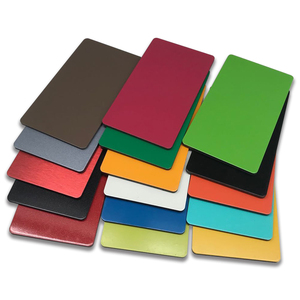
Our comprehensive technical submittal package includes comprehensive structural calculations (wind load deflection per ASTM E330 / QCVN 02:2022/BXD), thermal analysis reports, mill test certificates (MTC) detailing aluminum chemical compositions and yield strengths, third-party acoustic test reports, and physical sample boxes containing profile cross-sections, corner swatches, and finished color plates for architect sign-off.
For coastal zones within 5 kilometers of the shoreline, we mandate either Qualicoat Class 3 Fluoropolymer (PVDF) liquid spray coatings (minimum 70% Kynar 500 resin content with a dry film thickness ≥ 40 microns) or Hard Marine Anodizing (thickness rating Class 20 or Class 25, 20–25 microns) sealed with nickel acetate. These treatments withstand over 3,000 hours of continuous acetic salt spray testing without micro-cracking or filiform corrosion.
Depending on project site logistics, oversized folding and sliding systems can be shipped either fully factory-assembled and pre-glazed with heavy-duty lifting eye hooks, or knocked-down (KD) with pre-machined corner cleat joinery and separately crated glass units. Glazed units are packed in steel-reinforced A-frame glass racks with specialized elastomeric spacer pads to prevent dynamic harmonic shock damage during ocean container transport.
We provide exhaustive bilingual installation shop manuals, high-definition 3D video sequence animations, and direct remote engineering assistance via video conferences throughout the installation and water-testing phases. Furthermore, for major commercial developments and luxury hospitality resorts exceeding 5,000 m² of facade area, our senior facade installation technicians can be dispatched to your project site in Vietnam to supervise and train local installation subcontractors.
Whether you are designing a coastal resort in Phu Quoc, tendering a commercial high-rise in Ho Chi Minh City, or engineering cleanroom industrial structures in Bac Ninh, our facade engineers will analyze your schedule of openings, optimize your profiles, and provide direct export quotations with comprehensive technical shop drawings.