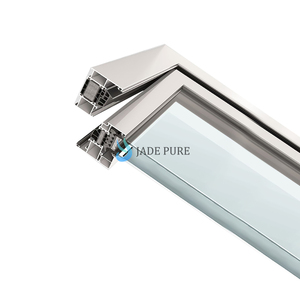

Engineered architectural extrusions, custom thermal break assemblies, and multi-laminate insulated glass units manufactured to counter urban noise pollution, monsoonal wind loads, and severe solar radiation.

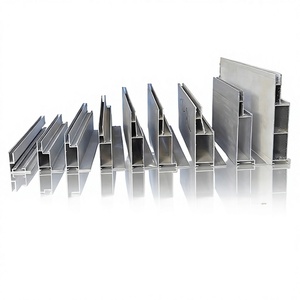
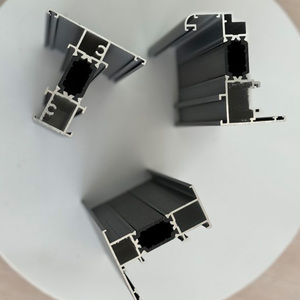
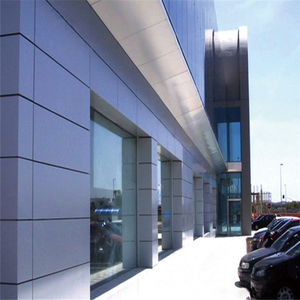
Ho Chi Minh City represents one of the most acoustically aggressive urban environments in Southeast Asia. The continuous background hum of over 8.5 million registered motorbikes, combined with rapid commercial development, arterial ring road transport (such as the Vo Van Kiet Highway and Hanoi Highway), and persistent street-level activities, creates continuous sound pressure levels oscillating between 75 dBA and 88 dBA. Standard single-glazed sliding frames commonly installed in legacy Vietnamese buildings yield an Sound Transmission Class (STC) rating of merely 24 to 28 dB, leaving indoor acoustic profiles completely saturated by low-to-mid frequency traffic hum.
Achieving real acoustic comfort—defined by international wellness standards and Vietnamese building codes as interior ambient noise below 38 to 42 dBA—demands a fundamental departure from conventional fenestration drafting. Sound energy propagates not only directly through glass panes, but also through frame flanking transmission and micro-gaps within sealing gaskets. As an experienced exporter and technical fabrication specialist, FAM Aluminium approaches acoustic mitigation as a fully integrated building science discipline.
"Acoustic integrity cannot exceed the performance of the weakest interface: a 1% acoustic leak through degraded perimeter sealant or ill-fitted sash corner gaskets compromises up to 10 dB of acoustic attenuation, effectively halving the noise reduction capability of an insulated glazing unit."
To counteract low-frequency engine resonance (125 Hz to 250 Hz) and mid-frequency vehicular horn disruptions (500 Hz to 2000 Hz), we implement asymmetric acoustic laminated glazing configurations. By pairing distinct glass lites (e.g., 8mm exterior toughened glass + 0.76mm/1.52mm Acoustic PVB interlayers + 6mm interior toughened glass separated by a 16mm warm-edge argon-filled spacer cavity), the system disrupts coincident frequency dips. Glass panes of identical thickness vibrate in resonance at shared critical frequencies, creating an acoustic bypass window; our asymmetric assemblies flatten this resonance curve, delivering field-tested Sound Transmission Class (STC) ratings exceeding 42 to 48 dB.
From the supertall mixed-use developments of Thu Duc City to riverside colonial restorations in District 3, our systems are calculated to withstand localized structural, climatic, and acoustic parameters.
Towers overlooking the Saigon River require envelope systems that solve dual structural challenges: severe localized monsoonal wind gusts reaching up to 1.8 kPa wind loads and traffic reverberation from regional bridges. We implement heavy-gauge unitized and semi-unitized curtain wall profiles with double-laminated IGU units to prevent glass deflection while establishing tranquil internal penthouses and luxury suites.
High Wind Load & Rw 45 dB