
From seismic-rated curtain walls overlooking the Caspian Sea to thermally decoupled patio sliding systems for Absheron private villas, discover our precision-engineered insulated glass units and integrated aluminum fenestrations.
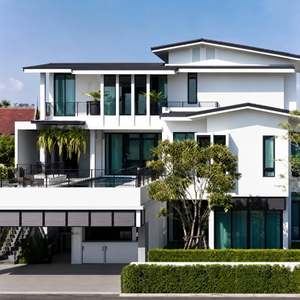
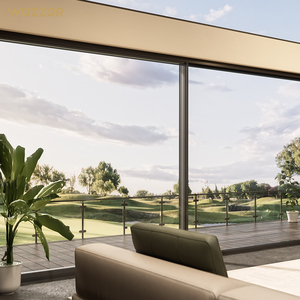
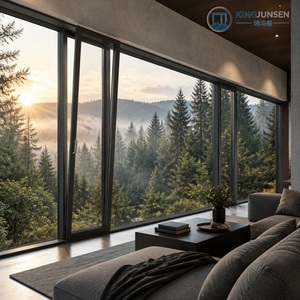
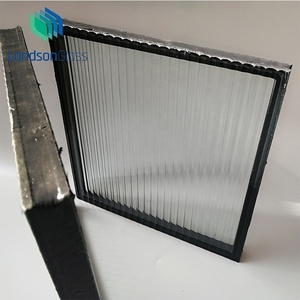
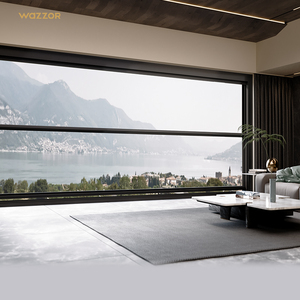
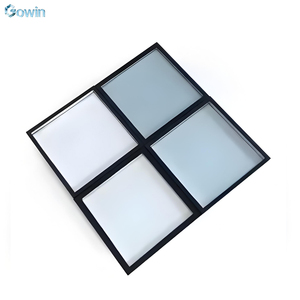
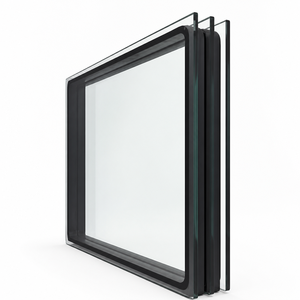
The construction landscape of the Republic of Azerbaijan is undergoing a historic structural transformation. Driven by sustainable urban regeneration projects such as Baku White City, Port Baku Phase II, and massive rebuilding initiatives in the Karabakh and Eastern Zangezur economic regions, the demand for high-tier architectural envelopes has surpassed legacy building capabilities.
Azerbaijan's hosting of COP29 in Baku has accelerated the enforcement of strict national green building frameworks. Historical reliance on single-pane glazing and standard non-thermal aluminum frames has been systematically replaced by stringent energy performance mandates aligning with updated State Committee for City Building and Architecture regulations (AZS and modified SNiP II-3-79 thermal protection directives).
"In coastal Baku, energy waste through poorly insulated glazing accounts for up to 42% of a commercial tower's HVAC operational expenditure. Modern double and triple insulated glass units (IGU) are no longer luxury options—they are baseline statutory requirements for real estate valuation."
Developers and general contractors across Baku, Sumgait, and Ganja now prioritize suppliers capable of delivering millimetric precision, proven solar heat gain coefficient (SHGC) modulation, and export logistics that mitigate cross-border transit fragility.

The Caspian basin presents one of the world's most aggressive microclimatic challenges for exterior fenestration systems. Glazing units destined for the Absheron Peninsula must conquer three simultaneous environmental pressures:
1. The "Khazri" Gale-Force Winds: Baku is famously dubbed the "City of Winds." The cold northern Khazri wind can generate local wind gust velocities exceeding 130–144 km/h (gust pressures above 2.4 to 3.8 kPa). Façade IGUs must maintain structural integrity without center-of-glass deflection that could rupture primary polyisobutylene seals.
2. Caspian Airborne Salinity & Humidity: Marine salts carried inland cause accelerated corrosion in standard aluminum frames and degrade inferior warm-edge spacers. Our assemblies utilize marine-grade 6063-T6 aluminum alloys anodized or powder-coated to Qualicoat Class 2 specifications, alongside dual-sealed structural silicone barriers.
3. Severe Summer Solar Insolation: Summer temperatures in lowland Azerbaijan regularly top 40°C with sustained direct UV exposure. Spectrally selective Low-E coatings (double-silver and triple-silver magnetron sputtered films) reflect the near-infrared spectrum while maintaining visible light transmittance (VLT > 65%).

Validated physical parameters calibrated to Azerbaijani regional climatic zones and building code benchmarks.
| Target Region / Zone | Recommended Build-Up | Ug-Value (W/m²·K) | SHGC Rating | Sound Attenuation | Primary Resistance Target |
|---|---|---|---|---|---|
| Baku Coastal Towers (Absheron) | 8mm Low-E Tempered + 16Ar + 6mm Clear + 16Ar + 8mm Tempered | 0.72 - 0.85 | 0.28 - 0.34 | Rw 44 dB | Extreme Wind Pressure & Caspian Saline Salt Fog |
| Baku White City (Mid-Rise Residential) | 6mm Solar Control + 14Ar + 6mm Tempered Float | 1.10 - 1.25 | 0.35 - 0.40 | Rw 38 dB | Balanced Energy Efficiency & Urban Acoustics |
| Shahdag / Quba (Sub-Alpine Alpine) | 6mm Low-E + 12Kr Vacuum + 4mm Float + 12Kr + 6mm Low-E | 0.58 - 0.70 | 0.48 - 0.55 | Rw 42 dB | Sub-Zero Freeze Prevention & Internal Condensation Defeat |
| Ganja & Aran Plains (Continental Extreme) | 6mm Sunergy Double Low-E + 16Ar + 6mm Clear Tempered | 1.05 - 1.15 | 0.26 - 0.32 | Rw 37 dB | Maximum Summer Cooling Load Reduction |
| Karabakh Rebuilding Zone (Hospitality / Gov) | 8mm Laminated Security + 16Ar + 6mm Toughened Low-E | 0.95 - 1.05 | 0.32 - 0.38 | Rw 46 dB | Seismic Safety, Structural Rigidity & Durability |
Sourcing architectural glazing packages from overseas requires total elimination of dimensional discrepancies and logistic vulnerabilities. Here is how our comprehensive manufacturing process guarantees zero-defect site delivery for projects across Azerbaijan:
Bespoke Engineering & Shop Detailing: Before glass cutting or aluminum extrusion, our engineering team performs finite element analysis (FEA) based on building height, terrain roughness, and opening schedules. We calculate deflection limits (L/200 to L/300) to ensure compliance with Azerbaijani earthquake resistance standard AzDTN 2.3-1.
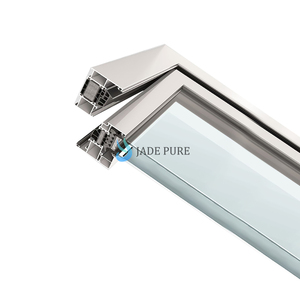
Polyamide PA66 Thermal Barrier Extrusions: All framing incorporates multi-chamber, fiberglass-reinforced Polyamide (PA66 GF25) thermal breaks that decouple exterior temperature shocks from interior conditioned air, preventing condensation even during the coldest winter blasts from the Caucasus mountains.
Automated Secondary Silicone Seal Application: Insulating glass units manufactured under vacuum cleanroom conditions receive dual automated sealing: primary polyisobutylene (PIB) for moisture vapor transmission prevention, followed by structural two-component silicone that resists solar UV breakdown and wind shear forces.

Discover how our rigorous six-stage quality assurance protocol safeguards every square meter of architectural glass bound for Baku International Sea Trade Port and direct rail transit.
Processed according to EN 12150 and ASTM C1048 specifications with mandatory Heat Soak Testing (HST) available on request to completely eliminate spontaneous nickel sulfide (NiS) inclusion breakage on high-elevation installations.
Continuous automated argon gas flushing achieves certified ≥ 90% gas fill concentrations, checked with non-destructive Sparklike laser testing, guaranteeing sub-1.0% annual dissipation rates for a multi-decade operational lifespan.
Glass thickness formulas (e.g., 6mm+12A+6mm to 10mm+16A+10mm) are precision-matched to mullion spans and negative wind vortexes encountered in high-density Baku urban clusters, preventing visual distortion and optical oil canning.
Units are protected with peelable polyolefin film, impact corner buffers, and packed in fumigated plywood crates with desiccant bags, engineered for multi-modal ocean and rail container transport without surface abrasion or micro-cracking.
Each crated IGU and pre-hung aluminum frame is tagged with QR/barcode identifiers cross-referenced against the structural engineering elevation submittals, enabling instantaneous on-site staging and snag-free installation by local crews.
We provide bilingual installation manuals, CAD/BIM shop drawings, gasket seating protocols, and on-demand video conferencing support to general contractors and glazing subcontractors operating on Azerbaijani job sites.
Authoritative answers to the most critical commercial, logistical, and technical questions asked by project directors and developers in Azerbaijan.
Glazing units and assembled aluminum systems are exported primarily via two established corridors: (1) Intermodal rail container transit connecting central manufacturing terminals directly to Baku (Keshla or Bilajari freight stations), with typical transit durations ranging between 18 to 26 days; or (2) Ocean freight to Poti/Batumi ports (Georgia) followed by direct bonded rail/truck transport into Baku, taking approximately 30 to 38 days. Full customs clearance documentation (Certificate of Origin, Bill of Lading, Packing Lists with opening references, and Factory Test Reports) is prepared in compliance with the State Customs Committee of the Republic of Azerbaijan requirements.
Yes. All glazing products are engineered to conform with Azerbaijani national standards (AZS) and the adapted building thermal norms (SNiP II-3-79 "Construction Heat Engineering" and AzDTN 2.3-1 "Earthquake-Resistant Construction"). We furnish complete submittal dossiers including Ug-value thermal calculation certificates, sound attenuation test reports (ISO 10140), and wind load structural calculations verified against the wind velocity zones of the Absheron Peninsula, ensuring rapid sign-off by municipal architectural inspection authorities.
Condensation occurs when the internal glass surface temperature drops below the dew point of the room air. We mitigate this through three engineered components: first, utilizing warm-edge composite spacers (such as stainless-steel/polypropylene or silicone foam) with 65% lower linear thermal transmission than conventional aluminum hollow spacers; second, deploying high-depth Polyamide (PA66) thermal breaks in all aluminum structural frames; and third, infusing 90%+ pure argon gas within the sealed cavity to maintain superior interior glass pane surface temperatures even during sudden Caspian northerly cold fronts.
Yes, we specialize in jumbo and oversized structural glazing units up to 3.2 meters by 6.0 meters. For coastal residences in Bilgah, Mardakan, and Zagulba, where floor-to-ceiling panoramic Caspian vistas are desired, we fabricate heavy-duty tempered laminated glass combinations (e.g., 10mm Low-E + 16Ar + 8mm Tempered + 1.52mm PVB + 8mm Tempered) engineered to withstand maximum negative suction forces and wind-driven sand abrasion without compromising visual transparency or optical flatness.
We provide a comprehensive 5-year to 10-year manufacturer warranty covering hermetic seal integrity of all insulated glass units (guaranteeing against internal fogging, desiccant saturation, and seal degradation), alongside a 10-year warranty on architectural aluminum powder coatings (Qualicoat Class 2) against blistering, flaking, or chalking under high Caspian UV and salt exposure. In the rare event of transit damage, our crated cargo insurance and fast-track remanufacturing protocol ensure prompt replacement panels are dispatched to avoid construction site delays.
We maintain flexible project thresholds: full container loads (FCL 20GP/40HQ) are optimized for commercial projects, mid-rise developments, and wholesale fabricators, while consolidated LCL shipments are supported for bespoke private luxury villas. We regularly dispatch architectural sample boxes to Baku, containing aluminum frame cross-sections, corner swatches in specified RAL colors, glass performance mock-up plaques (displaying coating tint and reflectivity), and complete technical submittal binders for client and architect review.
Whether you are detailing a high-rise curtain wall in central Baku, developing a residential compound in Ganja, or designing a sea-facing luxury villa on the Absheron coast, our technical glazing specialists will review your opening schedules, run thermal/wind calculations, and prepare a fully costed export proposal.