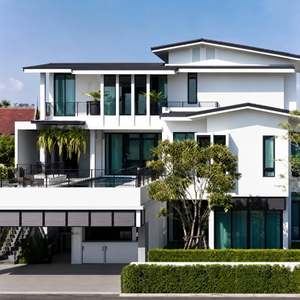

Custom-engineered insulated glass units (IGUs), thermal break profiles, and structural systems meeting ASTM, NFRC, and Mexican NOM standards.
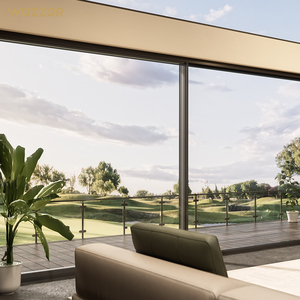
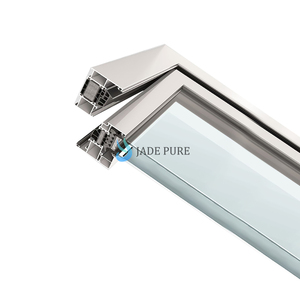
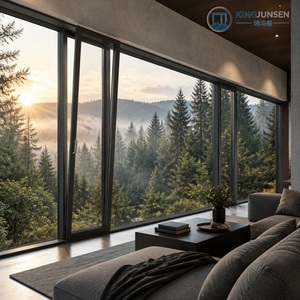
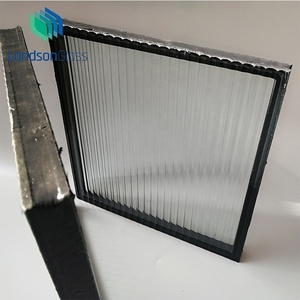
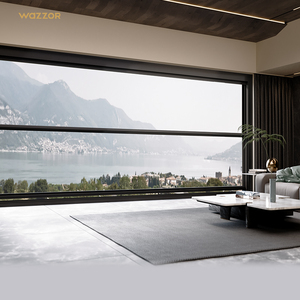
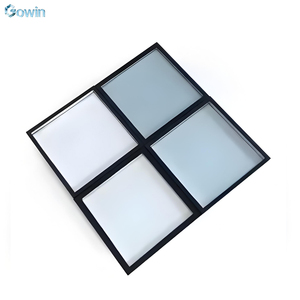
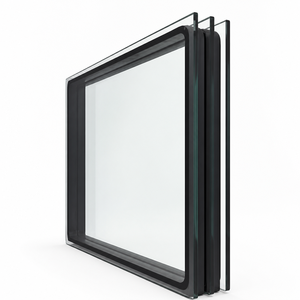
The structural fenestration market across the Republic of Mexico demands exceptional versatility. From high-altitude seismic activity in Mexico City (CDMX) to extreme solar radiation in Monterrey and corrosive salt-spray winds along the Riviera Maya and Baja California, general off-the-shelf glazing specifications routinely fail. As an international manufacturing specialist and direct supplier, our engineering focus delivers precision-engineered Insulated Glass Units (IGUs) and polyamide thermal-break aluminum assemblies customized to meet stringent local construction codes, including NOM-008-ENER-2001 and NOM-020-ENER-2011.
In hot, arid northern zones such as Monterrey, Hermosillo, and Chihuahua, cooling energy consumption accounts for upwards of 60% of commercial electrical loads. Traditional clear monolithic and tinted panels fail to block invisible shortwave infrared radiation. Our custom double- and triple-glazed units utilize offline magnetic sputter vacuum deposition (MSVD) double- and triple-silver Low-E coatings on surface #2 or surface #3. This architectural strategy drops Solar Heat Gain Coefficients (SHGC) down to 0.22 while maintaining visible light transmittance (VLT) above 65%, eliminating glare without sacrificing daylight harvesting.
Along the Caribbean and Pacific coasts—specifically Cancún, Los Cabos, Tulum, and Puerto Vallarta—fenestration assemblies must absorb dynamic cyclical pressures generated by Category 4 and 5 hurricanes. We laminate heat-strengthened and fully tempered lites utilizing 1.52mm and 2.28mm structural ionoplast (SentryGlas®) or structural PVB interlayers. These engineered impact assemblies resist projectile penetration and prevent catastrophic building envelope breaches, backed by structural silicone glazed (SSG) factory framing.
A critical engineering failure observed in standard imported IGUs shipped to the Mexican Altiplano (Mexico City at 2,240m, Guadalajara at 1,566m, and Puebla at 2,135m) is atmospheric pressure disparity. Sealed glazing fabricated at sea level expands in low atmospheric pressure, bending glass outward, causing optical distortion, edge seal failure, and premature fogging. We integrate calibrated capillary pressure equalizer tubes or altitude-adjusted factory gas-filling processes to guarantee flat glass planes and prolonged dual-seal life.
Tailored envelope assemblies formulated for high-profile hospitality, commercial, and residential developments.
Riviera Maya, Tulum & Los Cabos: Heavy-duty motorized patio glass walls and frameless balustrades resistant to severe salt spray, high humidity, and hurricane gale cycles with minimal sightlines.
Polanco, Santa Fe (CDMX) & San Pedro Garza García: Unitized curtain wall insulated panels incorporating warm-edge spacers, acoustic PVB laminates, and low-emissivity coating for LEED certification.
Valle de Bravo & Guadalajara: Thermally broken lift-and-slide doors and tilt-and-turn units achieving superior interior comfort, airtight sealing, and effortless opening spans up to 12 meters.
Compare thermal and structural properties of factory-assembled glazing systems engineered for project tenders.
| Glazing System | Glass Configuration (mm) | U-Value (W/m²K) | SHGC | Acoustic (Rw dB) | Primary Application |
|---|---|---|---|---|---|
| Double Glazed Solar Control | 6mm Low-E + 12A + 6mm Clear | 1.45 | 0.26 | 34 dB | Commercial Windows / Northern Mexico |
| Laminated Impact Resistance | 6mm Temp + 12A + 6mm + 1.52PVB + 6mm | 1.60 | 0.31 | 41 dB | Coastal Resorts / Quintana Roo & Baja |
| Vacuum Hybrid Insulated | 4mm Temp + 0.3V + 4mm + 12A + 4mm Low-E | 0.65 | 0.22 | 44 dB | Net-Zero Architecture / CDMX High-Rise |
| Structural Unitized Façade | 8mm Triple Silver + 16Ar + 8mm Temp Lam | 1.10 | 0.20 | 42 dB | Corporate Towers / Institutional Glass Walls |
The construction sector across Mexico is undergoing a fundamental transformation characterized by strict sustainability criteria and distinct design preferences:
1. Strict Enforcement of Energy Conservation Standards: Municipal approval bodies across Mexico are actively inspecting compliance with NOM-020-ENER guidelines. As a result, commercial developers are migrating from single monolithic glass to high-performance IGUs that cut air-conditioning chiller load by up to 35%.
2. Oversized Panoramic Panes with Minimalist Sightlines: Modern residential projects in regions like Querétaro, Zapopan, and San Miguel de Allende increasingly specify panoramic floor-to-ceiling glass sliding systems with panel heights surpassing 3.5 meters. This trend requires precision tempering furnaces to eliminate roller wave distortion and ensure true optical clarity.
3. Acoustic Decoupling in Urban Developments: In bustling metropolitan areas like Mexico City and Monterrey, high-density traffic demands advanced acoustic isolation. Glazing configurations pairing dissimilar glass thicknesses (e.g., 6mm + 8mm) combined with specialized acoustic PVB interlayers are now standard specifications for luxury residential towers.
From contemporary villas to mid-rise commercial envelopes, inspect the quality execution of our insulated glass assemblies.


Direct supply capability from certified production lines directly to Mexican ports and project sites.
Robotic secondary silicone and polysulfide extrusion ensuring flawless gas sealing and long-term desiccant longevity.
Glazing units undergo rigorous testing for air infiltration, water penetration resistance, and structural uniform load.
Heavy-duty, fumigated A-frame steel/wooden crates with moisture barrier wrap and edge shock absorbers for ocean freight.
Full technical shop drawing generation, thermal simulation modeling, and opening schedule reconciliation.
Crucial commercial, technical, and logistics answers for general contractors, facade fabricators, and architects.
We provide CIF and DDP delivery terms directly to major Mexican ports including Manzanillo (Pacific route for western/central regions), Veracruz (Gulf coast for CDMX and southeastern access), and Altamira. Cargo is loaded into open-top or standard dry containers in secure A-frame steel racks with specialized desiccant packets to prevent transit moisture issues.
Yes. Our double- and triple-glazed Low-E product lines are engineered to surpass the envelope thermal performance benchmarks established under NOM-008-ENER-2001 (non-residential envelopes) and NOM-020-ENER-2011 (residential envelopes), streamlining the process for your local perito endorsement and municipal permits.
Absolutely. High-altitude installations require specific equalization to prevent pane deflection. We incorporate factory capillary tubes or vacuum-controlled equalization chambers tailored to the exact altitude of your final installation site, whether in Guadalajara, Toluca, or CDMX, ensuring structural sealant integrity.
We back our dual-sealed insulated glass assemblies with a comprehensive 10-year warranty against visual obstruction caused by moisture condensation or dust accumulation inside the sealed cavity, underpinned by premium butyl primary seals and structural silicone secondary barriers.
We cater to both large-scale standard dimension developments and fully bespoke architectural schedules. Every unit is labeled with its corresponding CAD opening code on the protective corner protector, simplifying site distribution and installation staging.
Yes. Our hurricane series incorporates structural SentryGlas® (SG) or heavy PVB composite interlayers compliant with ASTM E1886 and E1996 large missile impact testing, perfectly calibrated for high-wind hospitality projects in Cancún, Cozumel, Nayarit, and Los Cabos.
Whether you require custom insulated glass units for a commercial tower in Monterrey or hurricane-resistant systems for a coastal resort, our technical team provides swift shop drawings, thermal calculations, and competitive FOB/CIF quotation schedules.
Contact Us