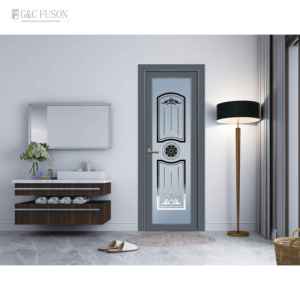
Export-ready architectural systems engineered to withstand persistent coastal humidity, wind-driven moisture, and rigorous cyclic opening fatigue.
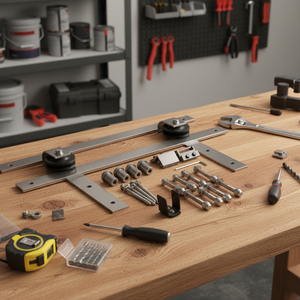
Seattle’s construction landscape demands fenestration hardware engineered to handle unique environmental stresses, including Puget Sound salt aerosols, severe cyclic rainfall, and stringent municipal energy requirements.
Waterfront residential developments along Alki Beach, Magnolia Bluff, and Ballard face continuous sodium chloride deposits combined with sustained maritime winds. Standard zinc or untreated 6063 alloy hardware suffers pitting and galvanic binding within 18 months.
Our OEM/ODM solutions integrate 316-grade stainless steel bearings, PVDF fluoropolymer finishes, and 25-micron hard-coat anodization, ensuring assemblies pass the ASTM B117 salt fog test beyond 3,000 hours without surface passivation failure.
Mid-rise and high-rise structures in South Lake Union and Bellevue encounter severe wind-driven rain from frontal storms off the Pacific. Hardware must maintain continuous gasket compression to prevent moisture intrusion.
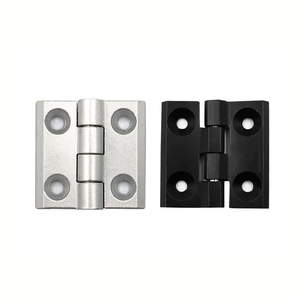
Our casement stays, multipoint lock mechanisms, and structural brackets maintain stable mechanical pressure against heavy EPDM dual-perimeter seals, ensuring compliance with AAMA/WDMA/CSA 101/I.S.2/A440 CW-class standards under cyclic dynamic pressure reaching 720 Pa.
The Seattle Energy Code enforces some of the strictest commercial U-factor requirements in North America (demanding overall fenestration U-factors ≤ 0.28). Uninsulated metal hardware can create thermal bridges that lead to internal condensation and mould growth.
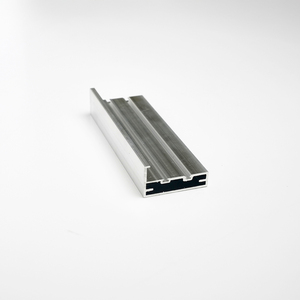
We supply precision hardware designed specifically for thermally broken profiles featuring 34mm polyamide (PA66 GF25) barrier strips, isolating interior levers and pivot housings from the exterior cold envelope.
Strategic hardware considerations shaping specifications among Seattle architects, envelope engineers, and commercial glazing contractors.
Pacific Northwest modern design prioritizes visual connections to nature, driving demand for floor-to-ceiling glass installations. Architects are shifting away from bulky exposed surface hinges toward concealed multi-link balances, hidden sliding tracks, and recessed bottom pivots.
Our OEM invisible track barn systems and hidden pivot pins handle sash weights up to 400 kg while keeping the visible aluminum frame sightline under 45mm.
Washington State commercial codes and multi-family developments require strict adherence to ADA Chapter 4 standards. Operable hardware cannot require tight grasping, pinching, or twisting of the wrist, and operating force must remain under 5.0 lbs.
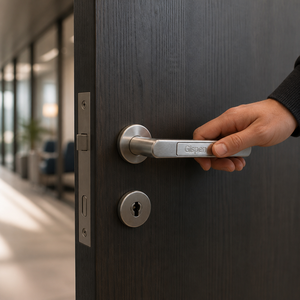
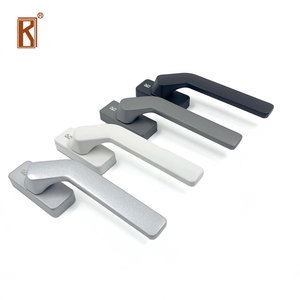
We manufacture custom die-cast levers and low-profile push-pull latches engineered with internal assist springs to provide precise closure indexing well within ADA operational limits.
Tech campuses across Seattle and Bellevue are standardizing motorized fenestration and digital access controls. Mechanical hardware must accommodate concealed wiring channels, integrated reed contact switches, and motorized multi-point lock tie-ins.
Our OEM production team supports customized lock casings and strike plates that integrate smoothly with dry contact access controllers and building automation systems.
A technical comparison of hardware metallurgy and surface treatments for high-salinity, high-precipitation environments.
| Hardware Component | Standard Commodity Spec | FAM Heavy-Duty PNW Export Spec | Seattle Project Compliance Value |
|---|---|---|---|
| Sliding Door Rollers | Nylon wheels, carbon steel bearings | Precision CNC POM wheels with dual 316 Stainless Steel sealed bearings | Smooth rolling friction (<3.5 lbs force); complete immunity to coastal corrosion. |
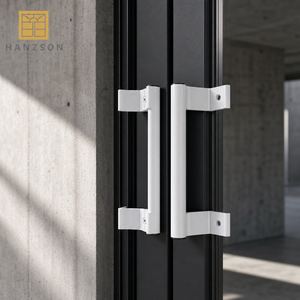
| Architectural Handles | Standard zinc alloy, electroplated finish | Die-cast virgin ADC12 / A380 alloy with Qualicoat Class II powder or AAMA 2605 PVDF | Prevents UV chalking, blister peeling, and micro-cracking caused by marine exposure. |
| Casement Locking Bars | Grade 201 steel, zinc bichromate plated | Austenitic 304/316 Stainless Steel with adjustable eccentric locking cams | Continuous gasket compression prevents water penetration under 12 PSF wind-driven rains. |
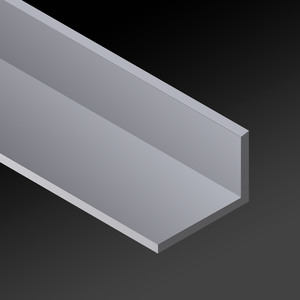
| Corner Angle Cleats | Stamped sheet steel / low-grade aluminum | 6063-T6 extruded aluminum with mechanical locking wedges and structural adhesive injection ports | Eliminates frame racking and sash sag under heavy triple-pane insulated glass loads. |
Direct from our precision extrusion, die-casting, and CNC machining facilities to job sites across King County and the Greater Seattle area.
We do not deliver off-the-shelf compromises. Every profile section, corner crimp angle, and handle mechanism is reviewed by mechanical engineers. From mold fabrication to initial production runs, we work directly from your CAD and Revit files to produce hardware that integrates smoothly into your proprietary door suites.
Quality assurance is built into every step of manufacturing. Spectrometer raw material testing confirms alloy composition before casting. Optical micrometers inspect CNC tolerances within ±0.02mm, while in-house salt-spray and cyclic fatigue rigs test assemblies through 200,000 continuous operating cycles prior to dispatch.
Exporting to the Port of Seattle requires robust crating designed for multi-modal transit. Every hardware component is wrapped in corrosion-inhibiting protective film, boxed in shock-absorbing foam, and packed into fumigated ISPM-15 plywood crates labeled with opening IDs for direct job-site staging.
Answers to common questions regarding local building codes, custom tooling, testing criteria, and Pacific Northwest delivery.
Connect with our technical engineering team to review opening schedules, structural wind load data, and hardware submittals for your Seattle developments.
Contact Us