Architectural Specification Whitepaper • Sultanate of Oman

Custom OEM Aluminium Cladding Systems Manufacturers & Suppliers in the Oman Market

Precision-Engineered Solid Aluminium & A2 Non-Combustible ACM Facades Tested for Coastal C5-M Corrosivity, 50°C Desert Solar Radiation, and ROP Civil Defence Fire Safety Regulations.

Curated Architectural Solutions

High-Performance OEM Aluminium Cladding Systems for Oman Projects

Engineered for extreme GCC atmospheric durability, combining 70% Kynar 500® PVDF fluoropolymer coating technology with precision CNC fabrication for Muscat commercial towers, Salalah beachfront resorts, and Duqm industrial zones.

500,000+ m²
GCC Cladding Export Volume
50°C+ Rated
Continuous Thermal Stability
Class A2 / A1
Non-Combustible Fire Certifications
100% OEM
Custom CNC & Sub-assembly Scope
Engineering Whitepaper • Regional Environmental Factors

Engineering Facade Envelopes for Oman's Rigorous Microclimates

Designing and manufacturing building skins for the Sultanate requires addressing unique meteorological realities: intense ultraviolet exposure, fine airborne abrasive sands, marine atmospheric salinity, and cyclical flash-monsoon humidity.

The Sultanate's Environmental Strain on Cladding Systems

The Sultanate of Oman presents one of the world's most aggressive microclimatic profiles for exterior facade systems. Coastal population hubs such as the Muscat Governorate, Sohar, and the Special Economic Zone at Duqm combine ISO 12944 C5-M high-salinity air with ambient summer temperatures consistently eclipsing 48°C. Under direct solar radiation, exterior panel surface temperatures frequently exceed 78°C, precipitating severe differential expansion coefficients between panel skins and internal substructure anchors.

Standard architectural coatings rapidly experience micro-fissuring, resin photo-degradation, and irreversible gloss loss when exposed to Oman's high UV index (frequently exceeding 11). Simultaneously, desert shamal winds drive fine quartz dust against panel joints, demanding non-vulcanized, dust-repellent gaskets and high abrasion-resistant coatings to prevent early coating failure.

  • Thermal Expansion Relief: Integrated slotted sub-frame brackets accommodating up to 2.4mm/meter coefficient of linear thermal movement.
  • Saline Barrier Protection: Double-primed 70% PVDF resin system (minimum 35-micron dry film thickness) preventing pitting corrosion.
  • Khareef Moisture Resistance: Pressure-equalized ventilated rainscreen design mitigating micro-biological growth during the Salalah monsoon.
Architectural Facade Installation in Demanding Topography

Muscat & Sohar Marine Corridor

Characterized by high chloride deposition rates and extreme relative humidity. Requires our 3003-H14/5005-H34 grade alloy systems treated with hexavalent-free chemical conversion coatings and marine-grade PVDF finishes compliant with AAMA 2605 testing standards.

Inland Desert & Fahud Basins

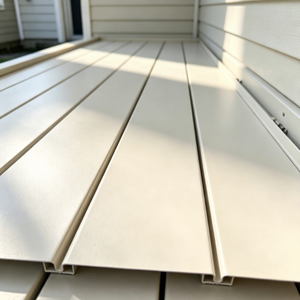
Inland regions experience diurnal temperature swings of 30°C within a single 12-hour span, coupled with severe sand abrasion. Systems utilize heavy-gauge interlocking extruded sections or reinforced solid aluminum cassettes that prevent panel warping, oil-canning, and seal rupture.

Dhofar & Salalah Sub-Tropical Zone

The annual Khareef season brings sustained fog, constant driving mist, and high vegetation density. Our envelope assemblies utilize pressure-equalized rainscreen cavities, self-draining weep weep-holes, and anti-fungal fluoropolymer chemistry that inhibit organic build-up.

Regulatory Directives • Fire Code Conformity

Meeting Royal Oman Police (ROP) Civil Defence & Building Standards

Full technical compliance with the Directorate General of Civil Defence, NFPA standards, and GCC Unified Building Code criteria to safeguard occupants and property investments.

High-Rise Façade Rigorous Fire and Wind Engineering

Strict Non-Combustible Mandates in Oman Commercial Projects

Following stringent regional updates in fire prevention regulations, the Directorate General of Civil Defence in Oman strictly regulates external wall assemblies on mid-rise, high-rise, commercial, and healthcare infrastructures. Traditional low-density polyethylene (PE) core composite panels have been systematically prohibited for high-occupancy envelopes due to flame propagation risks.

Our OEM manufacturing facility specializes in supplying Class A2-s1, d0 Fireproof Composite Panels and Class A1 Monolithic Solid Aluminium Sheets (2.5mm, 3.0mm, 4.0mm). Every cladding run designated for the Omani territory is paired with accredited third-party test reports from international laboratories (Exova Warringtonfire, Thomas Bell-Wright, or Intertek) verifying compliance with NFPA 285 full-scale multi-story wall assembly tests and EN 13501-1 reaction-to-fire standards.

  • Reaction to Fire: European Standard EN 13501-1 rated Class A2 with minimal smoke generation (s1) and zero flaming droplets (d0).
  • Assembly Multi-Storey Test: Passes NFPA 285 criteria evaluating vertical and lateral fire propagation along exterior wall cavities.
  • Inorganic Mineral Core: >90% non-combustible magnesium hydroxide/aluminum trihydrate mineral core composition.

Technical Matrix: Monolithic Solid Aluminium vs. A2 Core ACM vs. Extruded Interlocking Profiles

Performance Characteristic Monolithic Solid Aluminium (3mm) Fireproof ACM Panel (Class A2) Extruded Interlocking Alloy (6063-T6)
Fire Classification (EN 13501-1) Class A1 (Non-Combustible) Class A2-s1, d0 Class A1 (Non-Combustible)
Nominal Weight (kg/m²) 8.10 kg/m² 7.60 - 8.20 kg/m² 9.50 - 12.0 kg/m²
Max Unsupported Width Up to 1,600 mm (with welded ribs) Up to 1,500 mm (cassette return) Varies (Modular plank profiles)
Coating System & Warranty PVDF Kynar 500 (3-Coat, 20-30 Yrs) PVDF / FEVE (2-3 Coat, 20 Yrs) Marine Powder / 25μm Anodised
Wind Pressure Resistance Exceeds 4.5 kPa (Site engineered) Exceeds 3.8 kPa (Tested mock-up) Exceeds 5.0 kPa (Interlocked joints)
Common Oman Applications Airports, Hospitals, Civic Landmarks Commercial Malls, Towers, Showrooms Luxury Villas, Hospitality, Corporate Low-Rise
Market Intelligence • Strategic Transformation

Oman Vision 2040: Architectural Facade Evolution & Sustainability

How mega-developments like Sultan Haitham City, Khazaen Economic City, and coastal tourism destinations are reshaping architectural cladding procurement.

Sultan Haitham City & Modern Urbanism

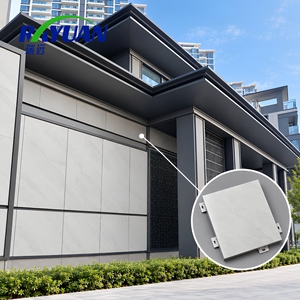
Oman's flagship sustainable metropolis demands building envelopes with low thermal bridging, high solar reflectance index (SRI > 78), and recyclable materials. Our OEM aluminium panels integrate seamlessly with mineral wool continuous insulation (ci), mitigating the urban heat island effect and reducing building operational chiller load by up to 24%.

Preserving Omani Heritage via CNC Geometry

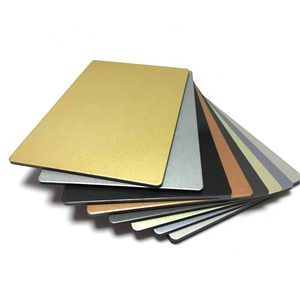
The Ministry of Housing and Urban Planning mandates that contemporary architecture harmonize with authentic Omani heritage. We offer custom parametric CNC perforations, geometric Mashrabiya cutouts, and specialized champagne, sand-dune bronze, and desert-ochre metallic PVDF finishes that fulfill heritage aesthetics while maximizing structural durability.

SEZAD & Industrial Logistics Resilience

In Duqm (SEZAD) and Sohar Freezone, industrial warehouses, refinery administrative hubs, and maritime headquarters demand robust facades resisting sulfur dioxide, crude refining fumes, and corrosive salt air. Our heavy-duty C5-M rated cladding ensures decades of operational integrity without structural degradation.

Precision Manufacturing • Global Supply Chain

OEM Manufacturing Capabilities Tailored for Omani Contractors

From parametric BIM drafting to sea-freight dispatch directly to Port Sultan Qaboos or Port of Sohar, our end-to-end production model ensures risk-free project execution.

Full-Chain Engineering, Fabrication, and Export Logistics

Importing high-specification facade packages into Oman requires strict adherence to project deadlines, flawless shop drawings, and precision fabrication tolerances. As an established OEM cladding manufacturer, we provide Tier-1 and Tier-2 general contractors across Oman with full technical back-up before material hits the fabrication floor.

Our engineering services unit conducts static calculations, dead-load and wind-load structural simulations (per ASCE 7-10 or BS EN 1991), and generates comprehensive BIM / CAD installation drawings detailing bracket fixings, expansion joint allocations, and flashing interfaces. Panels arrive on site marked with distinct elevation tags, ready for immediate sub-frame mounting.

  • Automated Precision Fabrication: CNC 5-axis routing, laser cutting, and robotic corner seam-welding with ±0.5mm dimensional tolerances.
  • Surface Finishing Assurance: In-house continuous vertical PVDF roller coating and automated spray lines verified under 4,000-hour Q-UV and salt spray testing.
  • Seaworthy Reinforced Packaging: Polyethylene film surface protection, heavy styrofoam edge protectors, and IPPC-stamped treated fumigated timber crates.
Engineered Cladding and Large Glazing Assemblies

1. Submittal & Material Approval

We provide full consultant-ready technical submittal dossiers: mill test certificates (EN 10204 3.1), coating thickness reports, fire safety laboratory attestations, sample mockups, and RAL / Pantone custom color swatch formulation matches.

2. Quality Control & Testing

Each production batch undergoes 18 distinct quality check stages: cross-hatch adhesion testing (ASTM D3359), Gardner impact resistance, gloss-level specular measurement, and core peel-strength analysis ensuring structural integrity under high shear loads.

3. On-Time Port Delivery

Streamlined shipping routes directly serving Port Sultan Qaboos (Muscat) and Port of Sohar. Clear customs paperwork including Chamber of Commerce Attested Certificates of Origin, Bill of Lading, and commercial invoices ensures rapid clearance without port demurrage.

Technical Guidance • Localized Procurement FAQs

Frequently Asked Questions by Omani Contractors & Specifiers

Clear, uncompromised technical answers addressing fire codes, coating specifications, import logistics, and warranty terms for facade projects in Oman.

What is the mandatory fire rating for aluminium cladding in Oman?

The Directorate General of Civil Defence in Oman enforces non-combustible building envelopes for commercial buildings, healthcare institutions, hotels, and residential towers over 15 meters. Cladding assemblies must achieve EN 13501-1 Class A2-s1, d0 (for fireproof composite panels with mineral cores) or Class A1 (for 3.0mm+ solid monolithic aluminium panels). Traditional PE-core ACM panels are strictly prohibited on external envelope applications.

How does PVDF coating combat chalking and fading under Oman's UV index?

We utilize authentic 70% Kynar 500® or Hylar 5000® PVDF fluoropolymer resins applied in a minimum 3-coat system (primer, color coat, and clear protective topcoat) reaching 35+ microns total film thickness. The carbon-fluorine bond in the PVDF molecular structure is impervious to solar ultraviolet rays, ensuring Delta E color shift remains under 5 units and gloss retention exceeds 80% after 20 years of continuous exposure in the Gulf climate.

Solid Aluminium vs. A2 ACM: Which is recommended for coastal projects?

For buildings located within 1 km of the shoreline in Muscat, Muttrah, or Salalah, 3.0mm solid monolithic aluminium sheet (3003-H14 or 5005 alloy) is preferred. Monolithic aluminium completely eliminates the theoretical risk of edge delamination from long-term salt aerosol ingress. For interior cladding, retail ceilings, and high-rise curtain wall spandrels where structural weight savings and panel flatness are critical, A2 mineral-core ACM provides excellent, cost-effective performance.

Can you provide custom Mashrabiya patterns and parametric CNC perforation?

Yes. We specialize in custom OEM engineering for architectural perforations. Utilizing high-speed multi-head CNC punch presses and fiber lasers, we produce traditional Islamic geometric patterns, perforated ventilation screens, and acoustic louvers. All cut edges are treated and post-coated to ensure continuous protective coating encapsulation around perforated apertures, preventing edge corrosion.

What is the standard lead time for shipping to Muscat or Sohar ports?

Standard production cycles range between 18 to 25 working days depending on quantity, color customization, and fabrication requirements. Ocean transit times to Port Sultan Qaboos (Muscat) or Port of Sohar typically average 14 to 22 calendar days. For expedited high-priority phases, split container dispatches or air-freight samples for mock-up approvals can be coordinated easily.

How do you assist with consultant approvals and shop drawings in Oman?

We supply a complete engineering submittal dossier for project consultants and main contractors. This includes structural calculation books (wind load deflection calculations per BS/ASTM standards), structural bracket fixing details, anchor pull-out data, certified lab fire test reports, and factory-issued 20-year performance warranties for coatings and panel integrity.

Project Consultation • Engineering Dossiers • Material Samples

Accelerate Your Project Specification in Oman

Connect with our technical facade engineering team today to review your project elevations, receive a comprehensive Bill of Quantities (BOQ) cost optimization, and request physical project sample kits tailored to Omani standards.