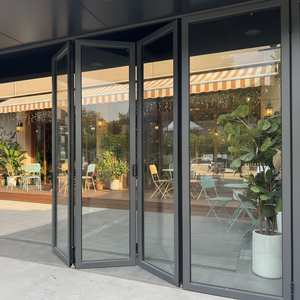

Engineered for high-density metropolitan infrastructure, monsoon rainfall loads, and commercial real estate projects across Bangladesh.
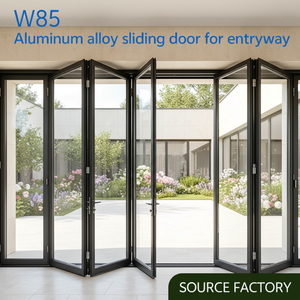
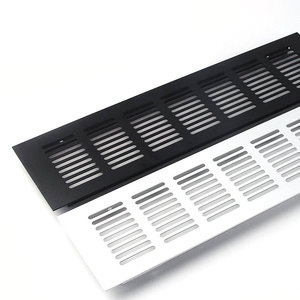
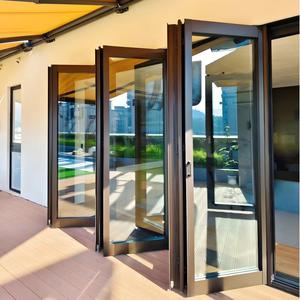
A rigorous metallurgical and structural evaluation for general contractors, MEP consultants, and structural engineers in Bangladesh.
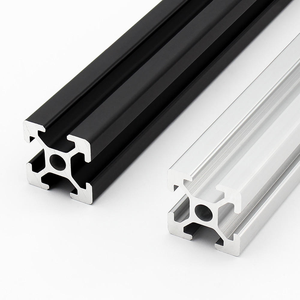
Commercial structures across Bangladesh—ranging from high-density corporate towers in Motijheel and Gulshan to heavy-load export processing facilities in Mirsarai and Narayanganj—demand aluminum framing profiles that significantly surpass baseline consumer tolerances. Our China-based manufacturing foundries employ prime-ingot 6063-T5, 6063-T6, and 6061-T6 structural architectural alloys, strictly avoiding secondary scrap remelt that introduces brittle iron contaminants.
By enforcing an extrusion dimensional tolerance compliant with EN 12020-2 and GB/T 5237 standards, mullion and transom wall thicknesses are strictly controlled between 1.4 mm for standard commercial windows and 2.5 mm to 3.5 mm for high-span structural curtain walls. The inclusion of manganese and magnesium in exact atomic ratios yields ultimate tensile strengths exceeding 205 MPa, crucial for neutralizing dynamic lateral wind shears experienced during extreme tropical weather phenomena in the Bay of Bengal.
Technical Consideration: Under BNBC (Bangladesh National Building Code) 2020 Chapter 6 Wind Load provisions, commercial fenestration installations above the 10th floor in coastal and riverine sectors must be verified for design pressures upwards of 2.2 kPa to 3.5 kPa. Our engineering teams perform Finite Element Analysis (FEA) on every extrusion die cross-section to eliminate structural deflection.
A major design vulnerability in commercial towers across Dhaka and Chattogram is intense thermal induction through aluminum framing. Aluminum exhibits a high thermal conductivity of approximately 205 W/(m·K). Without thermal insulation, continuous cooling systems in commercial facilities face severe parasitic heat loading, resulting in elevated peak HVAC consumption and internal perimeter condensation during monsoon humidity spikes.
Our engineered systems integrate European-standard PA66 GF25 (polyamide 6.6 reinforced with 25% structural glass fiber) thermal insulating struts. Mechanically knurled and crimped into aluminum extrusion cavities, these thermal barriers decouple the external framing skin from the internal frame. The composite assembly drops window frame U-values from over 6.5 W/(m²·K) in uninsulated sections down to Uf ≤ 1.8 to 2.2 W/(m²·K) when combined with low-emissivity double-glazed units (DGU).
| System Category | Alloy & Temper | Structural Wall Thickness | Air / Water / Structural Standard | Ideal Application in Bangladesh |
|---|---|---|---|---|
| Heavy Commercial Curtain Wall (Stick / Unitized) | Alloy 6063-T6 / 6061-T6 | 2.5 mm – 3.2 mm | ASTM E283 / E331 / E330 (3.5 kPa Wind) | High-rise Corporate Towers (Gulshan, Banani, Motijheel) |
| Thermal-Break Sliding / Folding Systems | Alloy 6063-T5 (PA66 Barrier) | 1.8 mm – 2.2 mm | NFRC / AAMA 101 Certified (Uf < 2.0 W/m²K) | Luxury Residential, Mixed-Use Developments, Hotels |
| Industrial High-Span Ventilation Grilles | Alloy 6063-T5 | 1.4 mm – 2.0 mm | AMCA 500-L Aerodynamic & Water Rejection | RMG Export Processing Zones (Gazipur, Savar, CEPZ) |
| Reinforced Casement & French Grid Doors | Alloy 6063-T6 | 2.0 mm – 2.5 mm | PAS 24 Security & Water Ingress Resistant | Diplomatic Enclaves, Commercial Retail & Banking Head Offices |
Addressing the specific operational and environmental challenges faced by commercial real estate across distinct regional districts.
Commercial corridors such as Gulshan Avenue, Banani 11, Kawran Bazar, and Uttara face extreme ambient noise pollutions exceeding 75 to 85 dB alongside severe solar heat reflection from surrounding concrete infrastructure.
Coastal developments, Agrabad commercial zones, and the Mirsarai Bangabandhu Sheikh Mujib Shilpa Nagar (BSMSN) require high-level resistance to oceanic salinity and severe monsoonal storm surges.
Bangladesh hosts the world's highest concentration of LEED-certified platinum and gold Readymade Garment (RMG) processing facilities, requiring industrial fenestration that aligns with strict global compliance standards.
How progressive real estate development groups, EPC firms, and architectural practices are revolutionizing fenestration procurement.
The formal gazetting and enforcement of the Bangladesh National Building Code (BNBC) 2020 has established rigorous structural requirements for commercial building envelopes. Fenestration systems are no longer chosen solely on cost; they must now provide verified structural calculation packages demonstrating adherence to lateral wind loading, seismic story-drift performance, and perimeter fire barriers.
Due to high urban labor congestion and tight construction timelines in Dhaka's core business districts, major developers are shifting away from traditional on-site stick-built curtain walls. Instead, they are adopting factory-assembled, factory-glazed Unitized Commercial Curtain Wall Modules imported directly from China. This modular approach cuts site installation timelines by up to 60% while ensuring uniform silicone structural bonding under cleanroom factory conditions.
With Bangladesh's rising power tariffs and aggressive ESG mandates for commercial grade-A real estate, single-pane clear float glass in uninsulated aluminum frames is being phased out. Modern projects now specify high-performance insulated glazing with Low-E coatings paired with thermal-break aluminum frames. This transition delivers significant operational energy savings over the lifecycle of commercial facilities.
Combining world-class extrusion lines, advanced CNC fabrication, and comprehensive export logistics directly to Chittagong Port and Pangaon Inland Container Terminal.
We engineer custom extrusion dies based on project architectural drawings, achieving complex mullion geometry, deep glazing pockets, and integrated structural stiffeners.
Frames undergo precision CNC cutting, mechanical corner crimping, and pre-drilled hardware alignment in our factory, drastically reducing installation labor and error rates on site in Bangladesh.
Every fabrication run undergoes multi-point testing: ultrasonic thickness checks, coating adhesion cross-hatch testing, and full-scale air/water infiltration testing per ASTM standards.
Panels and knocked-down (KD) frames are packed with peelable surface-protective films, corner bumpers, and moisture-sealed, fumigated solid wood crates labelled by opening tag for seamless site staging.
Clear, direct answers regarding customs tariffs, letters of credit (L/C), structural calculations, and supply chain logistics.
We are fully equipped to fulfill the strict conditions mandated by Bangladesh Bank and commercial banks for Irrevocable Letters of Credit (L/C at Sight). We provide detailed Proforma Invoices with exact HS Code classifications (e.g., 7610.10 for doors/windows, 7610.90 for architectural extrusions), clean on-board Ocean Bills of Lading, Certificates of Origin (CO), Non-Negotiable Packing Lists, and third-party inspection certifications (SGS, Intertek, or Bureau Veritas) as specified in the credit terms.
For marine environments within 15 km of the coastline, standard powder coatings are susceptible to filiform corrosion and bubbling. We mandate architectural coatings certified to AAMA 2605 or Qualicoat Class 2 / Class 3 specifications: either 70% fluoropolymer (PVDF) Kynar 500 resin coatings (with minimum dry-film thickness of 35-45 microns) or 25-micron continuous architectural anodization. Both treatments undergo rigorous neutral and acetic acid salt spray tests exceeding 4,000 continuous hours without adhesion failure.
Yes. Our engineering division utilizes specialized structural fenestration design software to model frame responses based on the Basic Wind Speeds (V) detailed in BNBC 2020 (ranging from 40 m/s to 80 m/s across coastal zones). We calculate the required moment of inertia (Ix, Iy) of primary structural mullions, factoring in opening spans, building height, exposure categories, and seismic story-drift allowances to ensure full approval by local design consultants and development authorities (RAJUK, CDA, KDA, RDA).
Shipments typically depart from primary ports in Southern China (Shenzhen, Guangzhou, or Foshan feeder ports) and travel directly to Chittagong (Chattogram) Port. Direct ocean transit times range from 12 to 18 days depending on transshipment routing via Singapore or Port Klang. For projects in Dhaka, containers can be cleared at Chittagong or transshipped via bonded river barge to the Pangaon Inland Container Terminal (PICT) or Kamalapur ICD, reducing road congestion across the Dhaka-Chittagong highway.
We offer both formats based on your project requirements and local logistics setup. Fully assembled and factory-glazed systems guarantee superior weather sealing, silicone structural joints, and quality control under cleanroom conditions, making them ideal for high-end unitized façades. Knock-down (KD) pre-machined assemblies maximize container volume utilization, helping reduce sea freight costs and import duties on volumetric cargo for high-volume commercial projects.
For our catalog of standard commercial profiles, we maintain a flexible threshold starting from a single 20-foot GP container (approximately 8 to 11 metric tons of aluminum profiles or 350-500 square meters of assembled fenestration). For bespoke extrusion profiles requiring custom die tooling, the minimum die run is typically 500 kg to 1,000 kg per section, with tooling costs credited back once cumulative order volume surpasses specified project metrics.