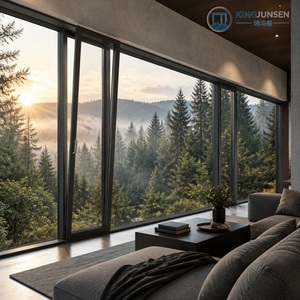
 WT 2021 Class A
Modern Aluminum Casement Windows And Doors With Louver Energy Saving Low-E Glass Double Glazed Tilt And Turn
- Multi-chamber thermal barrier profile
- Acoustic rating: Rw up to 42 dB
- Dual tilt-and-turn German kinematics

As Central Europe accelerates compliance with the recast Energy Performance of Buildings Directive (EPBD) and Poland enforces strict Technical Specifications (Warunki Techniczne 2021), developers, general contractors (generalny wykonawca), and architectural joinery distributors require precision thermal insulation systems delivering exceptional U-values, structural load capacities, and supply chain predictability.
Engineered for high thermal resistance, mechanical stability under adverse snow and wind loads, and seamless integration into residential, commercial, and industrial automation environments.
WT 2021 Class A
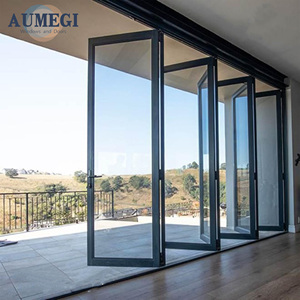 Panoramic Thermal
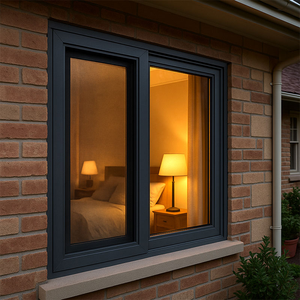 RC2/RC3 Security
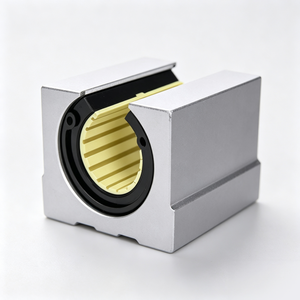 Precision Hardware
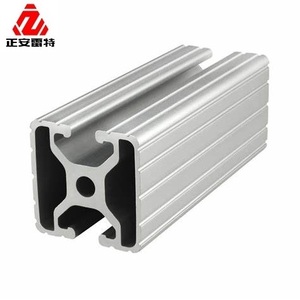 EN 755-9 Certified
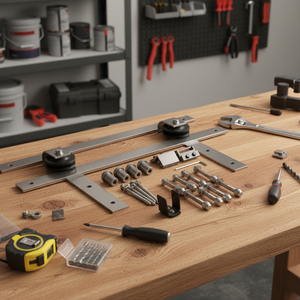 Architectural Interior
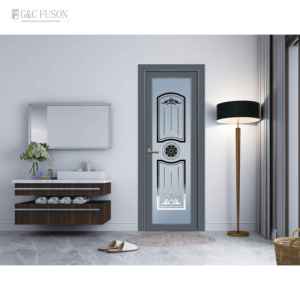 Passive House Ready
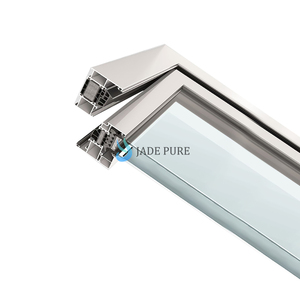 EN 13830 Facade
Navigating the fenestration and building envelope sector in Poland requires an uncompromising adherence to the national building standard Warunki Techniczne 2021 (WT 2021). As an EU member state subject to stringent European Union decarbonization trajectories, Poland has established some of the most rigorous heat transfer coefficient thresholds in Europe for vertical transparent partitions.
Under WT 2021, the maximum permissible thermal transmittance coefficient ($U_{max}$) for standard exterior windows installed in habitable rooms is restricted to Uw ≤ 0.90 W/(m²·K), while roof windows must achieve Uw ≤ 1.10 W/(m²·K), and commercial exterior doors cannot exceed Ud ≤ 1.30 W/(m²·K). For curtain walling and structural glazed facades, parameters governed by PN-EN 13830 typically require overall facade performance ($U_{cw}$) below 1.0 W/(m²·K). Chinese suppliers intending to supply the Polish building joinery sector (*stolarka otworowa*) must eliminate cold bridging entirely through structural innovation rather than superficial modifications.
In accordance with the Construction Products Regulation (CPR 305/2011/EU) and national notification procedures, any aluminum window, door, or facade system distributed in Poland must carry valid CE Marking, supported by a formal Declaration of Performance (DoP / Deklaracja Właściwości Użytkowych) issued in Polish. Testing must be performed under AVCP System 3 by an EU-notified laboratory (such as ITB Warszawa, ift Rosenheim, or equivalent accredited bodies), verifying air permeability (PN-EN 12207), water tightness (PN-EN 12208), wind load resistance (PN-EN 12210), and acoustic insulation (PN-EN ISO 717-1).
| Building Partition Type (Poland WT 2021) | Mandated Polish Code (Umax) | FAM Aluminium Standard | Passive House Target | Verification Test Protocol |
|---|---|---|---|---|
| Standard Exterior Vertical Windows (Habitable) | 0.90 W/(m²·K) | 0.78 - 0.85 W/(m²·K) | ≤ 0.80 W/(m²·K) | EN ISO 10077-1 / EN ISO 10077-2 |
| Terrace & Panoramic Lift-and-Slide Doors | 0.90 W/(m²·K) | 0.82 - 0.88 W/(m²·K) | ≤ 0.80 W/(m²·K) | EN 12412-2 / Hot Box Method |
| Commercial & Residential Entrance Doors | 1.30 W/(m²·K) | 0.95 - 1.10 W/(m²·K) | ≤ 0.80 W/(m²·K) | EN 14351-1 + A2 Annex ZA |
| Structural & Unitized Curtain Wall Facades | 1.00 W/(m²·K) | 0.85 - 0.95 W/(m²·K) | ≤ 0.85 W/(m²·K) | EN 13830 / Dynamic Chamber |
Poland is divided into five distinct thermal climate zones under Polish standard PN-EN 12831, spanning from the milder maritime conditions of Zone I (Szczecin, Baltic littoral) to the sub-zero continental severe conditions of Zone V (Suwałki, Podlasie, and the Tatra mountain alpine belt), where winter design outdoor temperatures drop to -24°C. Thermal envelope systems engineered by FAM Aluminium are customized to address these distinct microclimatic stressors across diverse application verticals:
Concentrated in metropolitan peripheries like Warsaw (Konstancin-Jeziorna, Wilanów), Kraków, and Wrocław. High demand for slim-profile thermal break casements and expansive lift-and-slide doors equipped with warm edge spacers (Swisspacer Ultimate) and solar heat gain control glass (g-value ~0.50) to optimize winter solar absorption while eliminating summertime overheating.
Strategic logistics nodes across Upper Silesia (Katowice, Gliwice), Central Poland (Łódź corridor), and Poznań require high-durability unitized curtain walling and robust extruded structural profiles (6063-T6). These systems combine strict condensation resistance (fRsi ≥ 0.72) with structural deflection compliance (L/300) under intense gusts common along Central European plains.
Driven by Poland's national priority programs including "Czyste Powietrze" (Clean Air) and "Ciepłe Mieszkanie", multi-family and institutional buildings undergo deep thermal retrofits. Replacement windows require precision CNC fabrication to fit legacy masonry openings while upgrading thermal efficiency from obsolete Uw 2.6 to modern Uw ≤ 0.90 W/(m²·K).
Poland's building sector is currently undergoing a structural transformation. Formerly dominated by entry-grade PVC fenestration, both residential homeowners and institutional investors are increasingly shifting capital toward architectural aluminum systems. Several pivotal structural factors drive this transition:
With the European Union tightening building emission rules, all newly constructed buildings in Poland must function as Nearly Zero-Energy Buildings (nZEB). By 2030, all new residential constructions must be zero-emission. In fenestration, this shifts focus from simple center-of-glass calculations ($U_g$) to comprehensive installed thermal modeling ($U_w$ and linear thermal bridging $\Psi$, calculated under EN ISO 10211). Aluminum profile extrusions incorporating multi-chamber polyamides filled with low-density aerogel or polyurethane foam insulation are no longer optional luxuries; they are fundamental to structural compliance.
Urban density along high-capacity arteries in Warsaw, Trójmiasto (Gdańsk, Gdynia, Sopot), and Poznań has elevated acoustic damping ($R_w$) alongside thermal metrics. High-performance aluminum profiles can accommodate triple-glazed, asymmetric laminated acoustic glass packs (e.g., 66.2 Stratophone Low-E + 16 Ar + 6 Float + 16 Ar + 44.2 Low-E) weighing upwards of 45-60 kg/m². Standard PVC profiles frequently experience sash sagging and gasket failure under these loads, making heavy-gauge 6063-T6 architectural aluminum the structural material of choice for high-end developers.
Polish general contractors bidding on BREEAM (Outstanding/Excellent) and LEED (Platinum) certified commercial towers increasingly demand Type III Environmental Product Declarations (EPD per EN 15804+A2). Chinese manufacturers leading the market are transitioning extrusion facilities to hydro-powered and renewable-energy smelting, offering recycled content rates exceeding 40-60%. This reduces embodied carbon from the traditional 16.0 kg $CO_2e$/kg Al down to under 4.0 kg $CO_2e$/kg Al, positioning Chinese supply directly in line with EU Green Taxonomy metrics.
Exporting building components over 8,000 kilometers from Chinese industrial hubs to Polish job sites requires rigorous engineering, automated repeatability, and meticulous logistical safeguards. FAM Aluminium has refined a vertically integrated manufacturing ecosystem designed specifically to de-risk overseas procurement for European architectural partners.
5-axis German CNC profile centers ensure milling tolerances within ±0.1mm. Precision cutting, corner crimping, and automated epoxy bonding prevent water ingress and preserve corner joint thermal continuity.
Utilization of high-performance PA66 GF25 (polyamide reinforced with 25% glass fiber) thermal struts, engineered to match the thermal expansion coefficient of aluminum, preventing bimetallic deflection under severe winter-summer temperature deltas.
Advanced vertical powder coating lines certified to Qualicoat Class 2 standards. Resistant to UV degradation, coastal salt spray along the Baltic Sea, and aggressive industrial smog, backed by 15 to 25-year finish warranties.
Every fenestration unit is barcoded with opening references matching architectural schedules. Comprehensive factory acceptance testing (FAT) includes corner shear tests, air tightness chambers, and glass optical distortion scanning.
Addressing core technical, legal, and operational inquiries raised by Polish project directors, cost consultants, and procurement managers.
Compliance is validated via two complementary paths: rigorous thermal finite element analysis (FEA) based on EN ISO 10077-2 modeling the exact profile cross-section and polyamide cavity layout, coupled with accredited hot-box testing under EN 12412-2. We pair our multi-cavity thermal break extrusions with triple-glazed units (Ug = 0.5 - 0.6 W/m²K) using argon gas filling and Swiss warm edge spacer bars, reliably yielding overall window metrics between Uw 0.78 and 0.85 W/(m²·K).
Every export shipment is delivered with a complete European compliance dossier: formal Declaration of Performance (DoP / Deklaracja Właściwości Użytkowych) in Polish and English, CE conformity markings affixed directly to profiles and crate labels per EN 14351-1 or EN 13830, mill test certificates (EN 10204 3.1) verifying alloy chemical composition (6063-T5/T6), glass batch test reports, and fully coordinated assembly shop drawings.
We offer multi-modal freight strategies. For standard budget optimization, ocean shipping from Chinese ports (Shenzhen/Shanghai/Ningbo) to Port Gdańsk or Port Gdynia takes approximately 35 to 45 days. For time-critical commercial construction schedules, direct freight rail via the New Silk Road (Chengdu/Xi'an to Małaszewicze dry port / Warsaw terminal) provides a fast transit time of 18 to 24 days, dramatically reducing project lead times compared to standard maritime logistics.
In Poland's climate zones, exterior temperatures can drop to -20°C while interiors are heated to +22°C, causing bimetallic bending in long dark-colored aluminum profiles exposed to solar radiation. We resolve this by utilizing split-insulating polyamide strips (shear-free or sliding thermal struts) that decouple inner and outer profile expansion. Furthermore, all Low-E and solar control glass panes undergo full thermal tempering and HST (Heat Soak Testing) per EN 14179 to prevent thermal shock fractures.
Initiate direct technical engagement with our senior facade engineers. Send your CAD/BIM architectural drawings, window schedules, or structural facade requirements for a comprehensive review, thermal simulation check, and competitive FOB/DDP project quotation.