
Explore our manufactured door, window, and structural profile collections fabricated in our precision facilities and certified for export to Central European commercial and residential projects.
An in-depth structural overview of why general contractors, real estate developers, and architectural firms across Budapest, Debrecen, and the Balaton region source structural aluminium envelope systems directly from Dubai manufacturing hubs.
The construction and commercial development sectors across Hungary face two structural bottlenecks: escalating domestic and regional fabrication lead times, and compounding costs driven by raw material shortages within the European common market. For high-volume residential projects, premium villa developments in the Buda Hills (II. and XII. Kerület), and multi-family units in expanding economic hubs such as Győr and Szeged, sourcing windows and curtain wall systems requires a partner who commands raw material security, large-span precision extrusion, and certified European compliance.
FAM Aluminium operates industrial extrusion, crimping, and automated CNC fabrication facilities in Dubai, United Arab Emirates—one of the world's most sophisticated smelting and metallurgical clusters. By combining high-purity electrolytic primary aluminium (Al 99.7%) with cutting-edge German multi-axis routing and automated crimping technology, our manufacturing plant delivers engineered fenestration products that surpass the structural stability of standard European distribution networks while reducing overall project costs.
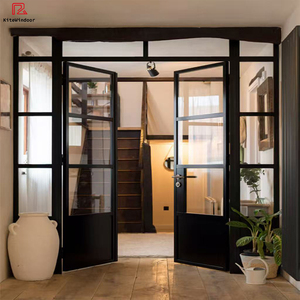
Far from delivering off-the-shelf catalog windows, our specialized export operations provide bespoke made-to-measure window assemblies, heavy-duty lift-and-slide doors, structural curtain walling, and thermally insulated tilt-and-turn units manufactured strictly according to project shop drawings. We supply fully crated, glazed, or unglazed modular assemblies ready for direct site delivery throughout Central Europe via Adriatic deep-water ports (Koper/Trieste) or direct air-and-rail freight channels into Budapest Liszt Ferenc and Csepel logistics terminals.
Hungary's climate presents rigorous physical demands on building envelope design. Unlike maritime regions that enjoy tempered seasonal variations, the Pannonian Basin experiences drastic temperature extremes: sub-zero winter temperatures dipping below -15°C followed by high-humidity summer peaks frequently exceeding +38°C. Fenestration systems must maintain strict airtightness, eliminate linear thermal bridging, and withstand prolonged thermal contraction and expansion cycles without frame warping or seal failure.
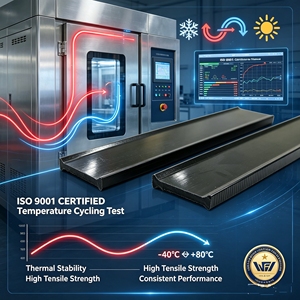
Our engineering department implements PA66 GF25 (polyamide 6.6 reinforced with 25% woven structural glass fiber) thermal break bars spanning widths of up to 34mm. By completely decoupling the exterior aluminium profile from the interior visible frame, our systems effectively halt heat flux. When combined with triple-pane insulated glass units (IGUs) incorporating soft-coat Low-Emissivity treatments, warm-edge silicone composite spacers, and 90% Argon gas filling (4Low-E/16Ar/4Float/16Ar/4Low-E), our window systems effortlessly hit overall heat transfer coefficients (Uw values) under 0.90 W/m²K, strictly fulfilling Hungary's TNM 7/2006 (V. 24.) energy performance directives and upcoming EU Nearly Zero-Energy Building (nZEB) standards.
| System Category | Dubai Factory Standard | Hungarian MSZ EN Specification | Architectural Application |
|---|---|---|---|
| Tilt & Turn Window Systems | 70mm–85mm Depth, 34mm PA66 Polyamide Break | MSZ EN 12207 Class 4, MSZ EN 12208 Class 9A | Multi-family developments, Budapest luxury apartments, civic institutions |
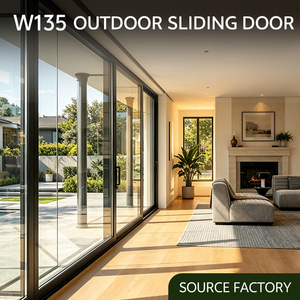
| Slim-Sightline Sliding Doors | 20mm–25mm Interlock Stile, Concealed Rollers | MSZ EN 12210 Class C5 (Wind Load Resistance) | Lake Balaton villas, penthouses, high-end hospitality terraces |
| Structural Curtain Walling | 50mm–65mm Transom/Mullion, EPDM Gaskets | MSZ EN 13830 (Static & Dynamic Water Tightness) | Office headquarters, Debrecen logistics parks, industrial centers |
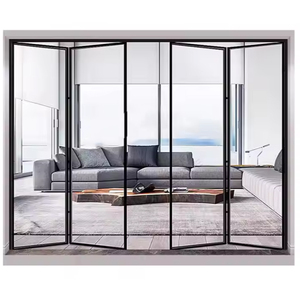
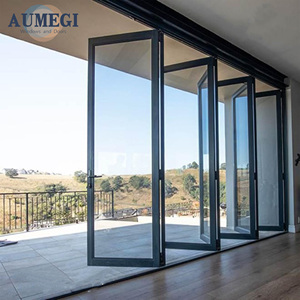
| Bi-Folding Door Walls | Heavy Stainless-Steel Rollers, Flush Threshold | MSZ EN 14351-1 Impact & Deflection Testing | Commercial restaurants, luxury residential gardens, rooftop lounges |
Custom-engineered profile assemblies designed to address the specific microclimatic, urban zoning, and structural architectural demands of Hungarian developments.
Strict heritage aesthetic mandates across Pest's District V and Buda's Castle District demand ultra-slim visual profiles that integrate effortlessly into masonry and limestone facades. Our narrow-sightline thermal break series replicates classical proportions while integrating high-specification triple acoustic glazing (up to 44 dB sound attenuation) to mute urban tram traffic and vibrant city sounds.
Properties situated along Lake Balaton endure severe wind loading and driving rain during summer micro-storms, alongside harsh seasonal freezing. Our heavy-duty lift-and-slide systems feature multi-point stainless steel locking gear, specialized EPDM vulcanized sealing gaskets, and Qualicoat Seaside certified powder coatings to eliminate corrosion, frame deflection, and water ingress.
With vast multinational industrial and automotive supply plants expanding throughout Eastern and Western Hungary, rapid delivery of unitized curtain walls, heavy personnel doors, and high-durability ribbon window arrays is critical. FAM Aluminium delivers mass-scale fabrication, strict delivery staging, and shop-floor engineering that drastically cuts on-site installation timelines.
The convergence of modern European sustainability mandates, minimalist design trends, and global manufacturing dynamics shaping Hungarian fenestration through 2030.
With the European Union's Energy Performance of Buildings Directive (EPBD) tightening building standards, Hungarian developers can no longer rely on uncertified profiles. High-performance building envelopes now dictate institutional asset valuations. Our Dubai facility provides fully documented thermal performance simulations, material passports, and environmental product certifications that streamline green building compliance (BREEAM, LEED) in the CEE region.
The contemporary Hungarian architectural landscape has moved away from thick PVC and bulky timber casements toward concealed-frame aluminium systems. High-end residential builds across Pest county require massive glass panels exceeding 3.2 meters in height. Aluminium's superior strength-to-weight ratio allows razor-thin sightlines that maximise natural light entry during brief winter daylight hours while carrying glass weights exceeding 450 kilograms per sash.
Fluctuating regional energy costs across mainland Europe have triggered periodic shutdowns and surging surcharges at regional glass processors and extrusion plants. Sourcing directly from our stable, vertically integrated production base in the UAE allows Hungarian contractors to lock in firm pricing, secure priority manufacturing slots, and avoid cascading construction delays across commercial handovers.
Built upon world-class extrusion lines, rigorous QA protocols, and dedicated export engineering services tailored to overseas architects and general contractors.
We work exclusively with certified 6063-T6 and 6061-T6 prime architectural alloys extruded through precision dies. Our profiles deliver exceptional surface smoothness, uniform wall thicknesses conforming strictly to EN 755-9 standards, and robust tensile strength capable of handling high wind pressures in exposed settings.
Before metal is cut, our structural engineering office prepares comprehensive BIM-compatible CAD details, anchorage connection calculations, drainage path layouts, and glass deflection reports. Hungarian engineering teams receive verified technical documentation for municipal permitting and client sign-off.
International shipping demands fail-safe packaging. Every fabricated sash, frame, and glass unit is wrapped in multi-layer protective PE film, cushioned with dense closed-cell EPE corner guards, and secured inside custom-built fumigated timber crates (ISPM 15 compliant). Each piece is labeled with its corresponding building schedule reference for effortless sorting on site.
Direct answers addressing technical compliance, customs clearance, logistics, and on-site support for importing aluminium joinery from Dubai into Hungary.
Yes. All fenestration products engineered for export to the European Union strictly fulfill the Construction Products Regulation (CPR 305/2011/EU) under harmonised standard EN 14351-1. We supply the complete Declaration of Performance (DoP), factory production control (FPC) records, and thermal test certificates required by Hungarian municipal building authorities (ÉMI).
We offer turnkey CIF or DAP delivery options to any commercial warehouse or jobsite in Hungary. Crated shipments move via container line directly to Port of Koper (Slovenia) or Port of Trieste (Italy), transferring to bonded rail or direct flatbed trucks that arrive in Budapest within 20 to 25 transit days from port departure. All EUR.1, commercial invoices, and origin certificates are provided.
Absolutely. Our window and curtain wall systems are built to withstand severe wind loads (Class C5 under EN 12210) and driving rain (Class 9A under EN 12208). The integrated multi-cavity PA66 thermal breaks and high-grade peroxide-cured EPDM gaskets ensure zero air infiltration, stopping condensation, interior frost formation, and drafts during sub-zero winters.
We provide Qualicoat Class 2 architectural powder coating finishes, heavy-micron anodic oxidation (up to 25 microns), and ultra-durable fluoropolymer PVDF coatings in any custom RAL color. These surface treatments prevent chalking, UV degradation, color shifting, and micro-cracking when exposed to intense summer sun along Lake Balaton or river reflections on the Danube.
We offer both delivery methods based on your site requirements. We can supply completely assembled, factory-glazed, and operationally tested window and door units ready for instant installation, or precision-machined knock-down (CKD) frame profiles with matching gasket and hardware packs, allowing your firm to source glass locally in Hungary to minimize shipping weight.
Following final shop-drawing approval and finish sign-off, standard factory fabrication requires 4 to 6 weeks depending on project scale and glass specifications. Combined with sea and rail logistics, total delivery time to Hungarian jobsites typically ranges from 7 to 9 weeks—frequently beating regional European fabricator backlogs by months.
Every shipment includes step-by-step assembly blueprints, 3D anchor and flashing connection details, and complete hardware setting guides. For large residential projects or complex curtain walls, our engineering department provides live video technical sessions with your Hungarian site managers, and can deploy senior installation technicians to the jobsite to supervise initial installation runs.