Selecting a Tier-1 aluminium casement window supplier goes beyond comparing quotation sheets. Precision engineering, thermal envelope efficiency (U-values below 1.2 W/m²K), alloy metallurgical purity (structural 6063-T5/T6 extrusions), multi-point hardware integration, and compliant testing under ASTM, EN, and AS/NZS standards dictate project longevity. Below is an authoritative technical overview and showcase of high-performance architectural systems curated by structural engineers.
Explore our precision-engineered product lines tailored for residential luxury estates, commercial high-rise towers, and heavy-duty architectural façade assemblies.
As global carbon-neutral mandates and climate volatility redefine structural envelope requirements, engineering procurement must anticipate these three pivotal manufacturing evolutions.
Specifiers now audit the embodied carbon of primary bauxite smelting. Modern Tier-1 suppliers are shifting to post-consumer scrap recycling (such as Hydro CIRCAL with over 75% recycled content), bringing the carbon footprint below 2.0 kg CO2 per kg of extruded aluminium profile.
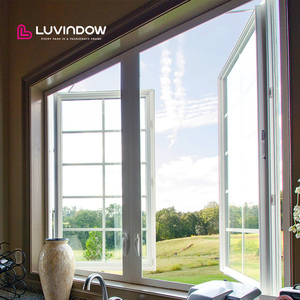
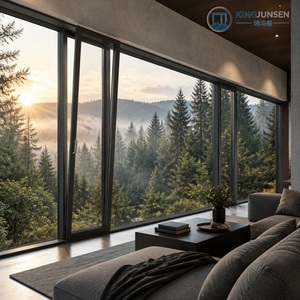
Driven by minimalist residential design, the technical trend utilizes concealed sash frames where the vent profile is hidden entirely behind the outer frame rebate. Combined with structurally bonded glazing tapes, this maximizes daylight penetration by 18% without sacrificing water tightness.
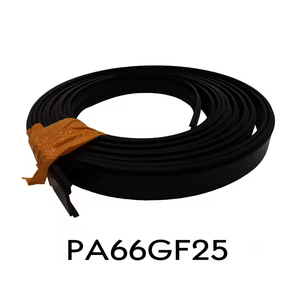
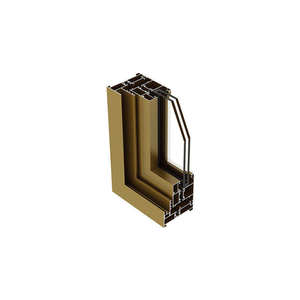
Traditional non-thermal aluminium is prohibited in modern regional building codes. Future-ready procurement relies on multi-chambered polyamide 66 reinforced with 25% transverse glass fibers, offering matching thermal expansion coefficients to aluminium while achieving Passive House U-value standards.
Evaluating supplier engineering proposals against critical performance benchmarks ensures façade integrity under peak typhoon and thermal load conditions.
| Evaluation Parameter | Commercial Grade (Baseline) | Tier-1 Architectural Grade (FAM Standard) | Test Standard / Code |
|---|---|---|---|
| Aluminium Alloy Spec | Secondary Scrap 6063 Billet | Virgin A00 Ingot Extruded 6063-T5 / 6061-T6 | ASTM B221 / GB/T 5237 |
| Profile Wall Thickness | 1.2mm – 1.4mm | 1.8mm – 2.2mm (Heavy Load Engineered) | EN 14351-1 / AS 2047 |
| Thermal Insulation Core | PVC or Cast-in-Place PU Foam | Extruded PA66 GF25 Virgin Polyamide | DIN EN ISO 10077-2 |
| Air & Water Infiltration | Water Test: 300 Pa / Air: Class 2 | Water Test: 600–900 Pa / Air: Class 4 | ASTM E331 & ASTM E283 |
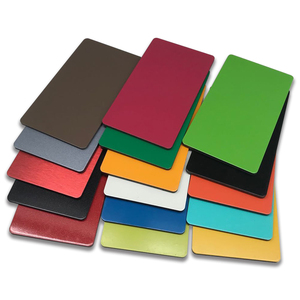
| Surface Coating Quality | Standard Spray Powder (5-Year Fade) | AkzoNobel/Tiger PVDF or Class 2 Qualicoat | AAMA 2604 / AAMA 2605 |
| Multi-Point Locking Rigidity | Zinc Castings / Single Latch | German Siegenia / HOPPE Stainless Steel Run | PAS 24 (Burglar Resistance) |
Exporting high-specification fenestration requires rigid shop drawing sign-offs, thermal FEA simulation, and precision CNC fabrication. We eliminate overseas procurement risk through an integrated end-to-end framework.
Prior to extrusion cut-lists, our engineers calculate inertia (Ix, Iy), mullion wind-load deflection limits (L/175 or L/240), and thermal stress margins based on your jobsite wind pressures.
Instead of cheap screw assembly, all casement frame corners use pneumatic corner-crimping machines with two-part polyurethane structural adhesive (glue-injection) to prevent miter separation and leaks.
Every casement is assembled, hardware-cycle tested for effortless sash engagement, and labeled with opening codes (e.g., W-0401) matching your architectural schedule for rapid jobsite distribution.
Send your door and window schedule or architectural CAD/DWG drawings for a free engineering review and system budget estimation.
Inquire NowTechnical, logistical, and compliance considerations addressed directly by façade engineering consultants.
Production typically requires 25 to 35 days following formal sign-off on shop drawings and finish color samples. Custom profile extrusion tooling (die fabrication) adds an additional 10 to 14 days during preliminary staging.
PA66 GF25 features a linear thermal expansion coefficient matching that of 6063 aluminium alloy (2.3×10^-5 1/K). PVC strips expand and contract at different rates, eventually shearing profile crimps, compromising airtightness, and causing water ingress.
We employ heavy-duty 304/316 stainless steel 4-bar or 5-bar friction stays rated up to 120 kg per sash, paired with glass toe-and-heel setting blocks that transfer glass dead loads directly to the pivot hinges.
For sites within 3 km of seawater, we specify a 2-coat or 3-coat 70% Kynar 500 PVDF (AAMA 2605 compliant) or marine-grade anodizing (minimum 25 microns) to resist salt-fog corrosion and galvanic oxidation.
All insulated glass units are protected with peelable anti-scratch polyethylene film, framed with high-density EPE foam corner bumpers, and packed in fumigated plywood crates with silica gel desiccant packs to prevent moisture trapping.
Direct factory engineering consultation, wholesale project schedules, and rapid container delivery coordination tailored for overseas contractors and developers.
Inquire Now