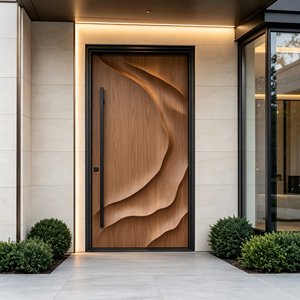
Every system is produced according to rigorous wind-deflection, thermal isolation, and impact-resistance parameters. Browse our core OEM/ODM fabrication line for modern building exteriors.
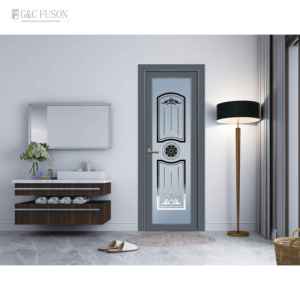
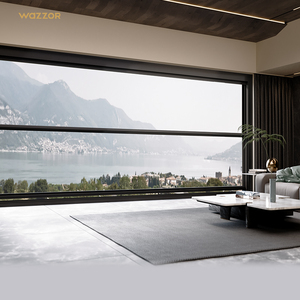
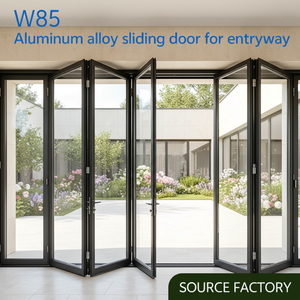
Architectural exterior cladding requires a nuanced equilibrium between structural rigidity, thermal expansion allowances, galvanic corrosion prevention, and aesthetic durability under aggressive ultraviolet radiation.
The foundation of long-term flatness and deflection resistance lies in non-heat-treatable alloy choice. While 3003-H14 (manganese-alloyed) delivers superior yield strength for brake-formed rainscreen cassetted panels, marine or anodized applications necessitate 5005-H34 (magnesium-alloyed) to mitigate silicon speckling and maximize anodic oxide film clarity.
For Grade-A high-rise envelopes, we apply liquid electrostatic 2-coat, 3-coat, or 4-coat fluoropolymer (PVDF) finishes exceeding AAMA 2605-20 specifications. Featuring a minimum of 70% polyvinylidene fluoride resin, these coatings resist color chalking, gloss degradation, and chemical etching under extreme atmospheric exposure.
Aluminum exhibits a linear coefficient of thermal expansion of approximately 23.6 × 10⁻⁶ /K. Unrestricted expansion over a 3,000mm cassetted panel across a 60°C diurnal swing can cause oil-canning if anchor slots lack slotted oval tolerances or if back-stiffeners are rigidly welded rather than adhesively bonded with structural silicone.
| Panel Architecture System | Core Composition / Thickness | Fire Reaction (ASTM / EN) | Recommended Architectural Application | Fabrication Method |
|---|---|---|---|---|
| Solid Sheet Aluminium Cassettes | 2.0mm, 2.5mm, 3.0mm Alloy 3003-H24 | Class A / EN13501-1 A1 Non-combustible | Commercial podiums, towers, soffits, structural column covers | CNC V-grooving, press-brake folding, welded return corners |
| Aluminium Honeycomb Panels | 10mm–25mm with 1.0mm 3003 skin + Hex Cell Core | ASTM E84 Class A / IMO Certified | Large-format mega-panels (>1500×4000mm) requiring extreme flatness | Continuous hot-laminating with thermosetting adhesive films |
| 3D Parametric Wave Panels | 3.0mm, 4.0mm Extruded & Carved 6063-T6 | NFPA 285 Approved Assemblies | Luxury villa frontages, boutique hotel signature portal walls | 5-Axis CNC fluid wave carving, structural reinforcement ribs |
| Perforated & Louvered Screening | 2.5mm–3.0mm 5005-H34 Anodized or Coated | Class A1 Non-combustible | Solar shading envelopes, car park ventilation screens, plant rooms | High-speed multi-head punch turret, laser perforation array |
From raw billet extrusion and sheet metal brake-forming to automated electrostatic coating and export logistics, our single-source factory footprint mitigates delivery risk and standardizes finish quality across global developments.
Our engineering office reviews architectural elevations, wind loading schedules, and thermal targets. We deliver comprehensive structural calculations, connection details, and 3D BIM models before cutting a single profile, eliminating site clashes.
Equipped with computerized double-mitre saws and CNC machining centers, extrusion cuts achieve tolerances within ±0.2mm. Corner joints feature high-pressure pneumatic crimping and epoxy sealant injection for absolute water tightness.
By controlling our own multi-stage pre-treatment (chromate-free conversion) and vertical electrostatic coating lines, we ensure batch-to-batch color uniformity, scratch resistance, and adhesion integrity meeting Qualicoat Class 2 and AAMA 2605 standards.
Quality checks are performed at incoming raw material receipt, intermediate forming/stiffener bonding, and post-finishing. Every order is inspected for coating thickness (DFT), gloss levels, cross-hatch adhesion, and panel squareness with inspection certificates provided.
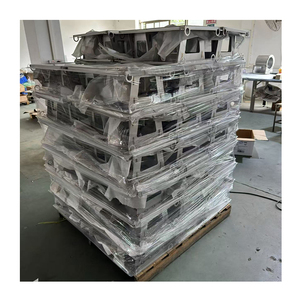
Export components are covered with low-tack protective film, wrapped in closed-cell EPE foam, corner-protected, and packed into ISPM-15 heat-treated plywood crates. Each crated item bears an architectural tag matching site installation layouts.
Corporate ESG mandates, carbon taxes, and labor constraints are transforming how global developers and façade consultants procure building envelopes. Below are the transformative trends defining 2025–2030 project specifications.
Global procurement criteria increasingly enforce Environmental Product Declarations (EPDs). Primary smelting using hydroelectric power reduces embodied carbon from 16.7 kg CO2e/kg down to under 4.0 kg CO2e/kg. Specifiers now favor aluminum alloys integrated with post-consumer recycled content to earn LEED v4.1 and BREEAM credits without compromising mechanical tensile strength.
Escalating on-site installation labor costs across North America, Europe, and Australasia are driving demand for factory-assembled, unitized panel cassettes. Rather than stick-building brackets and cladding on site, contractors procure pre-insulated, pre-glazed aluminum curtain wall units that hook directly onto structural slabs, reducing construction schedules by up to 40%.
Uniform flat curtain walls are giving way to dynamic sculptural facades featuring fluid curves, origami folds, and tactile powder-coated wood-grain finishes. Leveraging 5-axis CNC routers and advanced roll-forming machines, OEM/ODM manufacturers now fabricate fluid wave profiles and hyperbolic panel shapes at mass-production economics.
Direct answers to the critical engineering, quality validation, and supply-chain inquiries submitted by structural engineers, commercial buyers, and project directors.
Send our facade engineering desk your architectural elevations, opening schedules, or customized extrusion dies. Receive a comprehensive structural feasibility evaluation, budgetary estimate, and comprehensive OEM/ODM product catalog.