
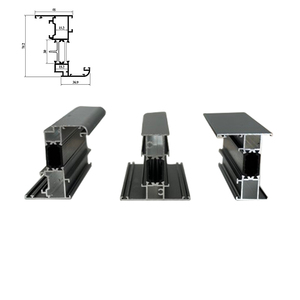
Engineered with primary 6063-T6 / 6060-T66 aluminium billets and reinforced PA66 GF25 thermal barriers, our profile series provide unmatched dimensional stability, structural rigidity, and thermal decoupling.
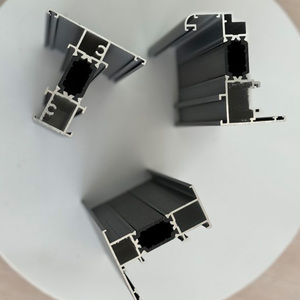
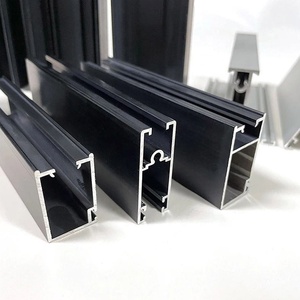
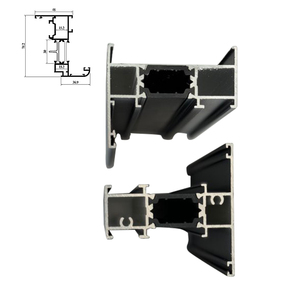
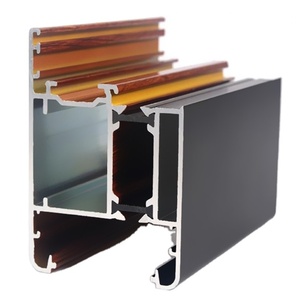
A technical examination of thermal barrier mechanics, alloy selection, roll-assembly shear resistance, and surface longevity in mission-critical commercial facades.
Top Chinese manufacturers utilize 100% virgin electrolytic aluminium ingots complying with GB/T 5237 and ASTM B221. By carefully managing the Mg-Si ratio (typically 0.45–0.9% Mg and 0.2–0.6% Si) and executing continuous induction billet heating followed by nitrogen-shrouded extrusion die quench, profiles achieve balanced tensile strength (Rm ≥ 215 MPa) and yield strength (Rp0.2 ≥ 170 MPa) without micro-embrittlement.
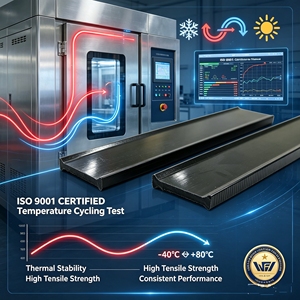
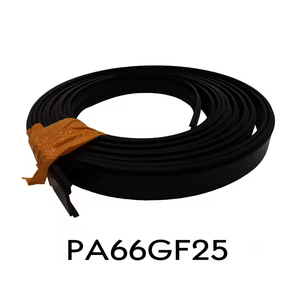
Thermal bridging is interrupted using Polyamide 6.6 reinforced with 25% chopped glass fiber strands. This specific composite matches the linear coefficient of thermal expansion (α = 2.4 × 10⁻⁵/K) of aluminium alloy 6063. When facades endure extreme diurnal thermal shocks (-30°C to +80°C surface temperature), the aluminium and the insulating strut expand synchronously, eliminating internal shear delamination and perimeter air infiltration.
The mechanical bond between the extruded aluminium race and the polyamide strut is formed via automated multi-stage roll-crimping. Prior to insertion, high-hardness carbide knurling wheels penetrate the aluminium groove to create micro-teeth with a controlled depth (0.15–0.30mm). Post-crimping, continuous pneumatic roll-calibration ensures that characteristic transverse tensile strength exceeds 70 N/mm in compliance with DIN EN 14024 testing protocols.
Strategic transformations reshaping architectural specifications, decarbonization mandates, and supply-chain risk mitigation for global contractors and real estate developers.
Global building energy performance standards (such as the EU Energy Performance of Buildings Directive, ASHRAE 90.1-2022, and California Title 24) are making classic single-chamber thermal break profiles obsolete for premium developments. Sourcing is rapidly shifting toward deep, multi-cavity polyamide thermal profiles (widths exceeding 34mm to 54mm) fitted with low-emissivity aluminum foil flags and co-extruded cellular insulation inserts.
Institutional real estate developers, REITs, and Tier-1 general contractors now evaluate Chinese extrusion factories based on embodied carbon. Sourcing contracts increasingly mandate primary smelting powered by hydropower or solar energy (yielding ≤ 4.0 kg CO₂e per kg of aluminium, compared to the coal-fired benchmark of 14-16 kg CO₂e).
To reduce onsite labor costs and human error in North America, Europe, and the Middle East, procurement teams are abandoning simple "profile length" purchases. Instead, they require Chinese extruders to supply profiles that are 100% pre-machined via 5-axis CNC machines: pre-punched water drainage slots, pre-drilled corner bracket mortises, pre-installed EPDM weatherseals, and customized snap-in thermal cores ready for rapid mechanical assembly.
Geopolitical supply chain scrutiny, including anti-circumvention tracking and strict tariff compliance (e.g., US CBP UFLPA, EU CBAM), requires absolute metallurgical transparency. Modern procurement protocols require Chinese manufacturers to provide digital material traceability systems with barcoded logs, spectrometer test reports for every melt batch, and transparent logistics manifests.
Comprehensive technical comparison across architectural thermal break categories used in global building enclosures.
| Profile System Category | Alloy & Temper | Thermal Barrier Type | Thermal Transmittance (Uf) | Transverse Shear (Q) | Primary Commercial Use | Compliance Standards |
|---|---|---|---|---|---|---|
| Standard Casement System (50–65mm) | 6063-T5 | 14.8mm – 20mm PA66 GF25 | 2.2 – 2.6 W/m²K | ≥ 50 N/mm | Mid-rise residential, commercial ribbon windows | GB/T 5237, EN 12020 |
| High-Performance System (70–80mm) | 6063-T6 / 6060-T66 | 24mm – 34mm Multi-Cavity PA66 | 1.3 – 1.8 W/m²K | ≥ 70 N/mm | Villas, upscale mixed-use, extreme wind-load facades | AAMA 101, EN 14024 |
| Passive House Envelope (85–110mm) | 6060-T66 Ultra-Pure | 39mm – 54mm Aerogel-Integrated PA66 | 0.75 – 1.0 W/m²K | ≥ 85 N/mm | Net-zero energy buildings, sub-arctic cold climates | PHI Certified, DIN 4108 |
| Unitized Curtain Wall Pressure Plate | 6061-T6 / 6063-T6 | Continuous I/T-Strut Isolators | 1.1 – 1.5 W/m²K | Structural Interlock | Skyscraper glazing, structural mullion transoms | ASTM E330, AAMA 501 |
| Pour-and-Debridge (P&D) System | 6063-T5 | High-Density Polyurethane Elastomer | 1.8 – 2.3 W/m²K | Continuous Mechanical Key | Heavy commercial entrances, hurricane-impact frames | AAMA TIR-A8, ASTM E1886 |
How top-tier Chinese extrusion facilities maintain tight dimensional tolerances, flawless surface coatings, and zero-defect export deliveries across the globe.
CAD/CAM wire-EDM cutting of H13 high-temp alloy extrusion dies with computer-simulated flow-rate balancing. Eliminates profile wall thickness variance and maintains tolerances within ±0.12mm across intricate internal screw bosses and euro-grooves.
Extrusion presses ranging from 800 metric tons up to 10,000 metric tons equipped with automated cooling run-out tables, infrared temperature monitoring, and high-velocity water/air quench systems to ensure uniform recrystallization and temper consistency.
German-designed roll-assembly lines featuring real-time CNC depth sensor adjustment. Knurling teeth are calibrated to match the thermal strip dovetail angle exactly, preventing premature stress risers while providing high longitudinal shear resistance.
State-of-the-art vertical powder coating plants equipped with automated chromate-free pre-treatment, multi-stage DI water cascading rinses, and GEMA electrostatic guns. Compliant with Qualicoat Class 2 and AAMA 2605 specifications with 30-year finish warranties.
Fully equipped mechanical testing laboratories: universal tensile testing machines for transverse tension ($Q$) testing at -20°C, room temperature, and +80°C; metallographic microscopes; gloss meters; cross-hatch adhesion testers; and Gardner impact testers.
Profiles are protected with laser-grade polyethylene protective tape, wrapped in custom pearl cotton cushioning, separated with corrugated interleaving, and packed into reinforced steel or plywood export crates with individual opening reference tags.
In-depth, direct answers addressing metallurgical validation, mechanical durability, cost drivers, and global shipping logistics.
Whether you require custom extrusion dies, Passive House-certified multi-cavity thermal profiles, or fully pre-machined window and door packages, our technical engineering desk provides prompt design reviews, thermal simulations, and volume production quotes.
Get a Quote