Global Architectural Envelope Standard

China Best Premium Glazing Units Supplier & Exporters

Precision-engineered insulated glass units (IGU), structural curtain wall glazing, and integrated high-thermal fenestration systems manufactured for Tier-1 international project specifications.

Engineering Excellence & Export Scale

Engineered Transparency: High-Performance Glazing Built for Extreme Climate Resiliency

Modern building enclosures demand more than light transmission; they require sophisticated structural integrity, acoustic containment, and verified thermal barrier controls. As a primary Chinese exporter and fabrication authority, our facility synthesizes advanced magnetron sputtering Low-E technology, automated robotic warm-edge sealing, and CNC structural thermal break aluminium integration. Every panel fabricated across our manufacturing lines complies rigorously with EN 1279, ASTM C1036/E2190, AS/NZS 2208, and NFRC certifications, providing architects, facade consultants, and general contractors an uncompromising supply chain advantage.

0.60 Lowest Center-of-Glass Ug (W/m²K)
50+ Countries & Ports Delivered Safely
5,000 Pa Peak Wind Load Resistance Tested
100% Batch Gas Argon Fill Verification
Engineered Solutions Matrix

Featured Premium Glazing Units & Architectural Assemblies

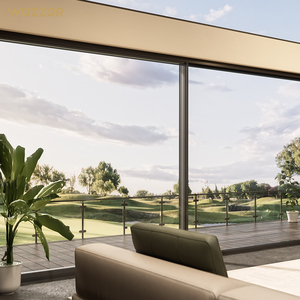
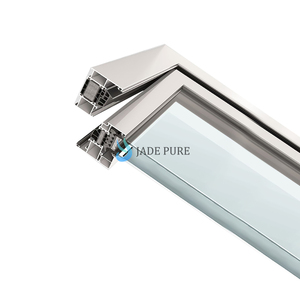
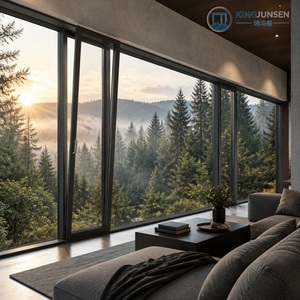
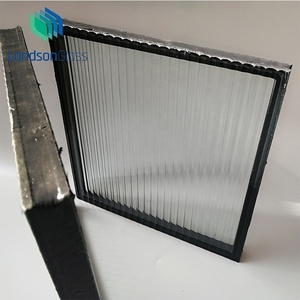
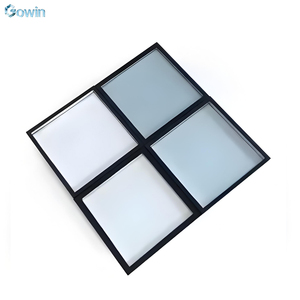
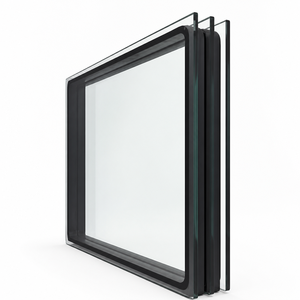
Explore our core portfolio of certified structural double, triple, and vacuum insulating glass configurations, complemented by fully framed unitized and operable building envelope components.

Engineering Selection Standard

Technical Performance Comparison Across Glazing Build-Ups

Consult the performance matrix below to match specified U-values, visible light transmission (VLT), and acoustic criteria to your project's regional climate envelope.

Glazing Unit Architecture U-Value (W/m²K) SHGC Range VLT (%) Acoustic Rw (dB) Primary Application Zone
Standard Double Low-E (6+12A+6) 1.50 - 1.70 0.38 - 0.52 68% - 74% 32 - 35 dB Temperate Residential & Mid-Rise Commercial
High-Performance Triple Glazed (6+12Ar+6+12Ar+6) 0.70 - 0.90 0.28 - 0.42 56% - 65% 38 - 42 dB Sub-Zero, Passive House, Severe Cold Zones
Acoustic PVB Laminated IGU (6+0.76PVB+6+16Ar+6) 1.30 - 1.50 0.32 - 0.46 62% - 70% 42 - 48 dB Airport Corridors, Urban Rail Stations, Hotels
Hybrid Vacuum Insulated Glass (VIG) 0.45 - 0.60 0.24 - 0.38 60% - 72% 39 - 44 dB Net-Zero Retrofits, Ultra-Slim Profiles
Reflective Solar Control Curtain Wall (8+16Ar+8) 1.25 - 1.40 0.20 - 0.28 35% - 48% 36 - 40 dB Tropical High Solar Radiation, Commercial Towers
Market Intelligence & Procurement Analysis

Future Procurement Trends in Architectural Glazing (2025–2030)

Anticipate regulatory shifts, embodied carbon mandates, and manufacturing standard updates before specifying your next commercial volume order.

EPD & Embodied Carbon Thresholds

Procurement teams across the EU, UK, and North America are moving from operational carbon focus to whole-life carbon auditing. Specifiers require third-party Type III Environmental Product Declarations (EPD) verifying lower emissions per ton of float glass produced, pushing suppliers toward electric melting furnaces and high-ratio recycled cullet processing.

Warm-Edge & TPS Automation

Traditional cold-bridge aluminum spacers are rapidly giving way to Thermo-Plastic Spacers (TPS) and composite structural silicone foam. Automated robotic TPS extrusion eliminates corner joints, reducing perimeter seal failure risk by over 80% and ensuring gas containment rates of less than 0.5% annual loss over 25-year lifespans.

BIPV & Dynamic Electrochromic Integration

Architectural glass is transitioning from passive barriers to energy-generating surfaces. Building-Integrated Photovoltaic (BIPV) vision glass and solid spandrel panels, alongside solid-state electrochromic switchable glazing, are becoming staple specifications for Tier-1 LEED Platinum commercial developments in urban centers.

R&D Horizons

Evolutionary Trends in Glazing Unit Manufacturing

How cutting-edge surface science and automated processing are reshaping building fenestration durability and optical clarity.

Triple-Silver Low-E

State-of-the-art coater beds apply 15+ sub-nanometer layers containing three silver films, driving selectivity ratios (VLT / SHGC) beyond 2.2 without producing undesirable external specular mirror effects.

Anisotropic Quench Elimination

Advanced convection tempering furnaces utilize optical stress imaging scanners to minimize iridescence and roller wave distortion, ensuring pristine visual aesthetics under polarizing natural sky conditions.

Polymer Interlayer Innovation

Shift from standard PVB to structural ionoplast interlayers (SentryGlas) offers 5-fold tear resistance and 100-fold post-breakage rigidity, critical for open-edge balustrades and hurricane impact envelopes.

Automated Gas-Fill Integrity

Inline spark emission spectrometry sensors measure non-destructive argon gas retention in real-time on every unit, certifying minimum 90% gas fill before secondary structural silicone curing.

The Enterprise Advantage

Why Global Contractors & Developers Partner With Us

Cross-border supply chain risks are eliminated through rigorous technical control, made-to-measure fabrication precision, and export-grade maritime logistics handling.

Complete Envelope Single-Source

Eliminate the friction between profile extruders and glass processors. We provide unified responsibility across structural aluminum profiles, thermal breaks, gaskets, and certified glazing units, ensuring verified fit before crating.

Engineering Shop Drawings & Calc Packages

Our dedicated engineering department reviews wind load calculations, glass thickness deflection, thermal stress break risk, and seismic inter-story drift, providing full submittal engineering documentation for architect sign-off.

Reinforced Export Packaging Protocols

Units receive edge-protection cap guards, vapor-sealed desiccant wrappers, and customized heavy-duty steel A-frame or fumigated plywood crates with shock-watch indicator labels, guaranteeing zero maritime transport damage.

Ready to Engineer Your Project's Glazing Envelope?

Submit your architectural window schedule, elevation CAD drawings, or curtain wall specifications. Our technical engineering desk delivers full structural assessments, U-value calculations, and firm export quotations within 48 hours.

Send an Inquiry
Procurement Knowledge Base

Frequently Asked Questions on Glazing Unit Export & Engineering

Authoritative technical and logistical insights directly addressing the risks and requirements of international glass procurement.

What technical parameters are required for a binding quotation?

We require the structural opening schedule, glass build-up (or target U-value and SHGC), building height and wind load criteria (Pa), preferred spacer type (aluminum or warm-edge), edge condition (clean cut or structural silicone stepping), and final destination port for accurate freight optimization.

How do you manage thermal stress breakage risk in tinted or Low-E glass?

We conduct automated finite element thermal stress modeling considering solar absorption, frame heat sink factors, interior shading blinds, and historical regional diurnal temperature swings. Where thermal gradient stress exceeds critical thresholds, full thermal tempering or heat-strengthening is implemented.

Can your glazing units be certified under local building codes (e.g., AS/NZS, ASTM, CE)?

Yes. Our manufacturing protocols and test certificates conform directly to European EN 1279, North American IGCC/SGCC / ASTM E2190 / ASTM C1048, and Australian AS/NZS 2208 standards. Official test reports and factory production control audits are provided alongside project submittals.

How is glass edge delamination and fogging prevented over time?

We employ a validated dual-seal barrier: primary polyisobutylene (PIB) applied under controlled heat to prevent moisture ingress, paired with structural silicone or polysulfide secondary sealant for structural bonding. Spacers are filled with 3A molecular sieve desiccant under automated humidity control below 15% RH.

What is the lead time for custom architectural project orders?

Standard fabrication cycles range from 20 to 35 business days following final approved shop drawings and glass optimization nestings. Ocean freight scheduling is handled through Tier-1 shipping alliances with full container load (FCL) or open-top container bracing for oversized structural panels.

How do you handle site coordination and glass crate uncrating safely?

Every wooden crate or steel stillage is sequenced according to the contractor’s installation elevation plan. Individual panels are labeled with project reference IDs, barcode traceability, glass build-up, and weight data, allowing rapid hoist management with vacuum glass lifters on job sites.