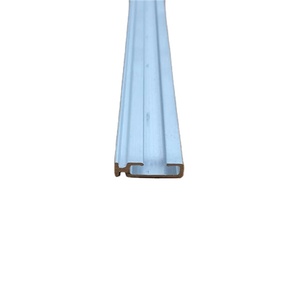

Explore our export-certified fenestration assemblies, combining multi-chamber thermal breaks, acoustic PVB laminates, and precision extrusion profiles fabricated to international standards.
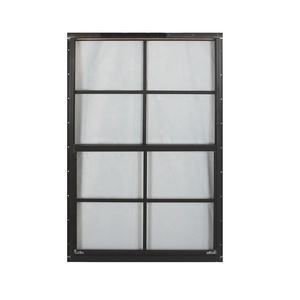
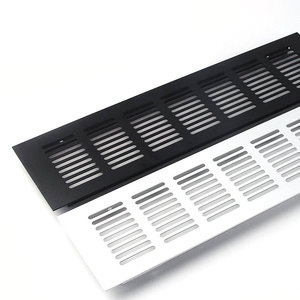

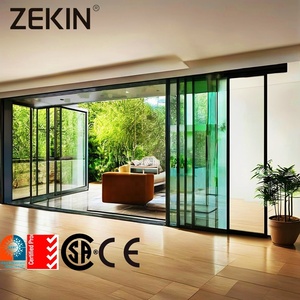
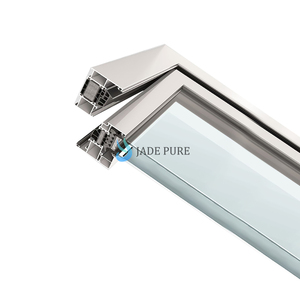
Modern architectural acoustic engineering relies heavily on breaking the coincidence frequency dips inherent to standard single-pane and monolithic glazing systems. In high-density urban developments, airport corridors, and transit-adjacent infrastructure, environmental noise mitigation requires a balanced system-level approach. As a dedicated CE certified soundproof aluminium windows supplier and exporter, our fabrication methodology targets the Mass-Air-Mass principle, structural decoupling via multi-chamber polyamide thermal breaks, and hermetic perimeter compression.
To attain acoustic reduction ratings exceeding 42–48 dB Rw+Ctr, asymmetrical insulated glass units (IGUs) are paired with specialized acoustic poly-vinyl butyral (PVB) or acoustic SentryGlas interlayer laminates. The varying glass sheet thicknesses disrupt harmonic resonance, dampening low-frequency structural vibration and high-frequency aircraft noise simultaneously. Furthermore, extruded frames manufactured from 6063-T5 and 6063-T6 architectural aluminium alloy incorporate polyamide 66 with 25% glass fiber reinforcement (PA66-GF25), interrupting sound propagation across the interior and exterior metal casings while ensuring high-torsional rigidity against sustained wind loads up to 4500 Pa.
Mitigate procurement risks through end-to-end engineering validation, certified export packaging, and rigorous factory-acceptance protocols tailored for international contractors.
Every commercial opening is verified for wind load resistance, frame deflection, and glass dead-weight balance prior to profile extrusion. Our structural shop drawings prevent site rectification delays and ensure perfect structural cohesion.
Fully compliant with European Standard EN 14351-1, Australian AS2047, and North American NFRC performance benchmarks. Acoustic test chamber reports (ISO 10140-2) and structural calculations accompany export submittals.
Units receive protective micro-adhesion films, structural corner dampers, and non-fumigation ISPM-15 plywood crating. Each crate is mapped with exact elevation IDs to streamline staging and direct-to-floor installation on overseas job sites.
Evaluate sound transmission loss, thermal values, and sealing technologies across typical architectural configurations.
| Glazing System Profile | Acoustic Rating (Rw / STC) | Glazing Build-Up Matrix | Airtight Gasket System | Thermal Transmittance (Uw) | Target Application |
|---|---|---|---|---|---|
| Series 65 Tilt & Turn | 38 - 42 dB (STC 40) | 6mm + 12A + 6mm Low-E Insulated | Triple EPDM Co-Extrusion | 1.3 W/m²K | Urban High-Rise Condominiums |
| Series 80 Heavy Casement | 44 - 48 dB (STC 47) | 8.76mm Acoustic PVB Lam + 16Ar + 6mm | Continuous Vulcanized EPDM | 1.0 W/m²K | Aviation Corridors & Rail Corridors |
| Series 120 Lift & Slide | 36 - 40 dB (STC 38) | 8mm Toughened + 16Ar + 8mm Warm-Edge | Compression Seal + Fin Gaskets | 1.4 W/m²K | Coastal Penthouses & Private Estates |
| Unitized Curtain Wall | 42 - 46 dB (STC 45) | 10.76mm Acoustic Lam + 14Ar + 8mm IGU | Dual Structural Silicone Barrier | 1.1 W/m²K | Commercial Office Towers & Hotels |
Strategic purchasing insights for architects, developers, and commercial contractors navigating regulatory decarbonization and building automation.
Global specifications increasingly require Environmental Product Declarations (EPDs). Forward-thinking developers are shifting toward low-carbon primary billets smelted using renewable hydro-power, cutting embodied carbon emissions below 4.0 kg CO2/kg Al.
The combination of micro-cavity VIG with acoustic laminated glass allows ultra-thin profiles to achieve thermal values under 0.60 W/m²K alongside superior decibel attenuation, drastically reducing frame depth requirements on high-value footprints.
Procurement cycles are abandoning generic 2D schedules in favor of parametric Revit/IFC BIM family submittals. Automated CNC double-mitre saws and crimping centres directly link with design models to ensure millimetric fabrication consistency.
Direct technical answers addressing air permeability, acoustic resonance, CE compliance, and long-range shipping logistics.
Acoustic attenuation requires interrupting both airborne and structure-borne sound paths. Standard double-pane glazing can fail at resonant frequencies. We implement asymmetrical glass thicknesses (e.g., 8mm outer + 6mm inner) combined with multi-layer acoustic PVB interlayers and warm-edge, argon-filled spacers to smooth the sound transmission loss curve across both traffic rumble (low frequency) and mechanical noise (high frequency).
Under the Construction Products Regulation (CPR 305/2011) and EN 14351-1, we issue an official Declaration of Performance (DoP) with each export batch. This covers certified third-party testing parameters: Wind Load Resistance (EN 12210), Watertightness (EN 12208), Air Permeability (EN 12207), Acoustic Performance (EN ISO 717-1), and Thermal Transmittance (EN ISO 10077-1/-2).
Acoustics follows the path of least resistance. A frame with even 1% unsealed air leakage can reduce total sound attenuation by as much as 10 dB. Our soundproof systems utilize continuous, vulcanized EPDM central and acoustic perimeter gaskets paired with multi-point perimeter gear locking drives to ensure airtight Class 4 compression around the entire operable sash.
Yes. We supply Qualicoat-certified powder coatings (RAL palette), Qualanod-certified anodizing (up to 25 microns for marine environments), and multi-coat PVDF coatings with superior UV resistance. Because our thermally broken profiles use separated interior and exterior extrusions, bi-color combinations (e.g., charcoal exterior, architectural white interior) are standard production options.