Choosing aluminium doors in Dubai means balancing appearance, durability, and everyday comfort. Strong sunlight, dusty winds, and frequent air-conditioning can expose weaknesses in poor finishes or loose seals. A door may look impressive in a showroom, yet feel less suitable after months of daily use. Details matter.
This guide shares seven practical tips for comparing aluminium doors Dubai suppliers and products. Check the frame profile, powder-coated finish, hardware, glass specification, and weather seals. Ask how the door will be measured and installed, and request clear warranty terms. A smooth sliding track should move without scraping; a secure latch should close firmly, not require a hard push. Small signs, but useful ones.
Experience helps, though no checklist guarantees a perfect purchase. We may focus too much on appearance and overlook maintenance access or replacement parts. That is worth reconsidering. Compare written specifications, inspect samples in natural light, and ask direct questions before paying a deposit. The right choice depends on the opening, budget, and how the space is used.
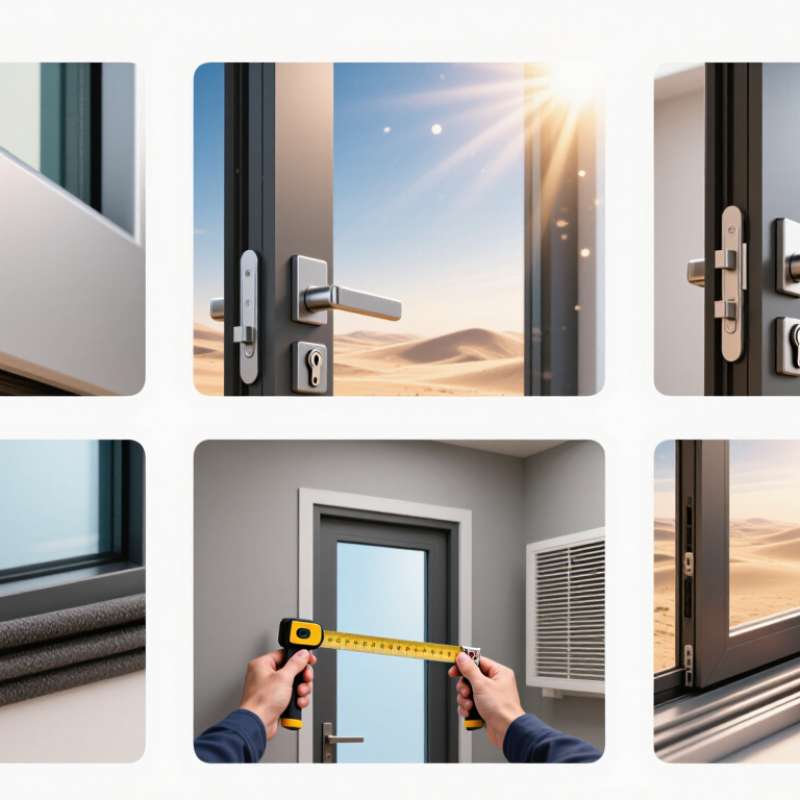
Dubai’s door requirements begin with extreme heat, not appearance. Summer temperatures can approach 45°C, while direct sunlight heats frames and glass for hours. Aluminium conducts heat quickly, so choose doors with a genuine thermal break. This insulated section reduces heat transfer between the exterior and interior surfaces. It also helps air-conditioning systems work less aggressively.
Glass selection matters as much as the frame. Ask for low-emissivity glass with a suitable solar heat gain coefficient. Large west-facing doors need stronger solar control than shaded entrances. Dark aluminium finishes may become extremely hot under afternoon sun. Check the stated U-value and solar performance figures before comparing prices. Vague phrases like “heat resistant” are not enough.
Inspect the practical details. Look for continuous gaskets, tight corner joints, and drainage channels that can handle dust and occasional heavy rain. Sliding doors should move smoothly without forcing the rollers. A poor installation can leave gaps, even when the door specification looks excellent. On site, measure the opening again after plastering and floor finishes are complete. No checklist is perfect. Dust, alignment changes, and neglected seals can reduce performance over time. Plan regular cleaning and inspect the weather seals before each summer.
Ask for the door’s calculated U-value, not only a general thermal-break claim. EN 10077-1 provides a method for assessing heat transfer through windows, doors, and shutters. A lower U-value usually indicates better insulation. However, the result depends on the frame, glazing, spacer, dimensions, and installation details. Compare complete door performance, not isolated frame figures.
Check whether the quoted value is Uf or Ud. Uf describes the frame, while Ud represents the entire door assembly. I once focused only on a frame number, which gave an incomplete picture. That mistake still seems easy to make.
Request the calculation basis and test conditions. A credible supplier should explain the profile geometry, glass specification, door size, and boundary assumptions. EN 10077-1 data becomes more useful when different products use comparable inputs.
Examine the thermal break carefully. Polyamide separators, suitable gaskets, and insulated panels can reduce conductive heat paths. Yet a thermal break is not a magic shield. Poor corners or compressed seals may weaken real performance.
Match the U-value with Dubai’s exposure. A west-facing entrance with strong afternoon sun needs more than good insulation. Consider glass solar control, airtightness, and frame colour. The lowest quoted number may not deliver the best comfort.
Inspect installation quality before signing. Continuous seals, accurate alignment, and insulated fixing zones matter.
Keep the documents. Ask for drawings, calculations, and installation requirements. Performance can drift from the brochure. That deserves honest checking.
Tip 1: Ask for documentation confirming the aluminium profile grade is 6063-T5. The label alone is not proof. Check that the paperwork matches the supplied profiles, including their finish and dimensions. Keep a copy with your quotation and technical drawings.
Tip 2: Measure wall thickness at a clean, accessible section with callipers, or ask the supplier to demonstrate the measurement. Compare the result with the specification, not a casual verbal promise. Thicker is not automatically stronger; design, profile shape, and reinforcement also matter. Small detail. Easy to miss. I once focused too much on the frame’s appearance and too little on its section dimensions.
Tip 3: Request structural data for the complete door assembly, including its size, glazing, hardware, and fixing method. In Dubai, exposed openings may face intense sun and strong gusts. Ask how the proposed system performs under the relevant project conditions, and whether test reports cover a comparable configuration. A strong profile can still fail if corner joints or anchors are weak. Inspect sample corners and ask how the frame will be secured to the wall. If the answer is vague, pause before approving the order.
7 Tips for Buying Aluminium Doors in Dubai
Dubai’s heat, dust, and occasional wind-driven rain make performance testing essential. The IEA’s Buildings 2023 report states that buildings consumed about 30% of global final energy in 2022. Poorly sealed doors can increase cooling demand. Ask for an independent test report, not only a brochure claim. It should identify the door size, glass type, frame system, and installation method.
Under EN 12207, air permeability is classified from Class 1 to Class 4. Class 4 provides the strongest tested resistance to air leakage. Check the pressure range and leakage results, especially for tall apartments. EN 12208 measures water tightness. Ratings commonly run from 1A to 9A, with higher classifications requiring stronger water-pressure performance. A high rating helps, but drainage paths and sill detailing still matter.
Wind resistance follows EN 12210. The report should show both the pressure class and deflection category, such as A, B, or C. Do not compare numbers without checking the tested specimen size. Larger doors can behave differently. A perfect laboratory score is not a perfect installation. Small gaps around anchors can undermine expensive testing. The World Meteorological Organization reports that extreme weather risks are increasing globally, so local exposure deserves attention. Request site-specific fixing details, gasket specifications, and maintenance instructions. I would also inspect one installed sample after a heavy rain event. That step is easy to overlook.
Buying aluminium doors in Dubai requires more than comparing frame prices. The city’s heat, dust, and coastal humidity can expose weak materials quickly. Choose a powder-coated finish designed for intense sunlight and salt-laden air. Ask for written coating specifications, not only a colour sample. Check the surface in daylight for bubbles, thin corners, or uneven texture.
Installation quality matters just as much. Measure the opening twice, confirm level frames, and inspect every corner before sealing. Proper alignment should allow the door to close without force. Look for continuous weather seals, secure hinges, and drainage paths that prevent trapped water. A beautiful door can still fail through careless fitting. I once underestimated the effect of poor sealing; dust entered within weeks.
Read the warranty line by line. It should explain coverage for coating failure, hardware, glass, installation defects, and response times. Ask who handles repairs and whether labour is included. Recycling also deserves attention. Aluminium can require up to 95% less energy when recycled than when produced from raw materials, although actual savings depend on collection and processing. Request recycled-content details and a recovery plan for future replacement. Keep invoices, coating records, and installation photographs. They make disputes easier, but they cannot repair a weak frame.
| Tip | Buying Dimension | Practical Evaluation | Useful Benchmark or Fact | Why It Matters in Dubai |
|---|---|---|---|---|
| 1 | Select a suitable aluminium alloy and profile | Ask for the alloy designation, profile depth, wall thickness, thermal-break design, and maximum tested sash size. Avoid comparing doors by frame appearance alone. | Common architectural alloys such as 6063 are widely used for extruded door profiles. A thermally broken frame generally performs better than a continuous metal frame for reducing heat transfer. | High outdoor temperatures and strong solar exposure increase the value of stable profiles, thermal separation, and correctly sized hardware. |
| 2 | Evaluate powder coating quality | Request the coating specification, pretreatment process, colour reference, film-thickness report, and written confirmation of exterior suitability. Inspect for pinholes, uneven colour, runs, scratches, and exposed edges. | Architectural powder coatings are commonly checked for adhesion, impact resistance, gloss, colour stability, and corrosion performance. Coating thickness should follow the applicable project specification rather than an arbitrary visual estimate. | UV radiation, dust, humidity, and airborne salts can accelerate fading or corrosion when surface preparation and coating control are inadequate. |
| 3 | Check glass and weather-performance requirements | Compare glass type, thickness, safety classification, visible-light transmission, solar-control performance, and the quality of gaskets and drainage paths. | Tempered or laminated safety glass is typically selected according to location and risk. Insulating glass can improve thermal and acoustic performance when the frame and seals are designed for it. | Appropriate glazing can reduce solar heat gain, improve indoor comfort, and help limit dust and water penetration during weather events. |
| 4 | Verify installation quality | Confirm that the opening is measured before fabrication, the frame is plumb and level, fixing points are appropriate, the sill is supported, and perimeter gaps are sealed continuously. | A high-quality door can underperform if it is out of square, poorly anchored, or sealed with incompatible materials. The installer should complete an operation, drainage, and water-spray inspection where required. | Correct installation helps prevent air leakage, rattling, difficult operation, water ingress, and premature hardware wear. |
| 5 | Review hardware, security, and maintenance | Check lock type, cylinder protection, hinge adjustment, handle quality, roller capacity, restrictors, child-safety features, and availability of replacement parts. | Hardware should be rated for the door weight and opening frequency. Moving parts normally require periodic cleaning, inspection, and lubrication according to the maintenance instructions. | Fine dust and coastal air can affect rollers, tracks, locks, and seals, so accessible components and a clear maintenance schedule are important. |
| 6 | Compare warranty terms and after-sales support | Read the coverage period, exclusions, response time, labour responsibility, finish coverage, glass coverage, hardware coverage, and required maintenance conditions. | A meaningful warranty should identify the product, installation scope, claim process, and remedies in writing. Separate terms may apply to frames, powder coating, glass, seals, and hardware. | Clear local support can reduce repair delays and make it easier to obtain matching components for custom-sized openings. |
| 7 | Assess lifecycle value and aluminium recycling | Ask whether the aluminium can be separated and sent to a licensed recycling stream at the end of service. Compare durability, maintenance, energy performance, repairability, and disposal costs—not only the purchase price. | Recycling aluminium generally uses about 5% of the energy needed to produce primary aluminium, representing approximately 95% energy savings. Actual savings depend on collection, sorting, transport, and remelting efficiency. | Long service life and responsible recycling can reduce material demand and lifecycle impact while preserving aluminium’s recoverable value. |
Note: Product performance depends on the complete door system, local exposure, glazing selection, installation workmanship, and ongoing maintenance. Request project-specific test reports and written specifications before purchase.
Summer temperatures can approach 45°C. Aluminium transfers heat quickly. A genuine thermal break reduces heat movement indoors and eases air-conditioning demand.
Consider low-emissivity glass with a suitable solar heat gain coefficient. West-facing doors need stronger solar control. Check U-values and solar performance figures.
Dark finishes can become extremely hot. Ask for written coating specifications designed for intense sunlight and coastal humidity. Colour alone proves little.
Request independent air, water, and wind test reports. The report should identify door size, glass type, frame system, and installation method. Brochures are not enough.
Air resistance ranges from Class 1 to Class 4, with Class 4 offering stronger tested protection. Water ratings commonly range from 1A to 9A. Wind reports should show pressure and deflection categories.
No. Larger doors may behave differently. Small gaps around anchors can weaken expensive testing. Site-specific fixing details still matter.
Re-measure openings after plastering and floor finishes are complete. Check level frames, tight corners, continuous gaskets, secure hinges, and drainage paths. The door should close without force.
Clean dust regularly and inspect weather seals before each summer. Check rollers on sliding doors. Heavy rain can reveal hidden drainage or alignment problems.
It should explain coverage for coating, hardware, glass, installation defects, and response times. Confirm whether labour is included. Keep invoices and installation photographs.
Recycling aluminium can require up to 95% less energy than producing new material. Actual savings depend on collection and processing. Request recycled-content details and a future recovery plan.
Choosing aluminium doors Dubai homes can rely on starts with the local climate. With summer temperatures reaching around 45°C and strong solar exposure, consider how each door handles heat, glare, and daily use. Compare thermal-break designs and U-values, using EN 10077-1 performance data to understand how effectively a door limits heat transfer. Also check that the profiles are made from 6063-T5 aluminium and review their wall thickness and structural strength rather than judging quality by appearance alone.
Ask for documented air, water, and wind resistance results under EN 12207, EN 12208, and EN 12210. These ratings help you assess how a door may perform during dust, rain, and windy conditions. Finally, examine the powder-coating finish, installation details, and warranty coverage before buying. A well-installed door can support reliable performance, while choosing recyclable aluminium also helps conserve resources; recycling aluminium can use substantially less energy than producing it from raw materials.